Getting behind the wheel of a 1967 Mustang or a vintage Jaguar E-Type feels like a dream, but if you’ve never driven before, that dream can turn into a very expensive lesson. Driver education comes first because classic cars demand skills that many modern vehicles let you skip entirely - manual shifting, reading a tachometer, and reacting without the safety nets of ABS, traction control, or lane assist. Before you turn that ignition key on a car that’s older than your parents, you need a solid foundation in the fundamentals.
Why driver education matters before classic car ownership
Most new drivers today learn in cars equipped with technology that helps compensate for mistakes. A modern Toyota can warn you when you drift out of your lane, automatically brake in certain emergency situations, and make driving easier with an automatic transmission. A classic car does none of that, so muscle memory is something you build through hours of practice behind the wheel.
What you can do first is get the knowledge right. NextDoorDriving online driver’s ed gives you that foundation before you ever handle a vintage car: it walks you through traffic laws, hazard perception, and defensive driving techniques. None of that changes whether you’re driving a 2026 EV or a 1965 Chevelle.
What makes driving a classic car different
Classic cars have personality, and part of that personality is a learning curve. The steering wheel is heavier because there’s often no power assist. The brakes may require more pedal pressure, and some older drum brakes fade under hard use. Shifting a column-mounted three-speed from the 1950s is nothing like flipping an automatic shifter into “D.”
Here are a few things you’ll notice right away in many older cars:
- The clutch bite point takes some getting used to until you learn the specific car.
- Mirrors are often smaller and blind spots can be bigger.
- Seat belts, if present, may be lap-only rather than three-point.
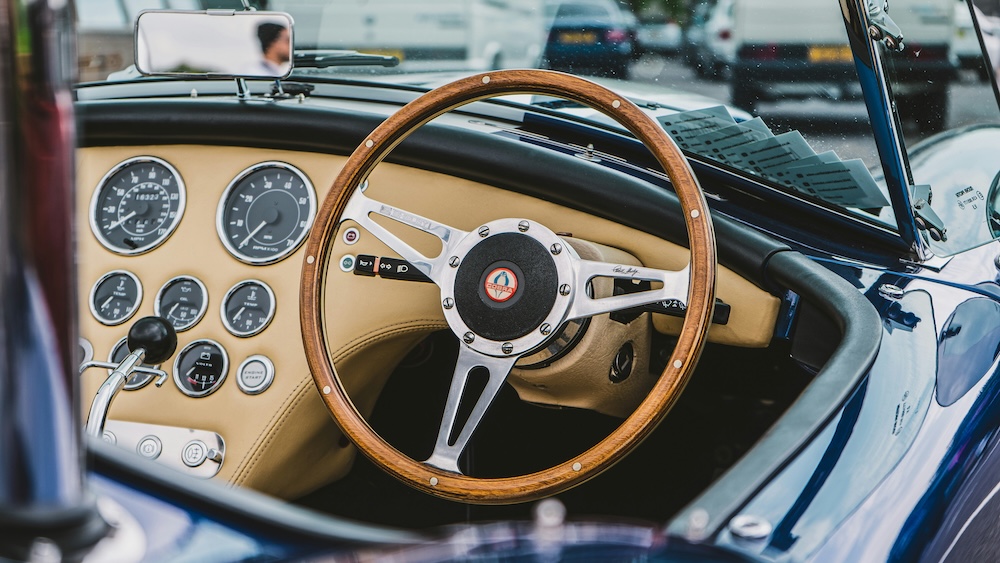
- Dashboard gauges demand your attention – there are fewer electronic warnings.
- Carbureted engines may need extra attention when starting on cold mornings.
These quirks are part of the fun, but they also mean a beginner can get into trouble fast if the basics aren’t already second nature.
The mechanical awareness you’ll need
A classic car often tells you when something is wrong through sounds and smells rather than dashboard icons. An unusual whining or humming noise at highway speed might indicate a worn wheel bearing. A sweet smell under the hood could mean coolant is leaking. New drivers trained only on modern cars may miss these signals because they’ve never had to listen for them.
Good driver education teaches you to pay attention to the whole vehicle, not just the screen in front of you. Developing basic mechanical awareness alongside your driving skills can also help you recognize potential problems before they turn into expensive repairs.
Skills every classic car driver should master
Before anyone hands you the keys to a vintage ride, you should be able to do a few things confidently. These skills come from logged hours of practice, not from a weekend crash course.
- Smoothly operate a manual transmission on hills, in traffic, and from a dead stop.
- Check blind spots and communicate your intentions without relying on electronic driver assistance.
- Judge stopping distances without the help of automatic emergency braking.
- Parallel park using only your mirrors and visual references, with no backup camera.
- Perform a pre-drive walk-around to check tires, fluids, and lights.
- Understand emergency braking and skid recovery techniques through professional, supervised driving instruction.
Getting comfortable with these takes time and consistent practice. This is exactly why driver education comes first – the classroom and practice hours build the base, and the classic car adds the character on top.
Common mistakes new drivers make in classic cars
New drivers who skip proper training tend to make the same mistakes when they jump into an older car. They ride the clutch, which can cause premature wear. They brake too late because they’re used to the responsiveness of modern braking systems. They forget to check their blind spots because their training car had sensors helping them.
Emergency braking can also be particularly challenging. Unlike modern vehicles equipped with ABS, many classic cars require drivers to manage braking pressure without electronic assistance. Understanding how your particular car behaves under braking is an important skill that should be developed through supervised practice in a controlled environment.
Imagine a nineteen-year-old buying a 1972 Datsun 240Z as their first car after learning to drive in a modern Camry. Within a week, they could find themselves stalling at intersections, struggling to park, or overlooking a rising engine temperature because they’re unfamiliar with the dashboard gauges.
These are the kinds of problems that proper driver education, mechanical awareness, and practical experience can help prevent. Learning how to handle a car confidently before taking on the additional challenges of vintage motoring makes the entire ownership experience more rewarding.
How driver education prepares you for vintage cars
A real driver’s ed program covers more than the written test. It drills habits that transfer directly to classic cars: scanning the road far ahead, maintaining space cushions, keeping both hands on the wheel, and planning your maneuvers before you make them.
These are the same habits that experienced classic car owners have been practicing for decades. The newer the driver, the more these fundamentals matter – and the harder they can be to pick up once you’ve developed shortcuts from driving modern cars.
Online driver’s ed programs also fit around the schedule of someone who’s restoring a car in the garage on weekends. You can complete the coursework in the evenings, log behind-the-wheel hours with an instructor during the week, and spend your Saturdays with a wrench in your hand.
Choosing your first classic car
Not all classic cars are equally demanding to drive. A lightweight British roadster, a powerful American muscle car, and a vintage European sedan can offer completely different driving experiences. Choosing the right model is almost as important as developing the skills needed to drive it.
Once you’ve completed your driver education and gained confidence behind the wheel, browsing classic cars for sale on Dyler can help you compare different models, transmission types, engine sizes, and price ranges. The international classic and collector car marketplace offers an opportunity to explore vehicles from different eras and manufacturers, helping you narrow down your options based on your driving experience, budget, and mechanical knowledge.
For your first classic, prioritize mechanical condition, predictable handling, manageable engine power, and the availability of spare parts over rarity or performance. It’s also worth researching whether your preferred model has power steering, assisted brakes, or other features that can make the transition from a modern car easier.
Before making a purchase, consider arranging a professional pre-purchase inspection and, where possible, a test drive with an experienced classic car driver. The right first classic should allow you to enjoy vintage motoring while continuing to develop your driving skills.
Why driver education comes before your first classic
A classic car is a reward, not a starting point. The pedals are often heavier, the steering is less precise, the brakes need respect, and the engine won’t babysit you.
You can absolutely learn to drive one – but the smart path is to get your license, build real road experience, and then step into something older with the fundamentals already locked in.
Finish driver’s ed, pass your road test, gain confidence in a daily driver, and then go shopping for that ’68 Camaro. With the right preparation and a carefully chosen classic, you’ll be able to spend less time worrying about handling the car and more time enjoying everything that makes vintage motoring special.
The patina and the chrome will wait. Your safety, and the car’s survival, won’t.
---
We invite you to start your journey by exploring our broad selection of Car Categories. After that, feel free to visit the Classic Passion Shop, where you'll find unique products from our partners — thoughtful picks for every enthusiast looking to add something special to their collection. You can also explore Dyler Gift Cards. And if crypto is part of your world, you can discover some of the best gift cards to buy with cryptocurrency through CoinGate Gift Cards.