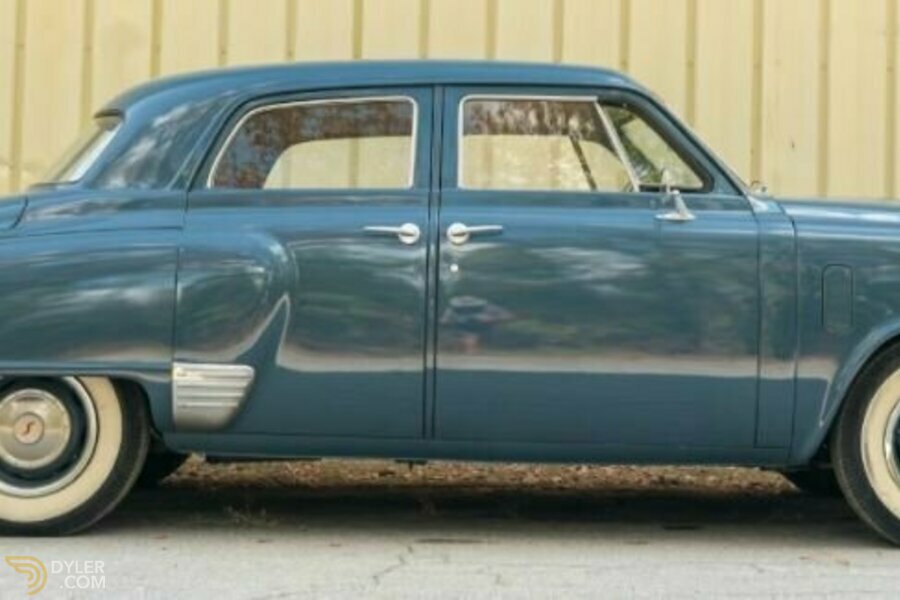
1949 Studebaker Champion. Lots of additional photos available.
Under the hood, it housed a 169.6 cubic-inch L-head inline-six engine producing 80 horsepower, paired with a three-speed manual transmission. The Regal Deluxe trim added chrome accents and upgraded interior features. Studebaker built 24,328 Regal Deluxe four-door sedans like this one for the 1949 model year, each priced around $2,149.
The Champion was praised for its fuel efficiency and affordability, helping Studebaker recover from wartime production halts. It was also notable for being one of the first truly new postwar American cars, not just a rehashed prewar design. The 1949 model year introduced new bumpers and grille styling that enhanced its visual appeal. Studebaker described it as "a dramatic new version of the new vision, the new ride, the flight-streamed new look that Studebaker originated."
Finished in Concord Blue paint over tan vinyl upholstery, this Regal Deluxe features a chrome bumper and accents, along with an upgraded interior. It is powered by a 169.9 cu-in L-head inline-six engine rated at 85 hp, with a column-shifted three-speed manual transmission.
The chassis number (G447920) decodes as: G – 1949 Champion (8G series), 447920 – unique serial number. It is titled in the State of Texas. The odometer shows 54,817 miles.
Features include suicide doors with handles facing each other, a split windshield, multi-pane wraparound rear window, bench seats front and rear, a two-spoke steering wheel, and a dash-mounted interior rearview mirror. A dealer-installed directional signal kit is on the steering column. The speedometer reaches 100 mph with backlit gauges for oil, temperature, gas, and amps. The wheels are blue-painted with Studebaker hubs and 6.70-15 wide whitewall tires.
Known imperfections include paint chips on the body and wheels/rims, pitting and scratches on chrome, a missing heater knob (not needed in warm-weather states, replacements available), a steering wheel that has separated into pieces, and residue on vent windows.
The vehicle was serviced in January 2026, including a cooling system flush and fill, repair and replacement of parking brake components, resealing of the rear differential pan cover, replacement of transmission seals and fluid, rewiring and repair of tail lights, brake light repairs, oil and filter change, gauge and dash light repairs, wiring harness reinstallation, belt tightening, trunk release hardware installation, NOS fuel sending unit replacement, carburetor recalibration, and distributor timing adjustments. It is now ready for the road.