1968 Jaguar 240 Overdrive
14 950 EUR- ModelJaguar 240 Overdrive
- Year1968
- ConditionUsed
- Body TypeSedan / Saloon
- Fuel TypePetrol
- Power98 kw (133 hp)
- Mileage90,195 km
- AddressEekstraat 2, 8375 HN Oldemarkt
- Country
- PublishedOct 23, 2026
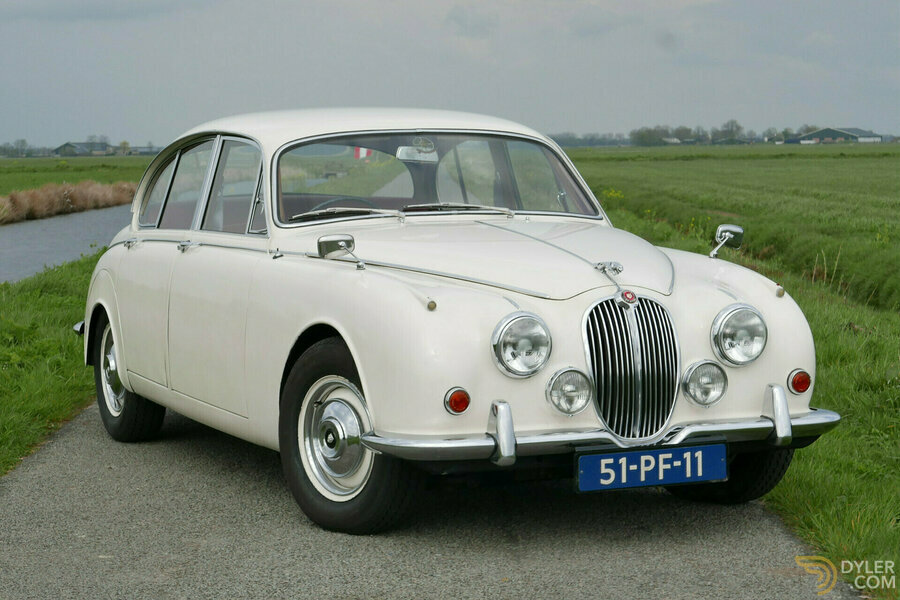


Description
Manufacturer: Carrosso Classic & Sportscars Eekstraat 2 8375HN OLDEMARKT, NL 0625351515 http://www.carrosso.com [email protected] below for information in English1968 Jaguar 240 Overdrive• Manual transmission with overdrive• Only 3 owners since new• History and documentation available• Distinctive history thanks to its prominent role in the opening of the “Gouwe Aqueduct” in 1981, with historical photos• Engine rebuilt• 6-cylinder engine with 133 pk and twin SU carburetors• Stiff chassis• Damage-free body• Ideal wedding carHISTORY/DOCUMENTATIONThis Jaguar 240 was delivered in the United Kingdom in 1968, like most of them. In 1977, the car was brought to the Netherlands, where the second owner owned it for no less than 45 years (1976–2021) and drove it in many wedding processions. The third owner purchased the car in 2021 but, due to health issues, has only been able to drive it 94 miles. In 2021, the car was in good mechanical condition. Currently, the car starts and runs, but it will need a service (including fluid changes and filter replacements). The car comes with extensive history and documentation, including invoices, old registration papers, and vehicle inspection reports. Also included are a workshop manual and a 2021 appraisal report (€34,000). Reportedly, the odometer reading is original. Of particular note is the prominent role the car played at the festive opening of the Gouwe Aqueduct in Gouda in 1981, for which historical photos are available. The official opening of the Gouwe Aqueduct on October 6, 1981, marked the national culmination of one of the most complex hydraulic engineering projects of the 1970s. This gigantic structure, which at the time—with a width of over 47 meters—was the widest aqueduct in the world, permanently resolved the notorious daily traffic bottleneck involving 70,000 vehicles on the A12. Several prominent figures attended this ceremonial opening, including Minister of Transport and Water Management Henk Zeevalking, who performed the opening ceremony by unveiling a Rijkswaterstaat flag. Other prominent figures, such as Gouda’s mayor and politician Ed Nijpels, were also present at the opening.EXTERIOR The car is finished in stylish Old English White. The Jaguar has never been fully restored and even retains some of its original paint. The body is in a damage-free, patina-covered condition with a few signs of wear but looks neat considering its age. Chrome trim and rubber seals have been replaced in the past. The chassis is in solid condition (see our extensive photo report for details). There are no visible signs of welding on the car. The wheels are fitted with chrome hubcaps and trim rings. The tires are Vredestein.INTERIORThe interior features attractive burgundy red Skai leather upholstery and is in largely original and good condition, with a few signs of wear. The upholstery on the seats, bench, and side panels is neat and free of major damage. The burl walnut woodwork could use some restoration. The gauges are complete and, as far as is known, in working order. The radio is an optional feature.TECHNICALThe engine was overhauled approximately 1,600 miles ago and converted to run on unleaded gasoline. In addition, the brakes and suspension have been overhauled. In 2021, the car drove, shifted, and braked well. Since then, the car has been out of service, so some maintenance is recommended. The car starts and runs, but it is recommended to, among other things, change the fluids, replace the filters, and have the car inspected for safety.The Jaguar 240 was powered by a 2.5-liter (2,483 cc) DOHC XK inline-six engine that, thanks to twin SU HD6 carburetors and an E-Type-derived straight-port cylinder head, delivered 133 pk and 202 Nm of torque. This power was transmitted via rear-wheel drive and a four-speed manual transmission (optionally available with overdrive or an automatic transmission), resulting in a top speed of 170 km/h and a 0-to-100 km/h sprint in just under 12 seconds. The chassis featured power-assisted Dunlop disc brakes all around, independent front suspension, a solid rear axle, and a modern 12-volt electrical system with an AC alternator, while the curb weight was reduced to approximately 1,440 kg thanks to the slimmer bumpersGENERALThe Jaguar 240 was a compact, luxury sports sedan produced from September 1967 to April 1969. The car served as the direct, more streamlined rebranding of its legendary predecessor, the Jaguar Mark II (2.4-liter), and was eventually succeeded in 1969 by the iconic Jaguar XJ6. A total of 4,446 units of the 240 rolled off the assembly line. An interesting fact is that the Jaguar 240, despite being marketed as a less expensive “end-of-line model” with cost-cutting measures such as Ambla faux-leather upholstery and the absence of the characteristic wooden picnic tables, was actually more powerful (133 pk) and faster than its predecessor, thanks to a new E-Type cylinder head and twin SU carburetors. In addition, this model is immediately recognizable by its strikingly narrower bumpers.1968 Jaguar 240 Overdrive• Manual transmission with overdrive• Only 3 owners since new• Full history and documentation available• Distinctive history thanks to its prominent role in the opening of the “Gouwe Aqueduct” in 1981, with historical photographs• Engine reconditioned• 6-cylinder engine with 133 pk and twin SU carburetors• Rigid chassis• Damage-free bodywork• Ideal wedding carHISTORY/DOCUMENTATIONThis Jaguar 240 was delivered in the United Kingdom in 1968, like most of them. In 1977, the car was brought to the Netherlands, where the second owner kept it for no less than 45 years (1976–2021) and drove it extensively in wedding processions. The third owner purchased the car in 2021 but, due to health issues, has only been able to drive it for 94 miles. In 2021, the car was in good mechanical condition. It currently starts and runs, but will require a service (including changing fluids and replacing filters).The car comes with a wealth of history and documentation, including invoices, old registration documents, and MOT reports. A workshop manual and a valuation report from 2021 (€34,000) are also included. The mileage is reportedly original. Of particular note is the prominent role the car played at the ceremonial opening of the Gouwe aqueduct in Gouda in 1981, for which historical photographs are available. The official opening of the Gouwe aqueduct on October 6, 1981, marked the national culmination of one of the most complex hydraulic engineering projects of the 1970s. This gigantic structure, which at the time—with a width of over 47 meters—was the widest aqueduct in the world, permanently resolved the notorious daily traffic bottleneck involving 70,000 vehicles on the A12. Various prominent figures attended this ceremonial opening, including the Minister of Transport and Water Management, Henk Zeevalking, who performed the opening ceremony by unveiling a Rijkswaterstaat flag. Other prominent figures, such as the Mayor of Gouda and politician Ed Nijpels, were also present at the opening.EXTERIORThe car is finished in stylish Old English White. The Jaguar has never been fully restored and even retains some of its original paintwork. The bodywork is in a damage-free, patina-covered condition with a few signs of wear, but is in good condition considering its age. Chrome trim and rubber seals have been replaced in the past. The chassis is in solid condition (see our extensive photo report for details). There is no evidence that any welding has ever been performed on the car. The wheels are fitted with chrome-plated hubcaps and trim rings. The tires are Vredestein.INTERIORThe interior features attractive burgundy red Skai leather upholstery and is largely original and in good condition, with a few signs of wear. The upholstery on the seats, bench, and side panels is neat and free from major damage. The burl walnut woodwork could use some restoration. The instrument cluster is complete and, as far as is known, in working order. The radio is an optional extra.TECHNICALThe engine was overhauled approximately 1,600 miles ago and converted to run on unleaded gasoline. In addition, the brakes and suspension have been overhauled. In 2021, the car was driving, shifting gears, and braking well. Since then, the car has been off the road, so some maintenance is recommended. The car starts and runs, but it is advisable to, among other things, change the fluids, replace the filters, and perform a safety check.The Jaguar 240 was powered by a 2.5-liter (2,483 cc) DOHC XK inline six-cylinder engine which, thanks to twin SU HD6 carburetors and an E-Type-derived straight-port cylinder head, produced 133 pk and 202 Nm of torque. This power was transmitted via rear-wheel drive and a four-speed manual transmission (optionally with overdrive or an automatic), resulting in a top speed of 170 km/h and a 0–100 km/h sprint in just under 12 seconds. The chassis featured power-assisted Dunlop disc brakes on all four wheels, independent front suspension, a rigid rear axle, and a modern 12-volt electrical system with an AC alternator, while the curb weight was reduced to approximately 1,440 kg thanks to the slimmer bumpersGENERALThe Jaguar 240 was a compact, luxury sports sedan produced from September 1967 to April 1969. The car served as the direct, more streamlined rebranding of its legendary predecessor, the Jaguar Mark II (2.4-liter), and was eventually succeeded in 1969 by the iconic Jaguar XJ6. A total of 4,446 units of the 240 rolled off the production line. An interesting fact is that the Jaguar 240, despite being marketed as a cheaper “end-of-run” model with cost-cutting measures such as Ambla imitation leather upholstery and the absence of the characteristic wooden picnic tables, was actually more powerful (133 pk) and faster than its predecessor, thanks to a new cylinder head from the E-Type and twin SU carburetors. Furthermore, this model is instantly recognizable by its strikingly narrower bumpers.
