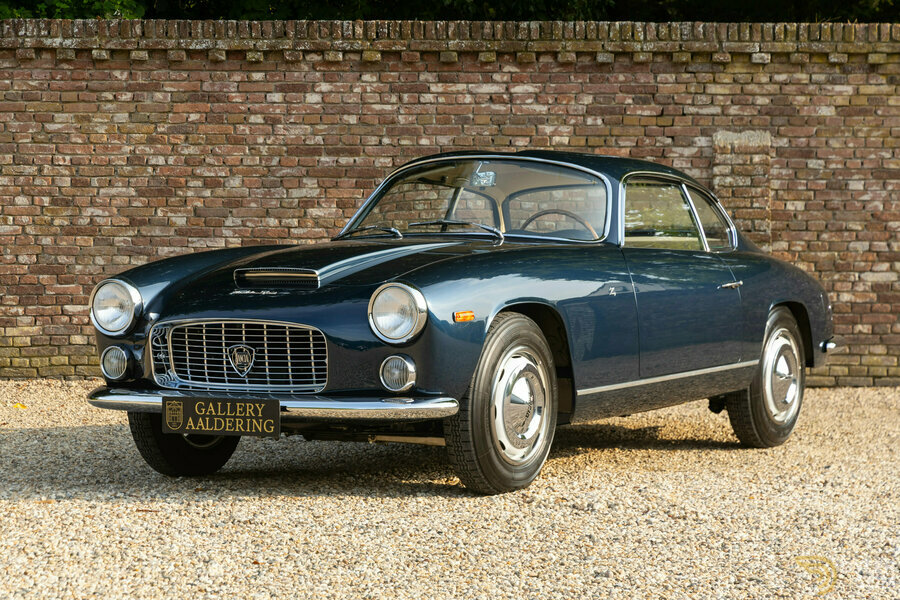
In the early 1960s, Lancia built cars in Turin with a workforce of about 5,000 employees. The factory operated six days a week, practically around the clock. Despite this, only about 200 cars were produced each week, emphasizing quality over quantity. The engineers focused on perfecting each component, often testing parts extensively to ensure top performance.
During that period, the Flaminia was Lancia’s top-of-the-line model. It was an expensive, technically sophisticated car designed for those who appreciated complex solutions. For the price of one Flaminia Berlina, you could buy about ten Fiat 500s in Italy, but none of those cars had a transmission tested separately at 2,000 RPM for two hours. The Flaminia’s transmission and differential were mounted together at the rear, with their own oil pump. Each transaxle was tested for two hours; if it did not run silently, it was rejected rather than repaired.
Lancia manufactured its own shock absorbers and paid meticulous attention to suspension parts. Castings were finished carefully, tested for hardness, and stamped with the inspector’s mark. This level of craftsmanship approaches art. The chassis was then sent to Zagato, where it was fitted with a lightweight aluminum body featuring the iconic Double Bubble roofline. Two bulges above the occupants maintained a low roofline while ensuring comfort.
The Flaminia Sport was a compact, aerodynamic two-seater with a long nose and short rear end, with lines that change from every angle. Enzo Ferrari is said to have called the Flaminia Sport one of the best-handling cars ever built. Its handling was widely admired, and this particular example exemplifies that reputation.
In 1961, Giulio Cabianca and Piergiorgio Provolo drove a Flaminia Sport Zagato to second place in the Mille Miglia. The model also achieved success in the GT class at major Italian races. This example is equipped with a 2.5-liter V6 engine paired with a manual transaxle. While not powerful by modern standards, its combination of low body, light weight, balanced weight distribution, and carefully engineered chassis creates a harmonious driving experience. It offers sporty comfort with perfectly matched gear ratios and responsive steering.
This Flaminia has been restored with meticulous attention to detail. The aluminum body is in excellent condition, complemented by a dark blue exterior and a light beige interior. The finish is flawless throughout. Having already won a concours d’élégance, this car exemplifies high-quality restoration and craftsmanship. A 1961 Lancia Flaminia Sport Zagato 2.5, featuring an aluminum Double Bubble body, in concours-level condition.