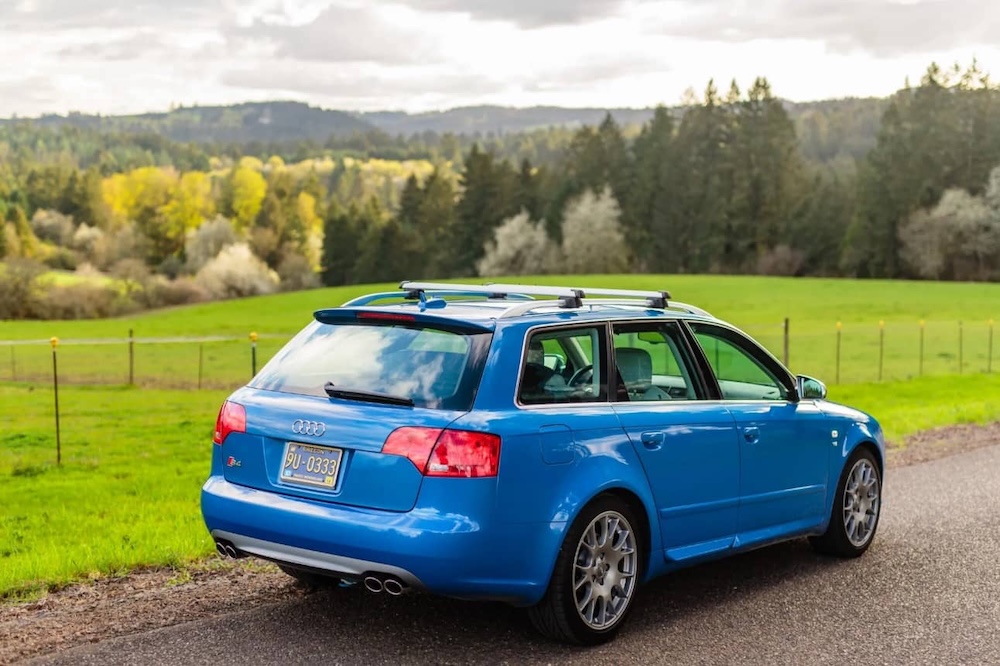
There’s a certain kind of person who falls for a car like the Audi S4 from the times when they had a V8. Not the casual commuter or the badge-chaser, but someone who finds love in complexity and who doesn’t mind either grease under the fingernails or spending some money at the service garage. The B6 and especially the later B7 S4 is a contradiction on wheels, a machine that demands patience and a touch of masochism. And for those who get it, it’s a love affair that borders on the irrational.
Launched in 2005, the B7-generation S4 was Audi’s most accessible gateway into the world of S and RS performance. It was the last of its kind: a compact executive car with a naturally aspirated V8 shoehorned into a chassis originally designed for four-cylinder diesels. It was a time when VW Group still flirted with madness. The result was a 4.2-liter, 40-valve, all-aluminum V8 producing 344 horsepower and 410 Nm of torque, shared with the Audi RS4 and Lamborghini Gallardo (in spirit).
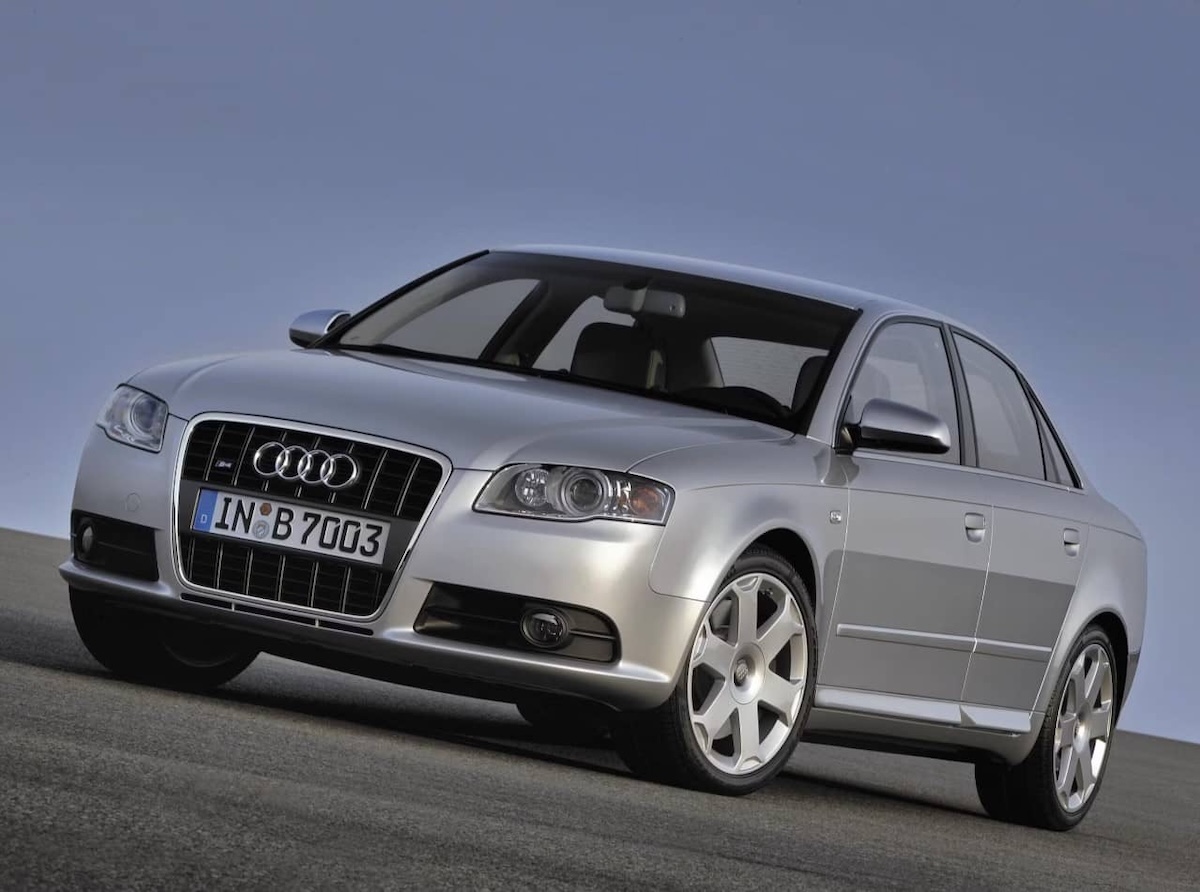
You could have it with a six-speed manual or a ZF 6HP automatic, the latter found in everything from Jaguars to Aston Martins. The S4 came with Recaro bucket seats, silver mirror caps, bigger brakes, a sport-tuned suspension and a palette of colors that included the iconic Imola Yellow and Nogaro Blue. It was, on paper, the perfect stealth performance car: a family-friendly sedan or wagon that could outpace most things on the autobahn.
But then reality sets in
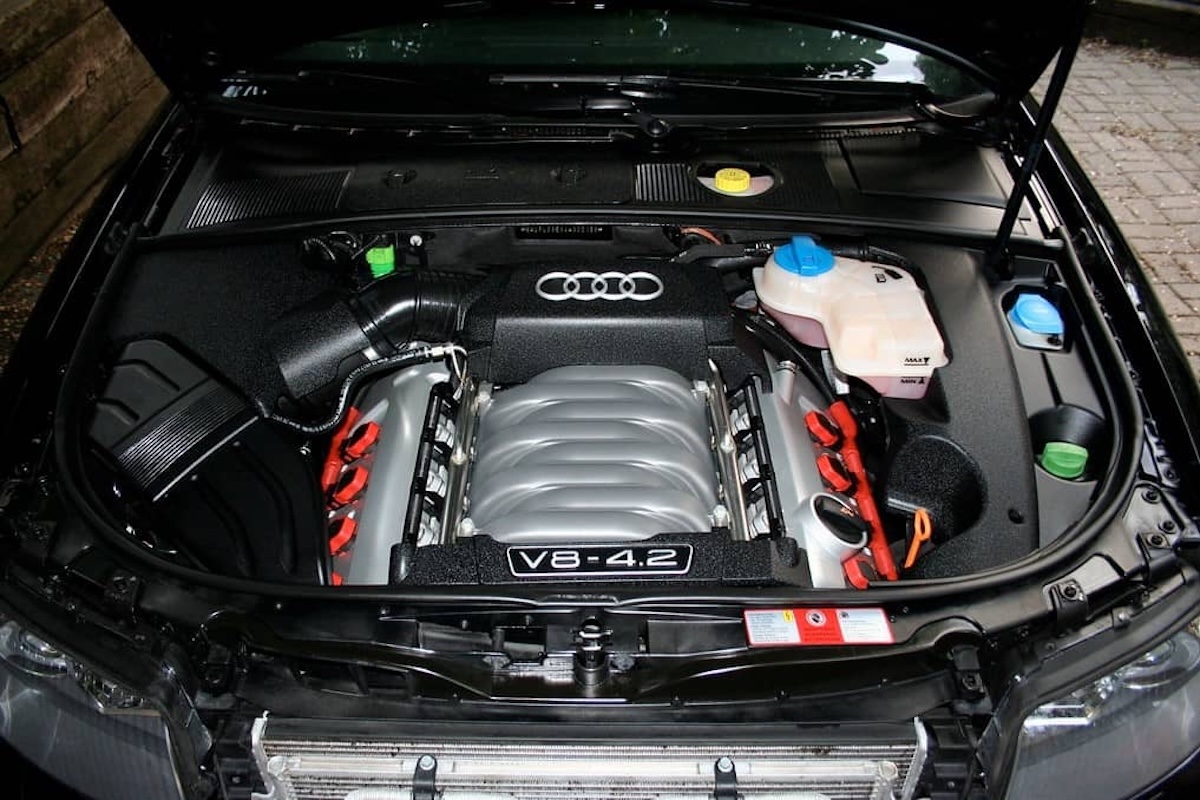
Because loving the B7 S4 means living with its flaws and there are many. The engine, for all its great sound and character, is mounted so far forward it feels like it’s trying to escape the engine bay. This layout, a legacy of Audi’s front-wheel-drive systems, means that even basic maintenance tasks often require removing the entire front clip. Over time, this repeated disassembly leads to misaligned panels and rattling trim at the front.
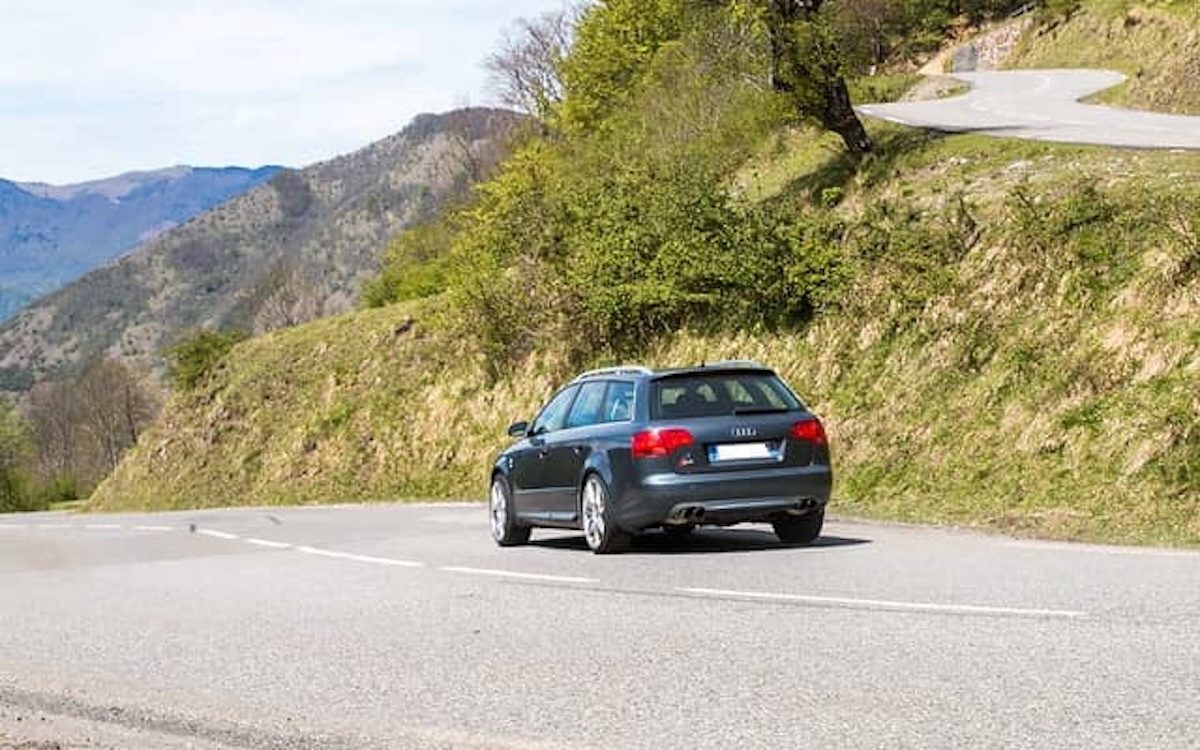
Then there’s the timing chain and other technical maintenance. The chain is positioned at the rear of the engine and it‘s a ticking time bomb that requires engine-out surgery to replace. And sadly, they do have to be replaced, the engine being high-stess and high-performance. Owners speak of it in hushed tones, like a family curse. Only some get lucky. Still, when it runs, it sings. The V8 has the same number of valves as a Ferrari 355. The throttle response is immediate, the power delivery is linear and the soundtrack is deep, metallic and addictive. It’s the kind of engine that makes you take the long way home, just to hear it echo off the trees.
The RS4 of the same generation, hailed as the halo car of Audi’s mid-2000s lineup, shares much of the S4’s DNA. It too carries the 4.2-liter V8 with the same high-revving character that borders on manic. But the engine’s placement, the rear-mounted timing chain, and the labor-intensive maintenance are all familiar headaches. It’s only a better performer, but not immune to the compromises of its architecture.
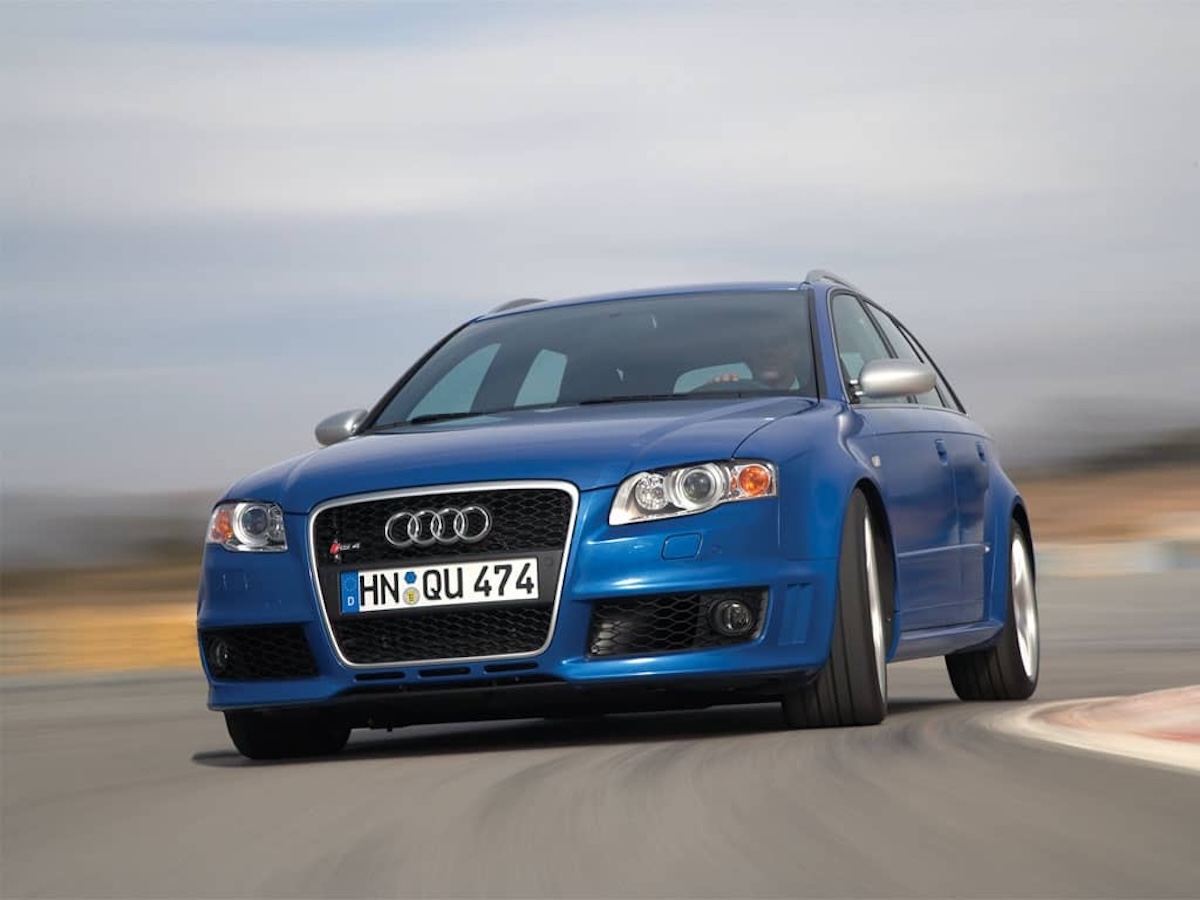

But the rest of the car struggles to keep up
It’s a compact sedan, but weighs 1,700 kilograms. It’s a dense thing. And despite the power, it feels heavy off the line and it’s noticeably slower than a contemporary BMW E46 M3, which makes has two fewer cylinders and a lot less mass. The suspension, updated from the B6 generation with components borrowed from the A6, is firm but not particularly communicative. On uneven roads, it thumps and crashes, and the steering is numb. The Quattro system and its 60:40 rear bias does its best to mask the car’s front-heavy nature. In fast corners, it feels neutral and planted. But once pushed harder, understeer creeps in quickly. The Audi S4 does not reward aggression, it prefers smoother inputs and long sweep corners and also a driver who understands the car‘s rhythm. Inside, the S4 is peak early-2000s Audi: solid plastics, sober, but slightly too adult. The Recaro seats are supportive but unforgiving, especially for rear passengers who’ll find legroom tighter than a glovebox.
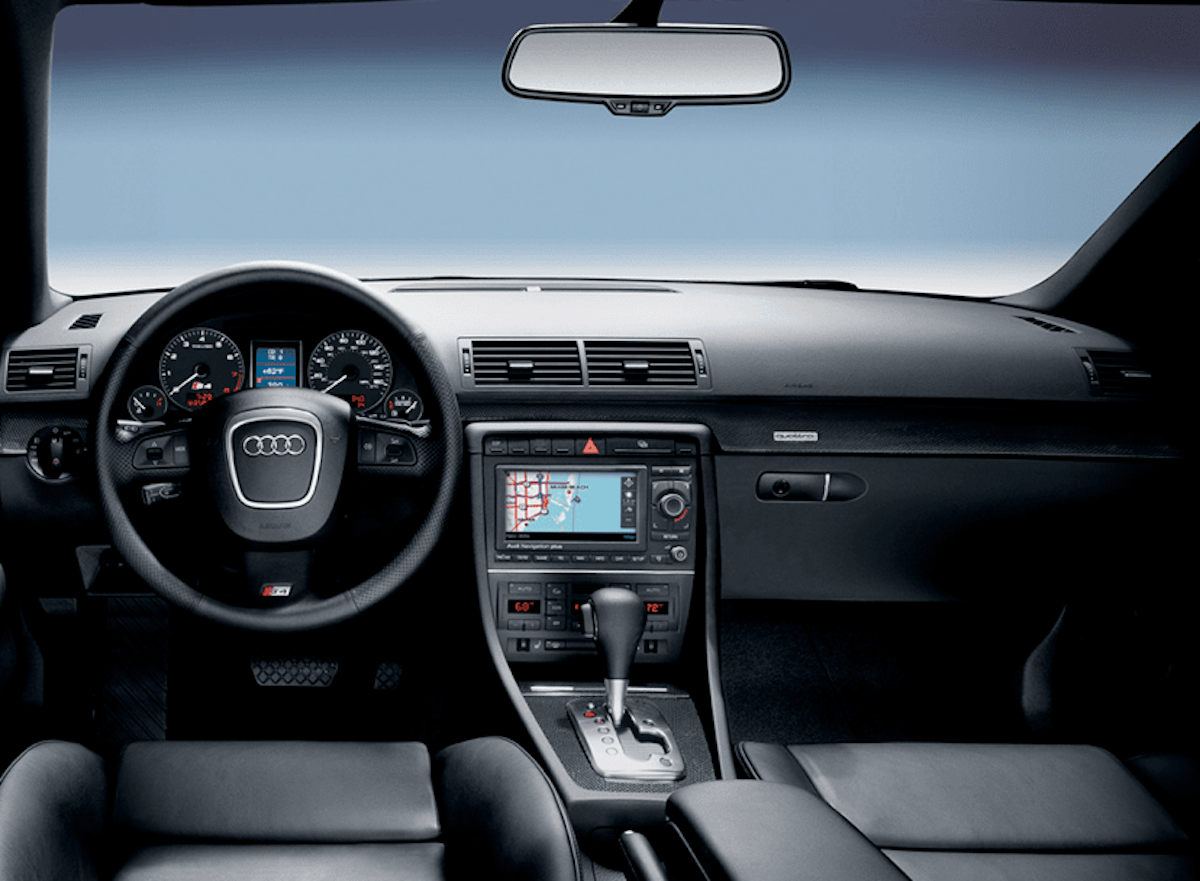
The wild times of German engineering
And yet, for all its shortcomings, the B7 S4 has a charm that’s hard to quantify. It’s a relic from a time when carmakers were still experimenting, still willing to take risks. This was the era of the W12 Phaeton, the V10 Touareg and the W8 Passat. Audi’s decision to stuff a high-revving V8 into a midsize family car is now a phenomenon and something we will not see in the future. And that’s what makes it special, even though it’s not a perfect package.
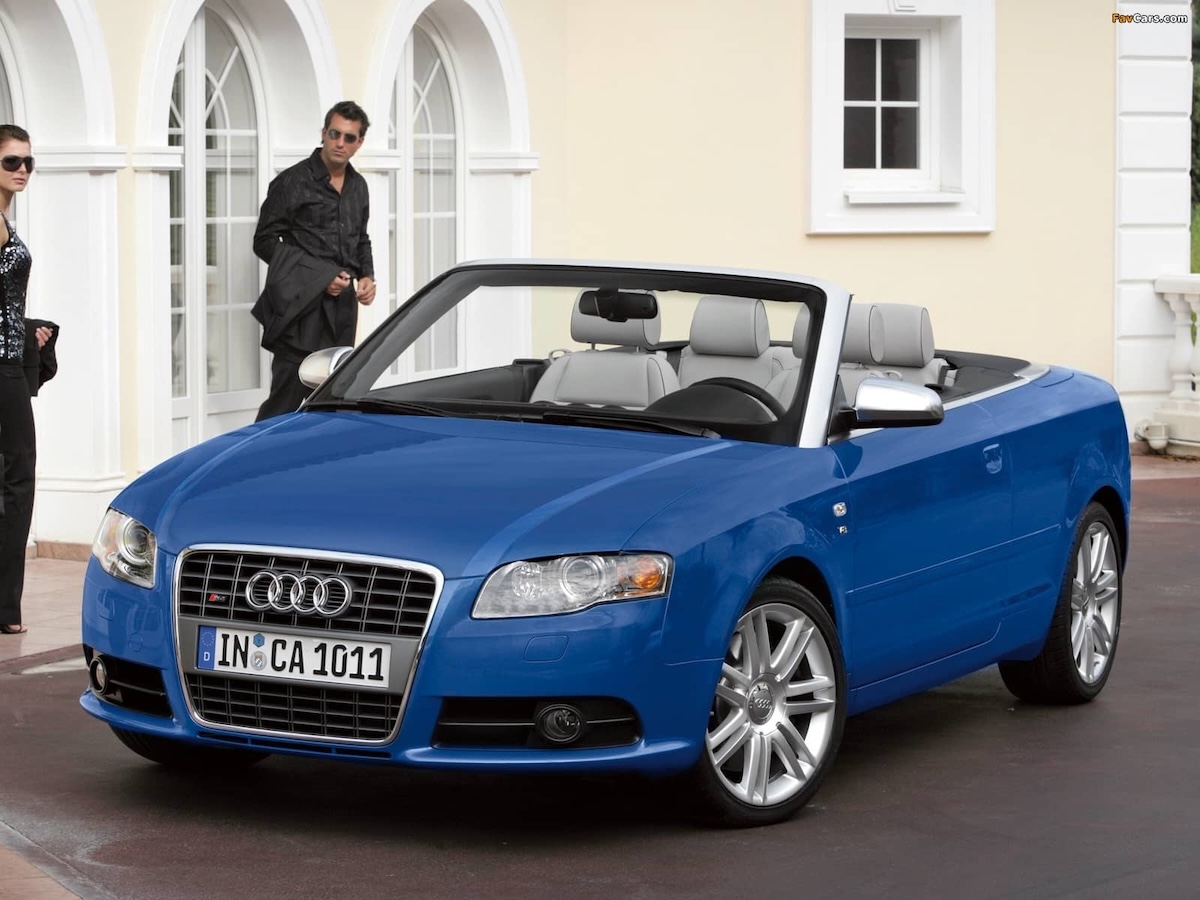
Today’s performance Audis are faster, more refined and infinitely easier to live with. Turbocharged engines, dual-clutch gearboxes and adaptive dampers have made them more capable but also more clinical. By contrast, the old naturally aspirated Audi S and Rs stuff is raw and mechanical. It asks something of you and demands attention, maintenance and a willingness to accept its imperfections. For those who connect with it, find the right road, drop a gear and let that V8 howl, most of it is forgiven. It’s also soulful, engaging and utterly unique. In a world of homogenized performance, that counts for something. Not everything that glitters is gold. But sometimes, tarnished silver is far more interesting.
---
Start your adventure by exploring our wide range of Car Categories. Then, step into the Classic Passion Shop and discover unique products from our partners — must-haves for every true enthusiast looking to elevate their collection!