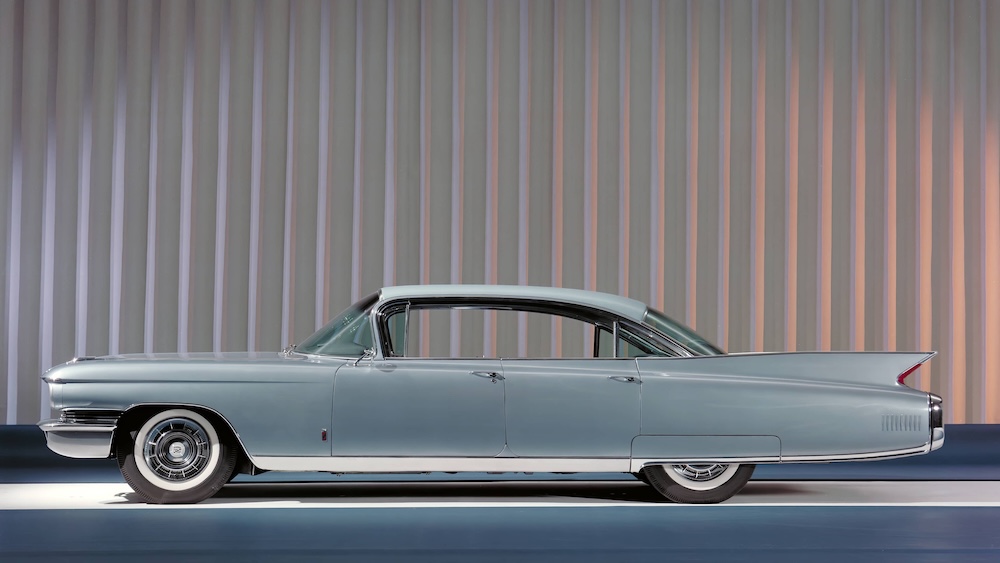
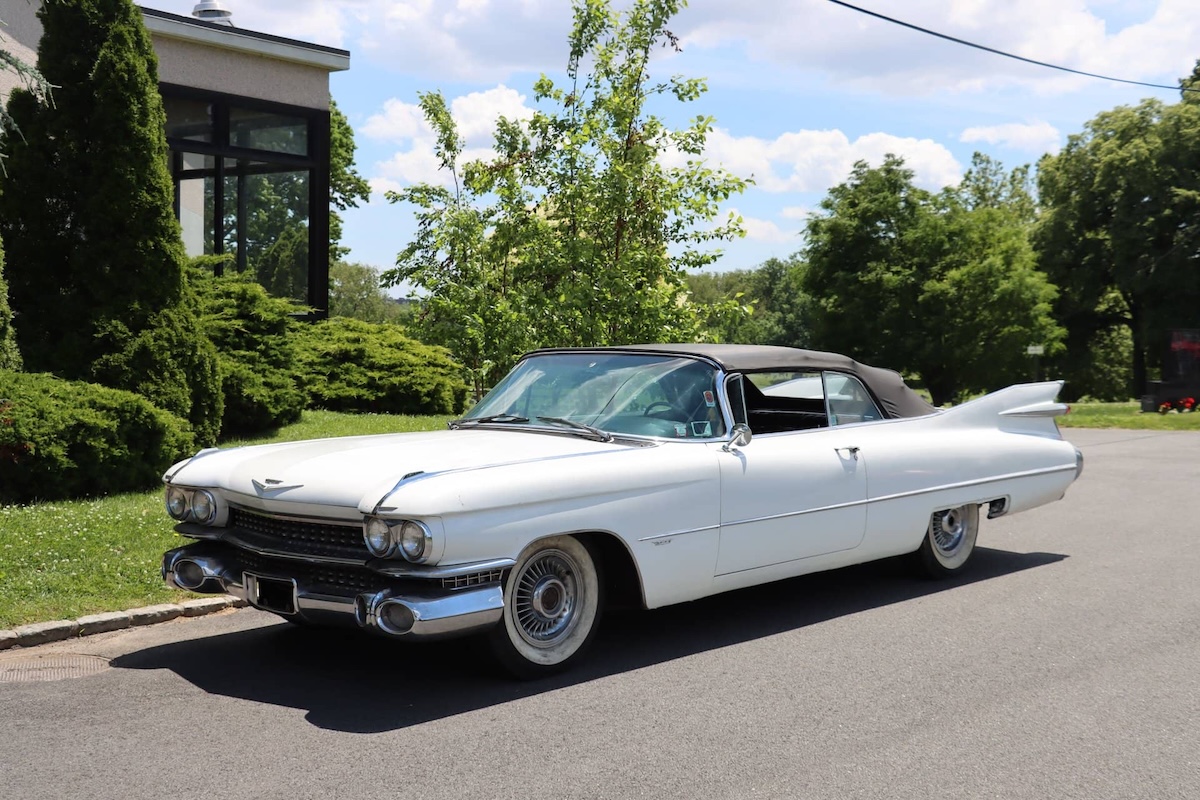
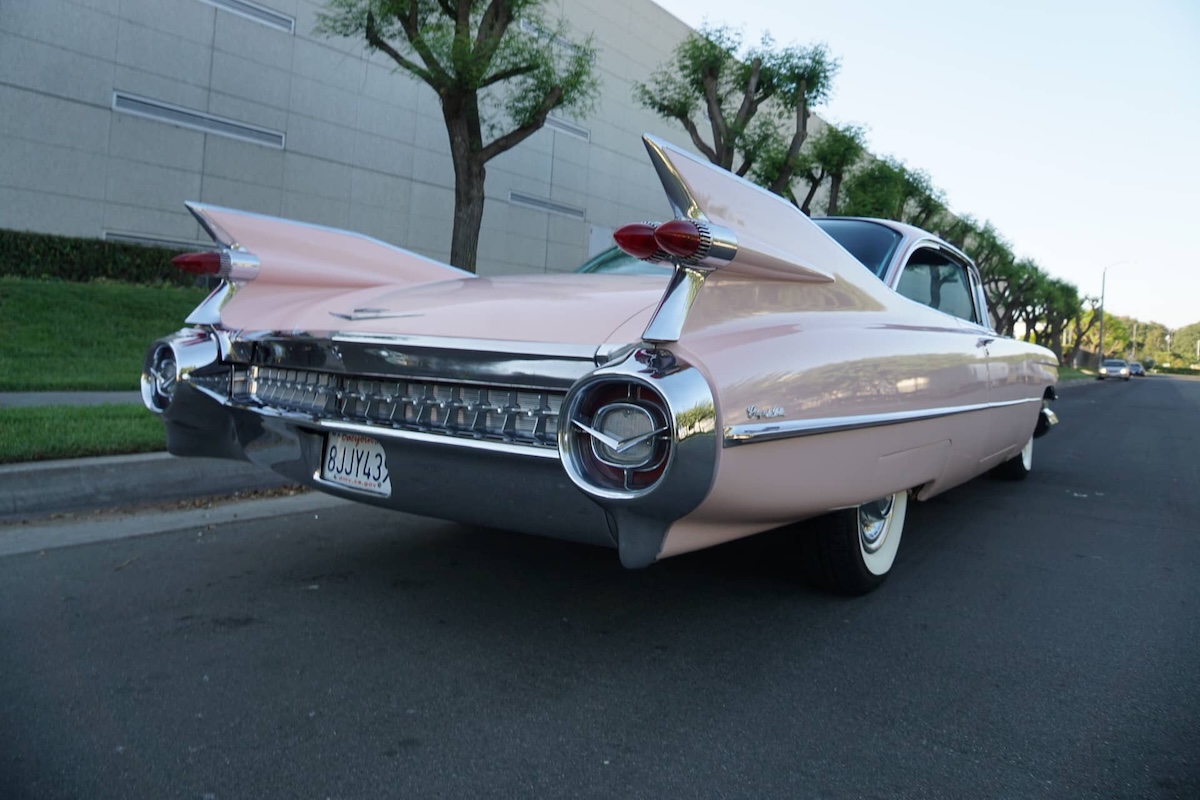
There are some cars remembered because they were good. Some because they were beautiful. And then there are cars remembered because, at exactly the right moment in history, they became monuments to whatever madness was in the air. The 1959 Cadillac was one of those cars. Enormous, theatrical, over-decorated and gloriously unashamed. It was optimism cast in chrome.
Yet the funny thing about Cadillac is that the car which followed it, the 1960 model, might actually be the better design. Less famous and less cartoonish, but more elegant and cohesive. By the late 1950s, American car design had become a competition in height, length, ornament and bravado. Chrysler had shocked the industry in 1957 with Virgil Exner’s Forward Look cars, wearing fins of astonishing proportions. Cadillac was not about to be outdone. This was Cadillac, after all, the self-appointed Standard of the World.
From Brash to Sharp
Designer Dave Holls, who would later become an important figure at Buick, Chevrolet and GM’s Opel studios, helped create the 1959 Cadillac’s unforgettable form. But even he was never entirely at peace with it. The car became iconic, especially from behind, but not exactly beautiful in many people's eyes. It was dramatic beyond reason, which is precisely why it worked.
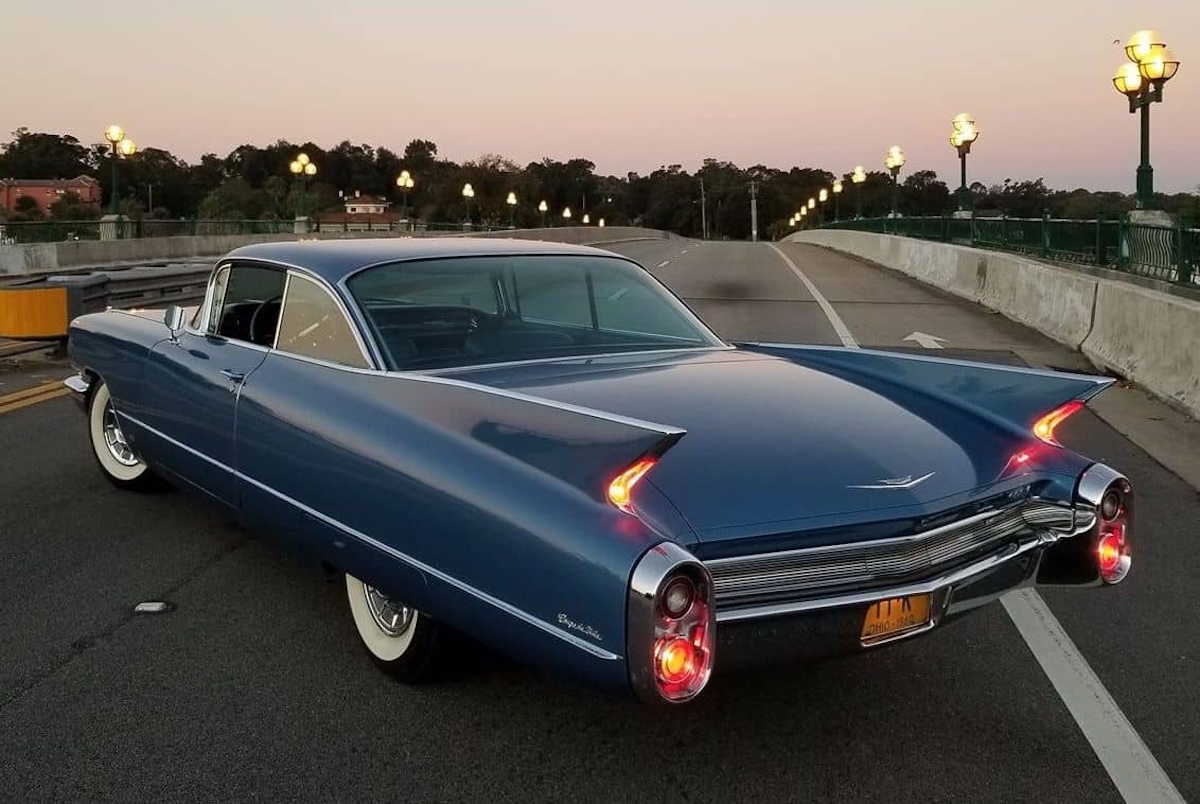
For 1960, the fins remained, still pointed enough to make pedestrians nervous, but they no longer looked as though they were trying to receive radio signals from Mars. The whole car became more composed and quietly more expensive-looking.
A clue to this change had already appeared on one of Cadillac’s most exclusive models: the 1959 Eldorado Brougham. The earlier 1957–58 Brougham is the one people tend to remember, with its astonishing equipment, stainless-steel roof, memory seats and even a set of cocktail glasses. But Cadillac also produced a later Eldorado Brougham in 1959 and 1960, designed in-house but built in Italy by Pininfarina. It was ruinously expensive, costing around $13,000 when new, which equates to serious luxury-car money today. It did not sell in meaningful numbers, but it carried an important design lesson: restraint could still look luxurious.
Compared with the regular 1959 Cadillac, the Brougham had calmer rear fins and a different roofline. It had less of the American rocket-age carnival and more of that continental tailoring. Not exactly Italian, because no Italian would make a Cadillac this enormous, but you could feel the attempt. The 1960 Cadillac borrowed some of that thinking. The fins came down, the jewellery became more disciplined and the car stopped doing jazz hands at every corner.
Look at the front and the difference is immediate. The 1959 model had bulbous parking lamps and a heavy bumper arrangement that made the nose look unnaturally bulky. On the 1960 car, everything is cleaner. The grille stretches almost wall-to-wall, making the car appear even wider. The crest and V emblem are pulled horizontally, almost as though someone stretched them across a drawing board. The whole front end stopped looking so swollen.
Then you move along the side and remember why General Motors design in this period deserves genuine respect. These were not simply big slabs with chrome glued to them. There is sculpture here. The beltline flows rearwards and gradually becomes the fin instead of the fin simply appearing. Creases begin near the headlamps and dissolve along the front wings. The surfaces catch the light in a way that makes the car appear lighter than it has any right to be.
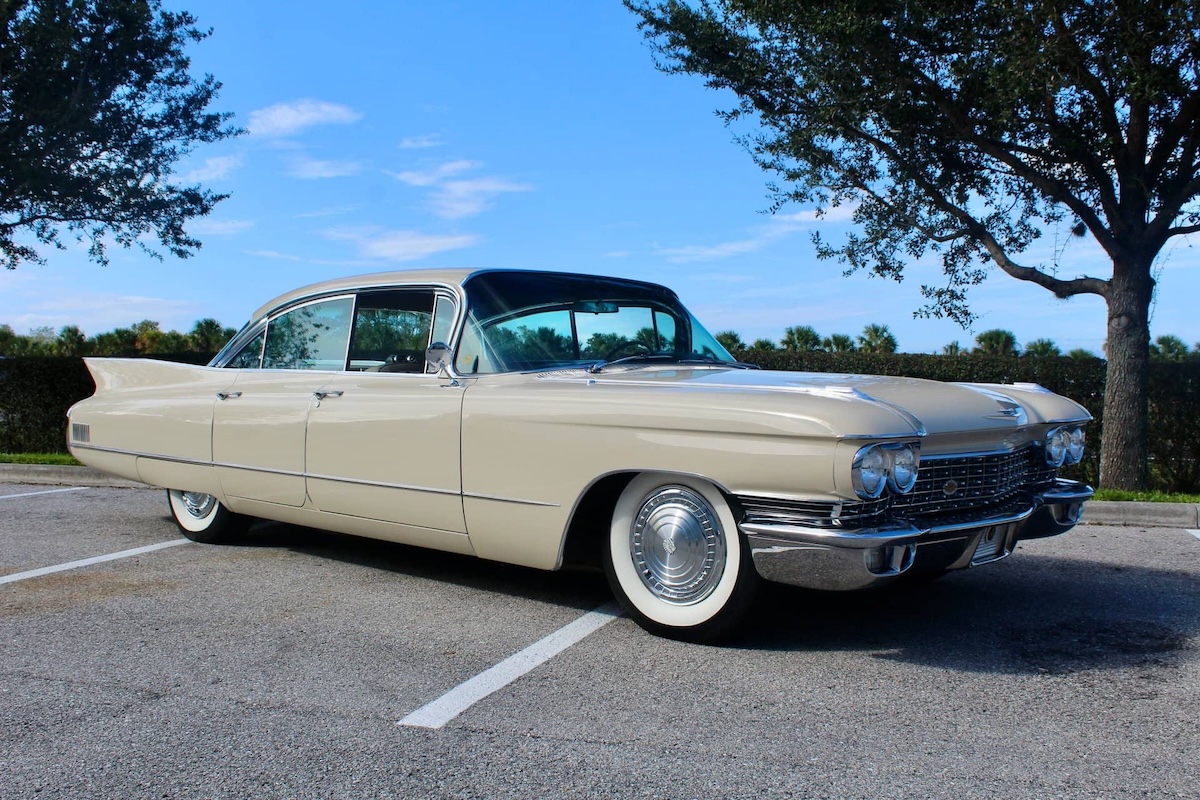
The A-pillar is a small piece of theatre by itself. Many cars of the era had wraparound glass, but the Cadillac’s pillar curves and tapers in a way that feels more hand-drawn. It gives the cabin a lightness that contrasts beautifully with the enormous body. From the side, the rocker panels tuck in just enough to make the car appear slimmer.
At the rear, the 1960 Cadillac still knew how to make an entrance. The fins remain sharp, dramatic and unmistakably Cadillac, but they are better integrated than before. The tail lamps are built into the fins themselves rather than sitting there like glowing jet exhausts. Auxiliary lamps and reverse lights sit vertically in the bumper, a treatment that disappeared after 1960. Ambulance builders apparently liked this arrangement because the later horizontal lamp design introduced in 1961 made rear-door conversions more difficult. It is a small but fascinating example of how styling decisions often had unexpected engineering consequences.
The Interior
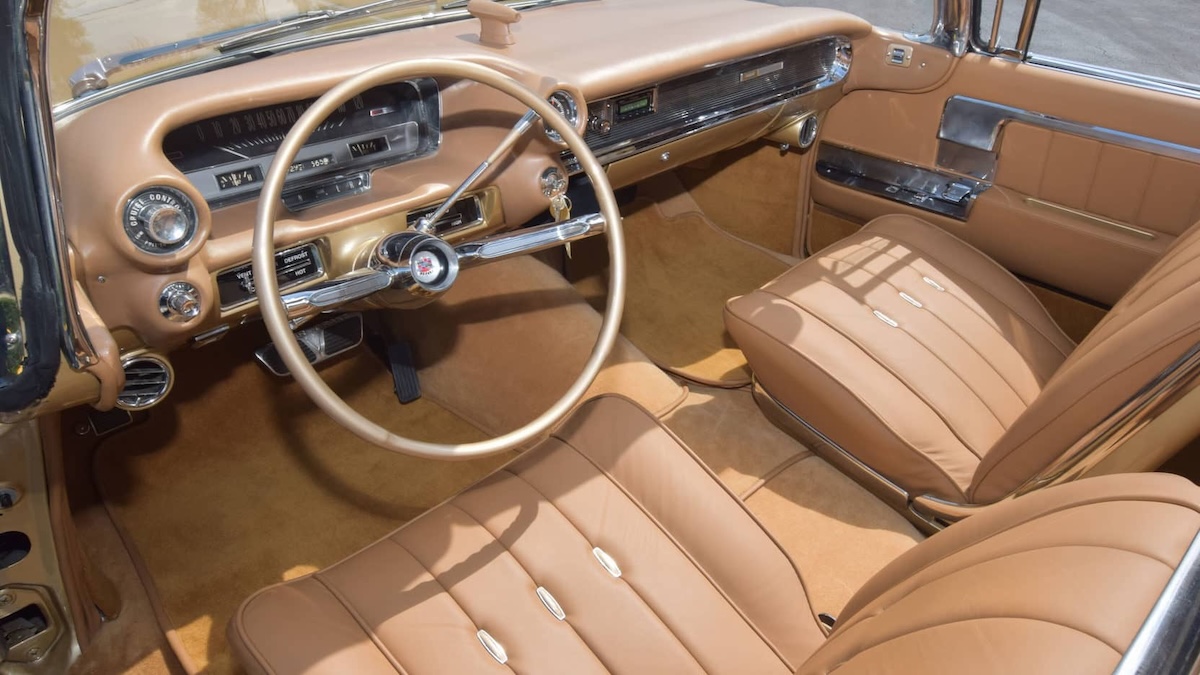
Inside, Cadillac did what Cadillac did best. The dashboard is full of brightwork and symmetry. The two-spoke steering wheel, with its recessed centre hub, belongs to that moment before collapsible steering columns became the norm and when safety was arriving but had not yet fully arrived. The cloth patterns are rich, durable and decorative. A Cadillac interior of this era was simply the place to be.
There are delightful period quirks too. Air conditioning and heating controls were still separate systems because the fully integrated HVAC world had not yet arrived. You switched one off before using the other. Cadillac would later introduce automatic climate control in 1964, briefly ahead of the rest of General Motors, but in 1960 everything remained mechanical and separate.
And perhaps this is why the 1960 model deserves more recognition. It is still undeniably the Standard of the World: luxurious, feature-filled and larger than life. But it also captures the moment when American excess rediscovered restraint. The fins remained. The chrome remained. The V8 remained. Yet the car had finally learned some manners. And that subtle shift would help shape American car design for the rest of the 1960s.
---
We invite you to start your journey by exploring our broad selection of Car Categories. After that, feel free to visit the Classic Passion Shop, where you’ll find unique products from our partners — thoughtful picks for every enthusiast looking to add something special to their collection.