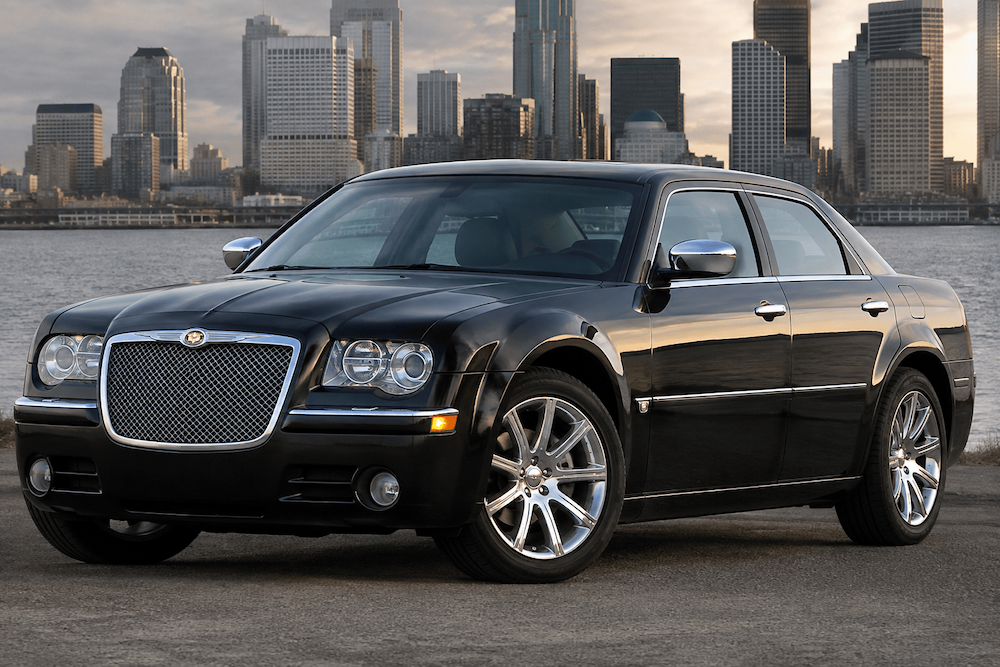
When the Chrysler 300C arrived in Europe in 2004, it came with confidence and a kind of American theatricality that immediately set it apart from the established European competition. For many buyers, it was something new and slightly unexpected: a large rear-wheel-drive sedan from across the Atlantic, wearing chrome and speaking a design language that felt both nostalgic and bold.
The Chrysler 300, born during the DaimlerChrysler era, quickly found its audience in North America. In Europe, however, it occupied a different role. It stood alongside Jeep SUVs, the PT Cruiser and other Chrysler models as an alternative for buyers who wanted something different from the German mainstream. Built on the LX platform and later continuing under the Stellantis umbrella, the 300C remained in production for two decades.
Returning to Bold Design
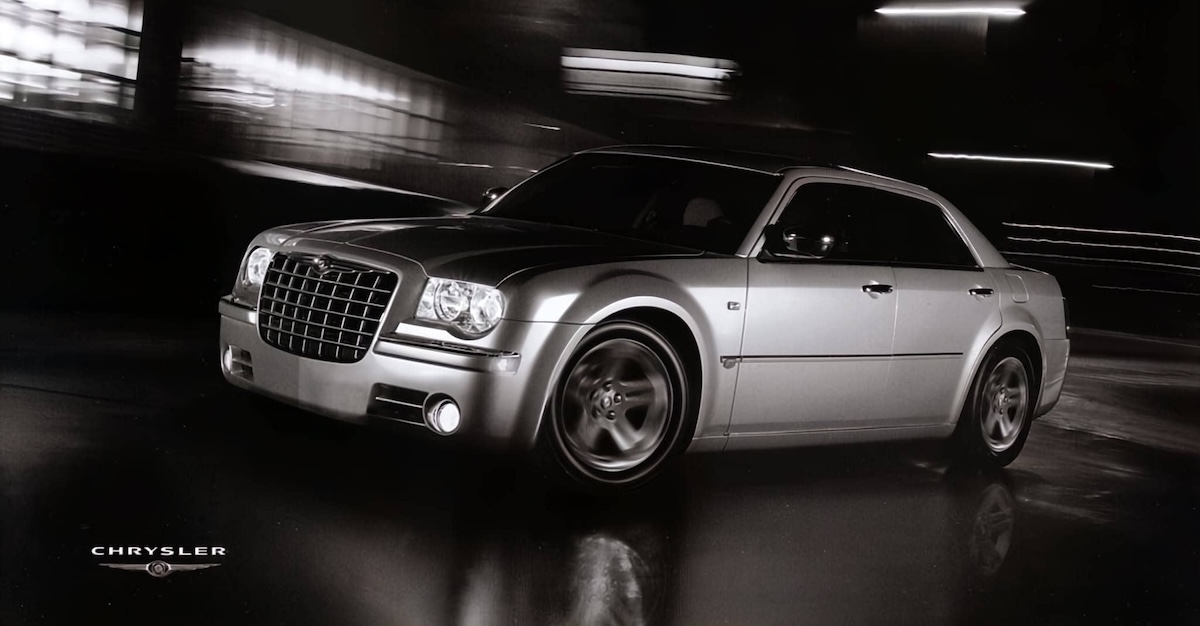
The design of the 300C followed a clear retro philosophy. In the early 2000s, many manufacturers were looking backwards for inspiration. It was not only the Mini or the New Beetle that embraced this trend. The Ford Mustang, Chevrolet Camaro, Ford Thunderbird and BMW Z8 all reflected the same movement. The past had suddenly become fashionable again.
The Chrysler 300C interpreted the trend in its own way. The front end was upright and formal, the grille was large and imposing, while the headlamps echoed post-war Chrysler styling from the era when American industrial optimism was at its peak.
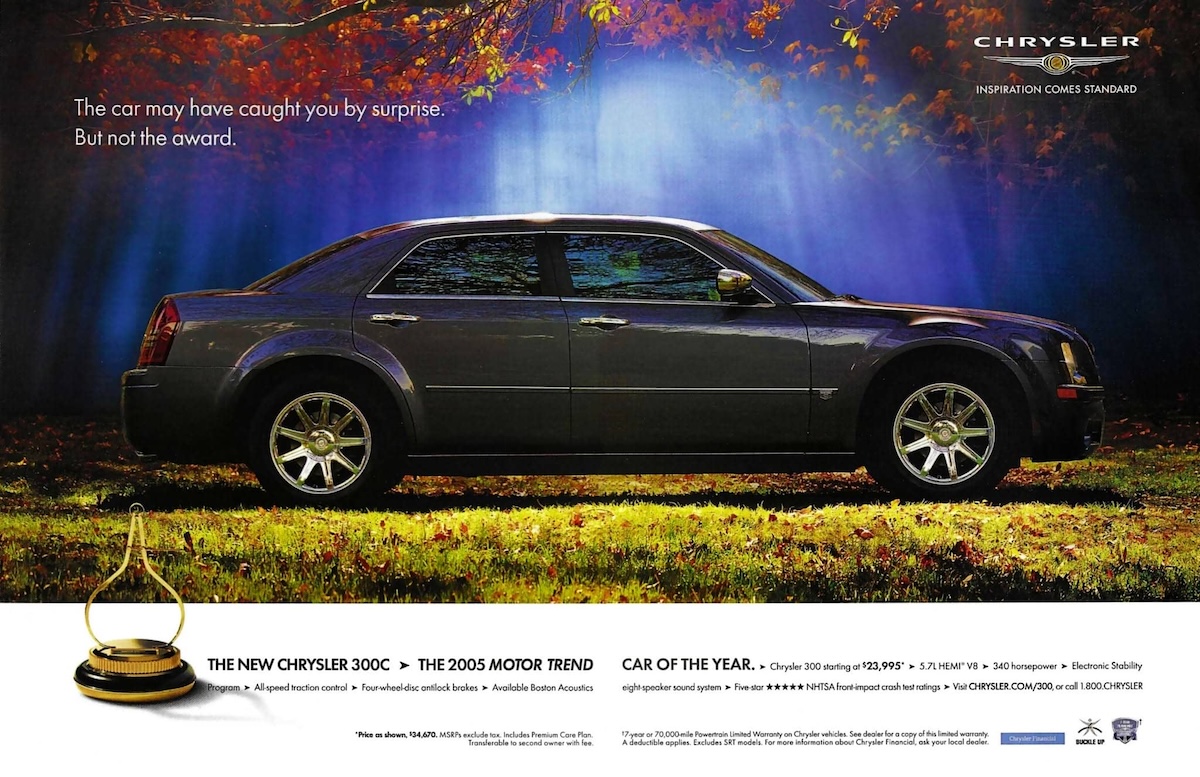
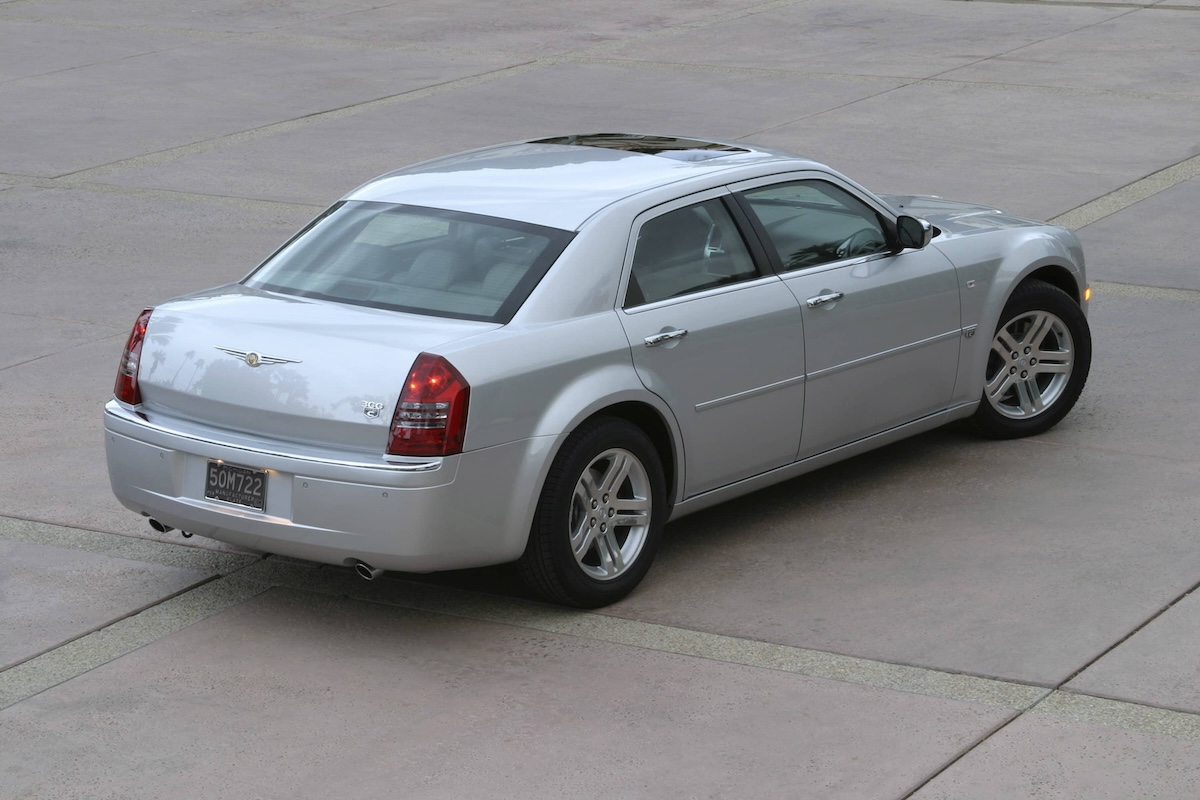
Inspired in part by the Chrysler Chronos concept, the descending roofline, high shoulder line and muscular rear profile created a monolithic silhouette. The car looked heavy because it wanted to look heavy. It projected strength rather than elegance.
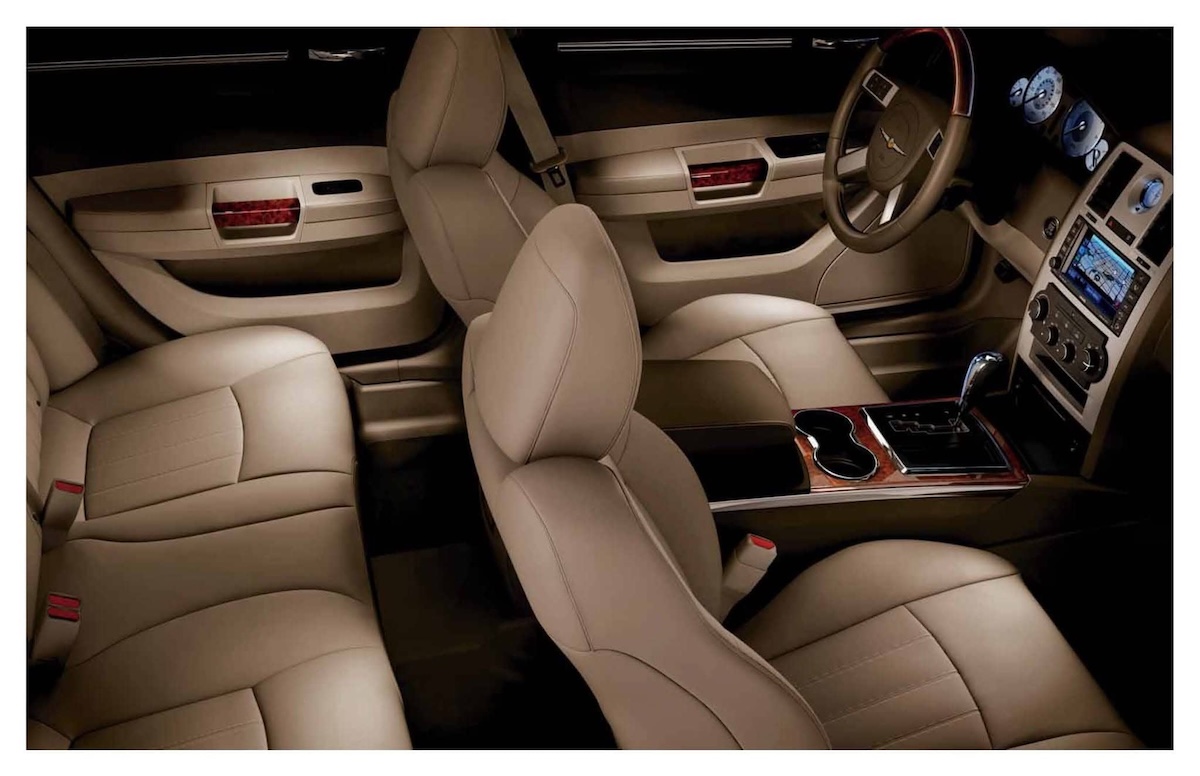
Inside, that same philosophy continued. The side windows were unusually small, giving the cabin a cocoon-like atmosphere. The dashboard, switches and controls felt substantial and almost industrial in character. It was an unusual approach for a European executive saloon of the period and helped give the 300C its unmistakable personality.
Engineering Under Mixed Heritage
Technically, the Chrysler 300C combined American and European engineering. Many structural ideas and components originated during the DaimlerChrysler partnership. Diesel versions relied heavily on Mercedes-Benz technology, including the well-known OM642 3.0-litre V6 turbo diesel.
The petrol V6 and HEMI V8 engines, meanwhile, remained unmistakably Chrysler. The relationship with Mercedes engineering is often misunderstood. The suspension was not simply transplanted from an E-Class. Instead, Chrysler adapted and re-engineered many concepts for its own LX platform. The result was neither a traditional American cruiser nor a typical European executive saloon, but something comfortably in between.
Driving Experience
On the road, the 300C immediately revealed its true identity. It was a large, heavy sedan weighing close to two tonnes in many configurations. That weight was always noticeable, especially under heavy braking or during rapid direction changes.
Ride comfort, however, was excellent. The suspension absorbed broken surfaces with ease, particularly on poorer roads where the Chrysler often felt as though it floated above imperfections. Drivers accustomed to firmer German suspensions sometimes interpreted this softness as a lack of precision.
The braking system proved to be one of the weaker aspects in long-term ownership. Constantly controlling nearly two tonnes placed considerable stress on discs and pads, meaning regular maintenance was essential.
Engines with Consequences
The stars of the range were undoubtedly the HEMI V8 engines. They delivered effortless torque and the unmistakable soundtrack buyers expected from an American sedan. Performance always felt relaxed rather than frantic.
However, these engines rewarded careful ownership. Their lubrication system demanded frequent oil changes, as neglect could lead to accelerated wear, particularly around the rear cylinders and valvetrain. Owners who followed strict maintenance schedules generally enjoyed excellent reliability, while neglected examples often became expensive projects.
The diesel models offered a very different character. Thanks to Mercedes-Benz engineering, they combined respectable performance with considerably lower fuel consumption, making them especially popular across Europe.
Comfort, Electronics and Theatre
When new, the Chrysler 300C impressed buyers with a generous level of equipment. Automatic wipers, premium audio systems, electrically adjustable pedals and comprehensive onboard computers all helped it compete with established European executive cars.
Some of its features felt almost theatrical. The doors closed with a satisfyingly heavy thud, while the boot lid shut with the kind of mechanical force usually associated with much larger American luxury cars. Inside, the cabin created a remarkable sense of isolation from the outside world, reinforcing the impression that the 300C had been designed primarily for long-distance cruising.
Ownership and Perception
Across Europe, the Chrysler 300C appealed to a surprisingly broad audience. Some buyers appreciated its straightforward approach to luxury and its unmistakably American personality. Others simply liked the image it projected. When new, it looked expensive, important and unlike almost anything else on European roads.
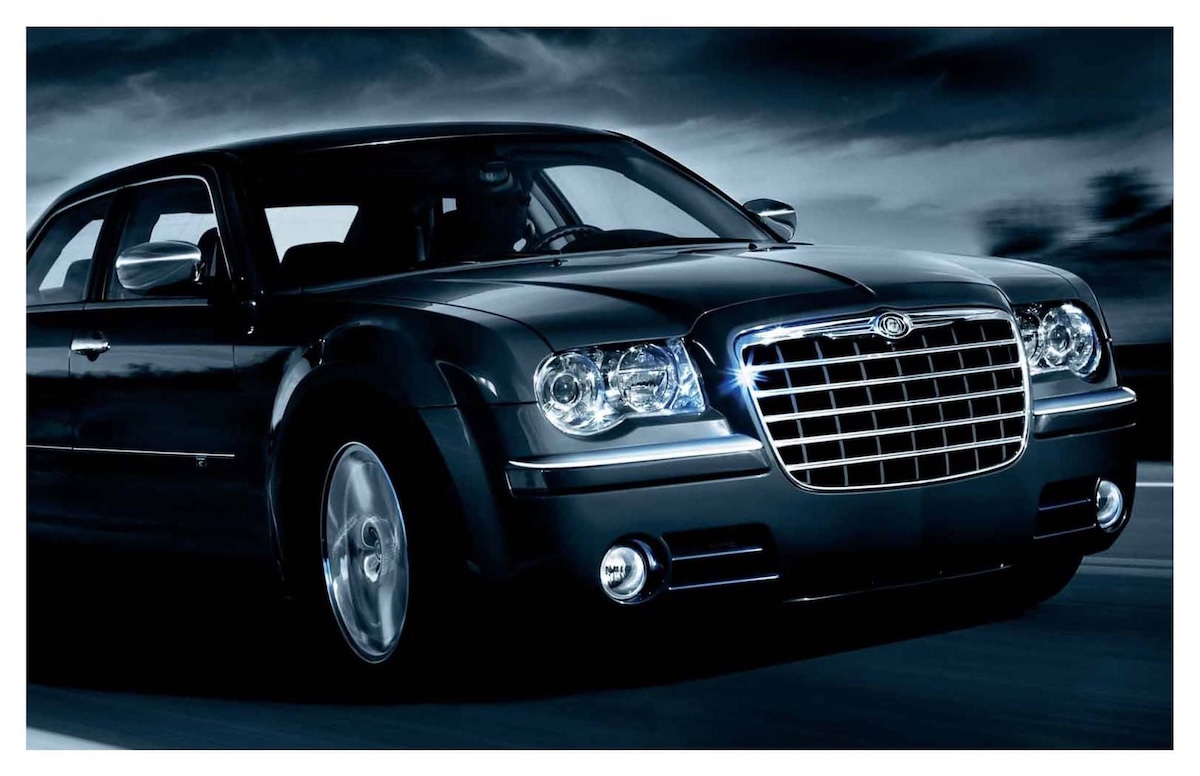
As the years passed, the 300C quietly became one of the last American sedans to combine a naturally aspirated V8 with everyday practicality. In that sense, it evolved into something of a rolling reminder of a disappearing automotive philosophy.
There is also an important cultural aspect to its appeal. In Europe, the 300C rarely stood out because it was objectively the best in any one category. It stood out because it approached luxury from a completely different direction. Where many European and Japanese rivals emphasised precision and restraint, the Chrysler celebrated confidence, presence and mechanical honesty.
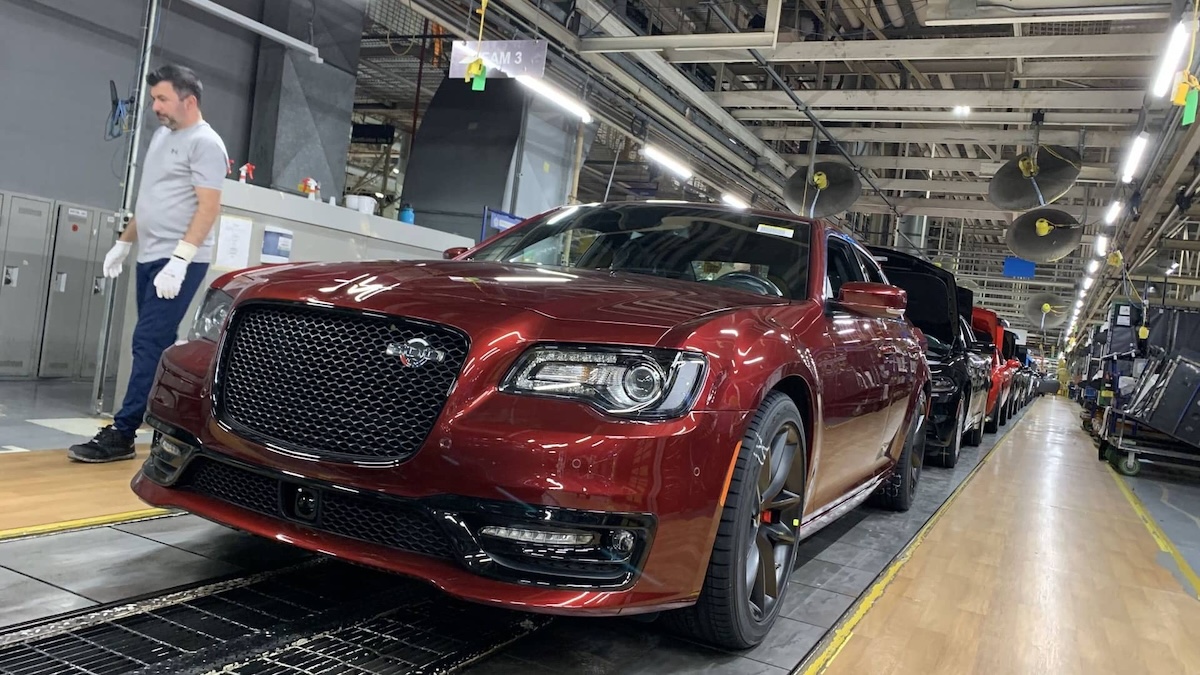
Today, the Chrysler 300C is not especially rare, but finding a well-preserved example has become increasingly difficult. Most enthusiasts are referring to the original generation introduced in 2004. Thanks to a series of facelifts, it remained in production until 2023, while also living on in Europe as the rebadged Lancia Thema. A production run approaching two decades is an impressive achievement for any modern car.
The Chrysler 300C was never intended to be perfect. It is heavy, occasionally crude and can become mechanically expensive if neglected. Yet those same qualities are also part of its appeal. It has presence, character and a personality that many modern executive sedans struggle to replicate. In an increasingly homogeneous automotive world, that alone makes the 300C worth remembering.
---
We invite you to start your journey by exploring our broad selection of Car Categories. After that, feel free to visit the Classic Passion Shop, where you'll find unique products from our partners—thoughtful picks for every enthusiast looking to add something special to their collection.


