It is difficult today to imagine how dramatic an American full-size car could look in 1969. Modern cars are shaped by wind tunnels, pedestrian safety requirements and countless regulations. They are clever, but many of them are clever in the same way. In the late 1960s, things were different. A big Chrysler was nearly six metres of metal, glass, chrome and confidence, designed and built relatively simply, yet in a very clever and completely new way.
The 1969–1973 full-size Chrysler models became known as the “fuselage” cars, and the name was not just marketing poetry. Chrysler designers wanted the body to feel like one continuous shape, almost like the fuselage of an aircraft. The sides were clean and rounded, the glass sat more flush with the body, and the whole car looked as if it had been carved from one long piece of metal instead of assembled from separate panels. It was a very different kind of American luxury car: less decorated, more technical and strangely elegant for something so enormous.
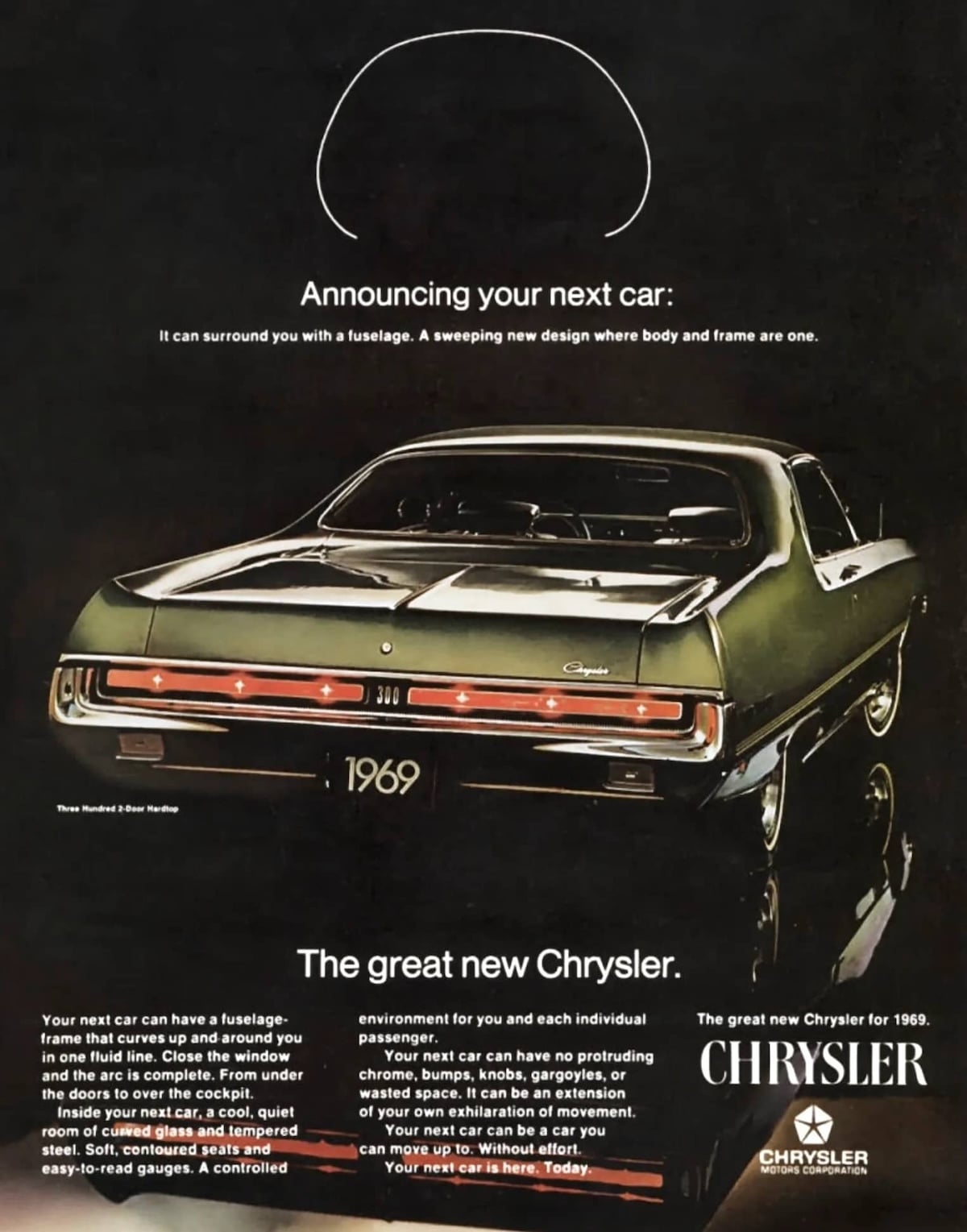
New Smooth Sides
To understand why these cars mattered, we have to go back to the 1950s, when Chrysler had already shocked the American market with its Forward Look cars. The 1957 Plymouth Fury and its relatives came with huge tail fins, aircraft-inspired styling and the famous advertising idea that “suddenly it’s 1960.” For a while, Chrysler looked more futuristic than General Motors, which was a serious achievement. Plymouth sales jumped, and tail fins became one of the strongest visual symbols of the American car industry.
But by the early 1960s, fins were already becoming old news. Chrysler tried to explain that fins helped directional stability, which sounds very nice until you remember that a car is not a boat without a rudder. In reality, the public mood had changed. The 1962 Plymouth and Dodge models were also a commercial disappointment, partly because Chrysler management believed General Motors was downsizing its big cars and pushed its own cars in the wrong direction. Virgil Exner, the man behind Chrysler’s previous design drama, became the victim of this failure.
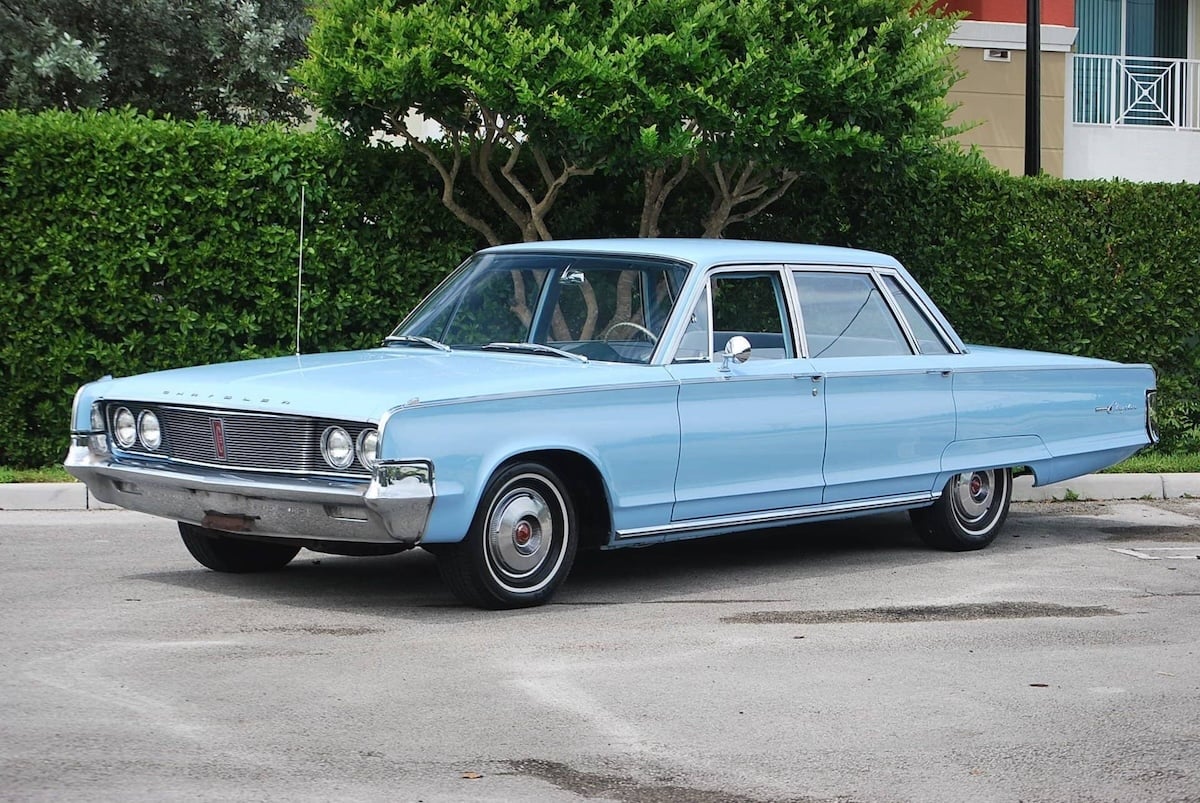
His replacement, Elwood Engel, came from Ford, where he had helped create the 1961 Lincoln Continental. That car was almost the opposite of Exner’s finned fantasy. It was clean, formal, minimal and very disciplined. This influence became visible in Chrysler’s 1965 models, which were elegant and sharp, but still not truly aircraft-like. Their sides had concave and convex forms. All those creases played sculptural tricks. Beautiful, but not yet timeless fuselage.
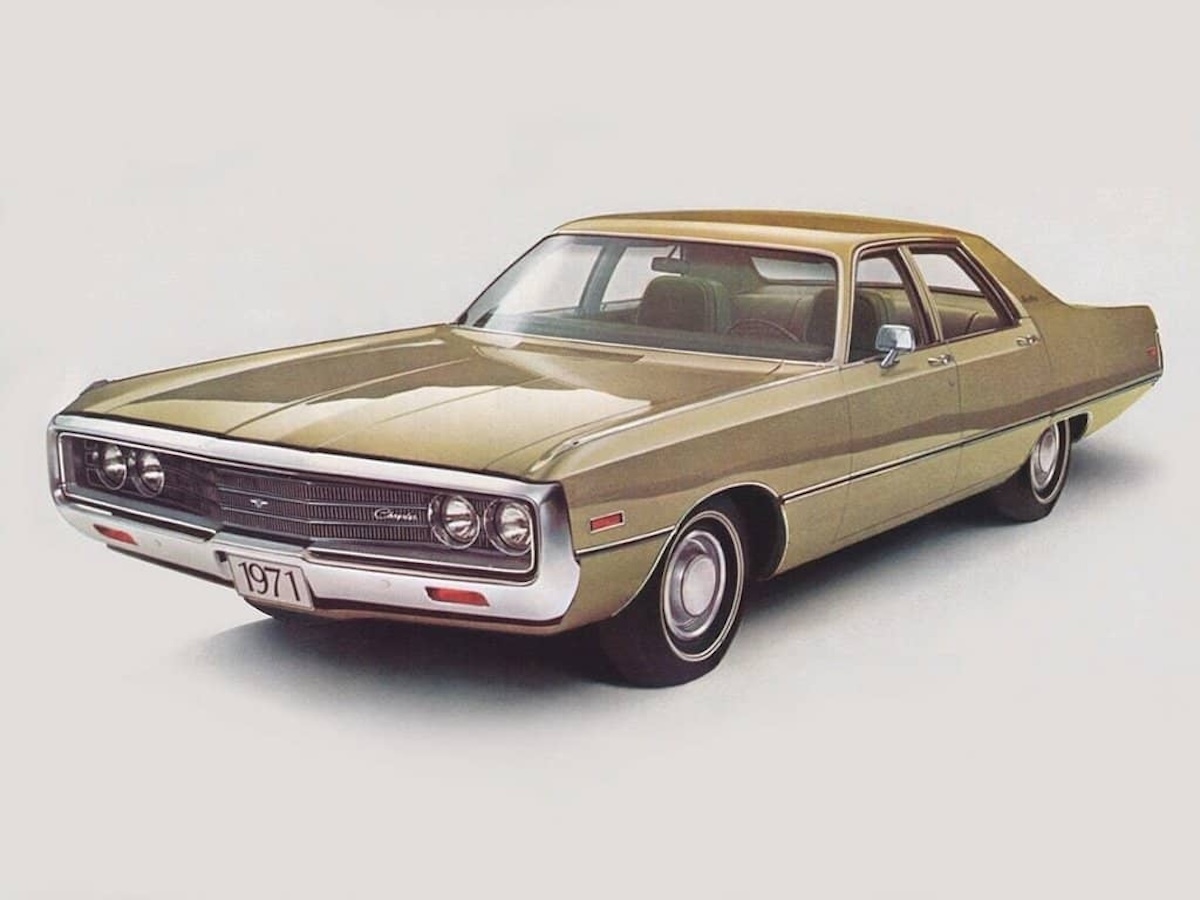
The next step was to remove the old separation between body and glass. In early design proposals from the mid-1960s, Chrysler designers started to push the side glass outward and let the body sides curve smoothly into the roof. Some proposals still had dramatic ideas, like a kinked windscreen or very thin grilles with hidden headlights, but the main theme was already clear. The car should look like something an airline might have in its fleet.
More Space Inside
The fuselage shape gave Chrysler a practical advantage. By pushing the glass outward and making the body sides smoother, the cars gained more interior room in several dimensions. For convertibles, the improvement was even more dramatic, with the rear seat becoming almost as wide as in the two-door hardtops.
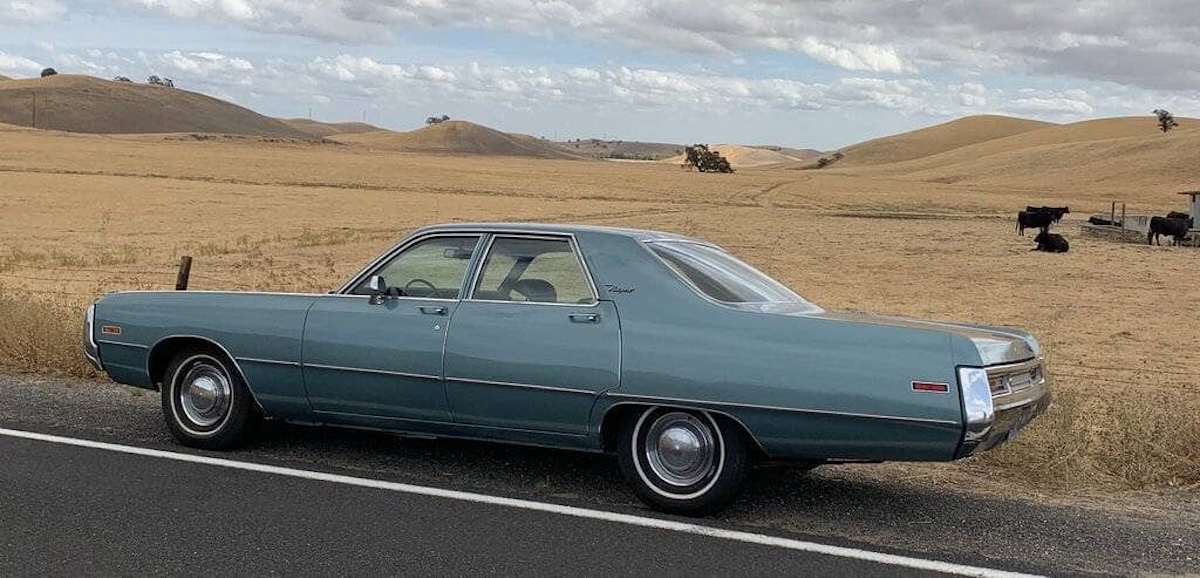
This is where the aircraft comparison actually made sense. An aircraft fuselage is efficient because it uses its external shape to create as much internal space as possible. Chrysler applied similar thinking to a road car. These were still huge machines, but the space inside was used better than before.
The long rear quarters also helped visually balance the taller roofs that management demanded for sedans. Designers hated this requirement, of course, because designers always want cars to look lower and longer. Their solution was to make the rear part of the car extremely long, which gave the sedans better proportions and also created an almost absurdly large boot.
Loop Bumpers and Hidden Wipers
Fuselage Chryslers were not completely free from late-1960s styling fashion. One of their most memorable details was the loop bumper, especially on the Chrysler 300. The front bumper wrapped around the grille area, making the car look extremely wide and planted. This was also the age when manufacturers wanted bumpers to look more serious and protective, partly because safety conversations were becoming louder. Whether the bumper was truly as functional as it looked is another question, but visually it worked.
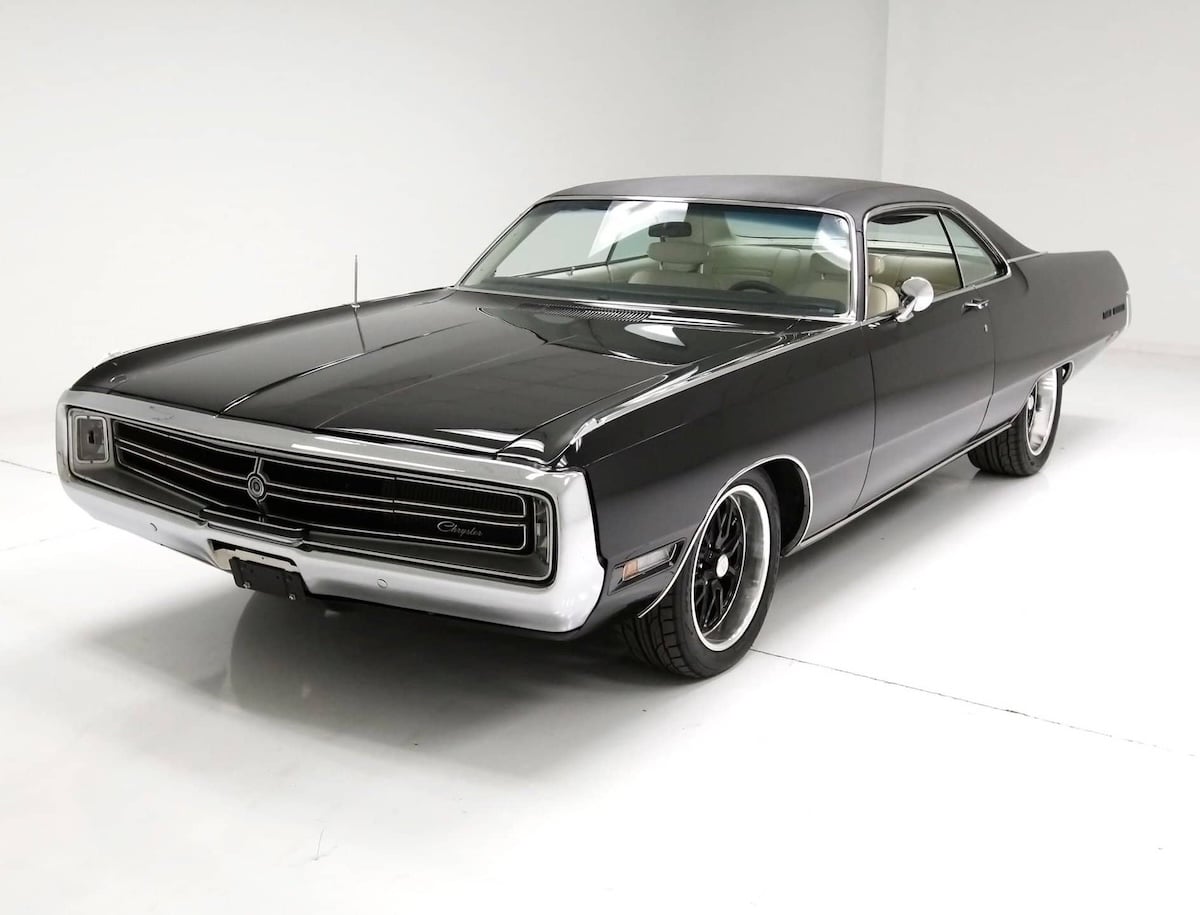
The 1969 Chrysler 300 was one of the best-looking examples of this era. Its wide front, clean flanks and block “300” lettering on the rear quarter gave it real presence. There were other thoughtful touches too. Concealed windscreen wipers cleaned up the base of the windscreen. Some two-door hardtops without air conditioning deleted vent windows, giving the side profile an even smoother appearance. Even the drip rails were integrated neatly into the roofline instead of sticking out like afterthoughts.
Inside, the instrument panel repeated the loop bumper idea. The gauges, radio and climate controls sat within a large padded surround, like a bumper turned inward. It was not necessarily luxurious in material quality, and some of the black plastic looked cheaper than it should have, but the layout was clear and functional. At night, the large speedometer and green-blue flood lighting gave the cabin a special atmosphere.
Ordinary Compromises
For all their beauty, the fuselage cars were not perfect. Chrysler had limited tooling budgets, so the Imperial and Chrysler shared more parts than luxury buyers might have wanted. Roof panels, glass and other components were common across models, and sometimes the compromises were visible. Designers disliked some of the two-door roofline solutions, especially where the roof met the rear body.

The driving experience also had mixed character. Chrysler’s torsion-bar front suspension gave the cars a firmer ride than many Ford or GM competitors. The unibody construction was modern in some ways, but road isolation was not always on the same level as the competition. Plymouths and Dodges could be noisy, and even the Chryslers were not always as quiet as equivalent big Fords or General Motors cars. The Imperial came closer to Cadillac and Lincoln, partly thanks to its more isolated front structure.
But under the bonnet, Chrysler still had serious strengths. The 440 V8 and TorqueFlite automatic transmission were among the best American powertrain combinations of the era. Even if the cabin was not always the quietest, the engine gave the cars the effortless authority that a full-size American car needed.

The Aircraft Dream
By 1973, new bumper regulations began to compromise the purity of the fuselage look. Bigger bumper guards and heavier front and rear treatments made the cars less elegant than the cleaner earlier versions. Soon the era was over, but its influence remained. General Motors’ 1971 big cars also moved towards smoother sides and more flush glass, suggesting that Chrysler had once again helped push Detroit design in a new direction.

Not every company would dare to make a family sedan look like an aircraft cabin on wheels. Chrysler did, and for a few years, the American road became a little more futuristic because of it.
---
We invite you to start your journey by exploring our broad selection of Car Categories. After that, feel free to visit the Classic Passion Shop, where you’ll find unique products from our partners — thoughtful picks for every enthusiast looking to add something special to their collection. Looking for another way to spend your crypto? Discover some of the best gift cards available through CoinGate Gift Cards.