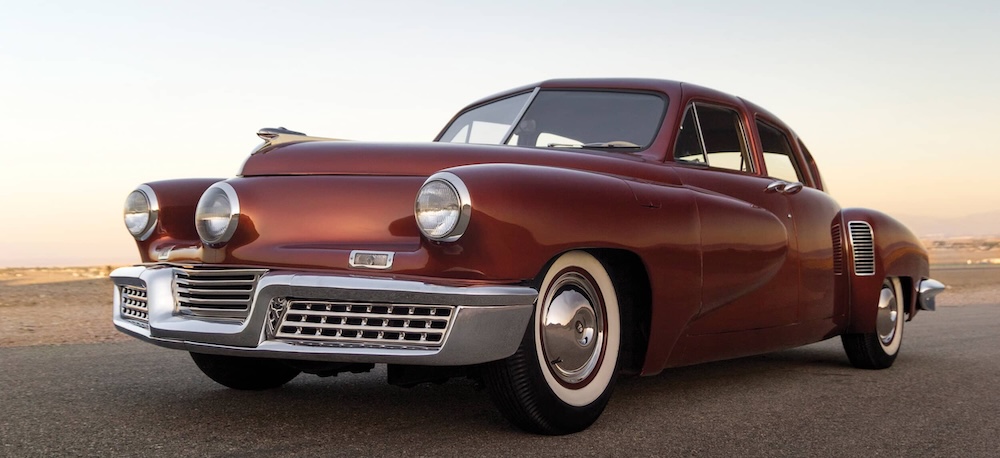
Some classic cars become famous because they won races, appeared in films or were produced for many decades. The Tucker 48 became a legend for the opposite reason. It came from a new manufacturer, existed for only a short moment and disappeared after just 51 cars had been built. And all these years later, most don’t even know what it is.
Still, more than 75 years later, the Tucker looks like a machine from an alternative version of American history. It is the car which asks a fascinating question: what could have happened if an ambitious outsider had successfully challenged Detroit’s established manufacturers?
A New American Car After the War
When the Second World War ended, American motorists were ready for something new. Civilian car production had been restricted during the war, creating strong demand, but most manufacturers returned with models still closely related to pre-war designs.
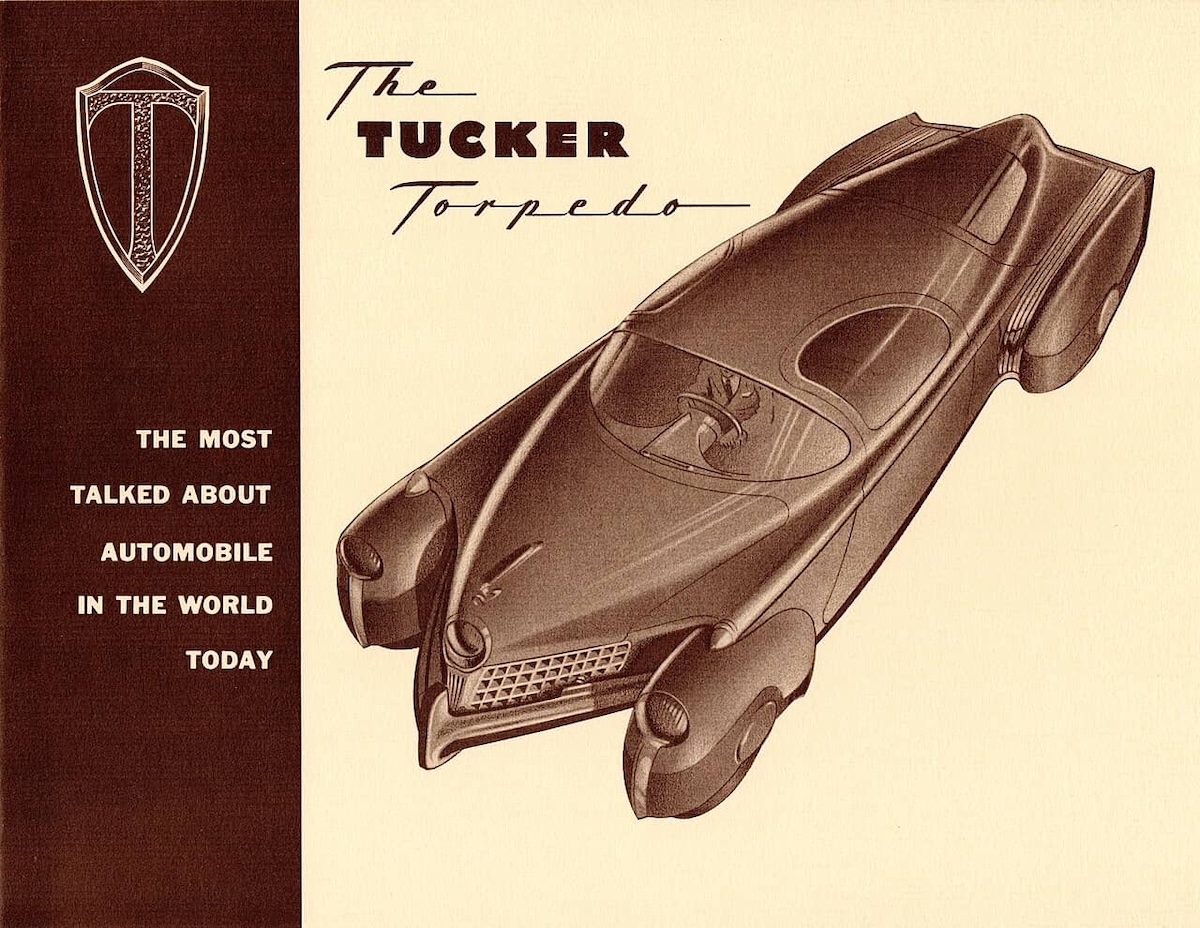
Preston Tucker saw an opportunity. He was not a traditional motor-industry executive, although he was not an amateur. Tucker had worked with the respected racing-car engineer Harry Miller and had been involved with several military vehicle projects. His proposed automobile would not be another large American sedan. Tucker advertised it as a safer, faster and more technically advanced “Car of Tomorrow”. It promised futuristic styling, a rear-mounted engine, independent suspension, excellent performance and a long list of safety innovations.
The first prototype was presented at Tucker’s Chicago factory on 19 June 1947. Around 5,000 people attended. The car was unfinished in several areas and reportedly required some desperate last-minute work, but the public response was enthusiastic. It looked unlike anything being offered by the Big Three or all the independent makers.
Not a Torpedo
The Tucker 48 is frequently called the Tucker Torpedo, even in contemporary conversations. Torpedo was the name associated with an earlier design concept. The actual production car was the Tucker 48, referring to its intended 1948 model year.
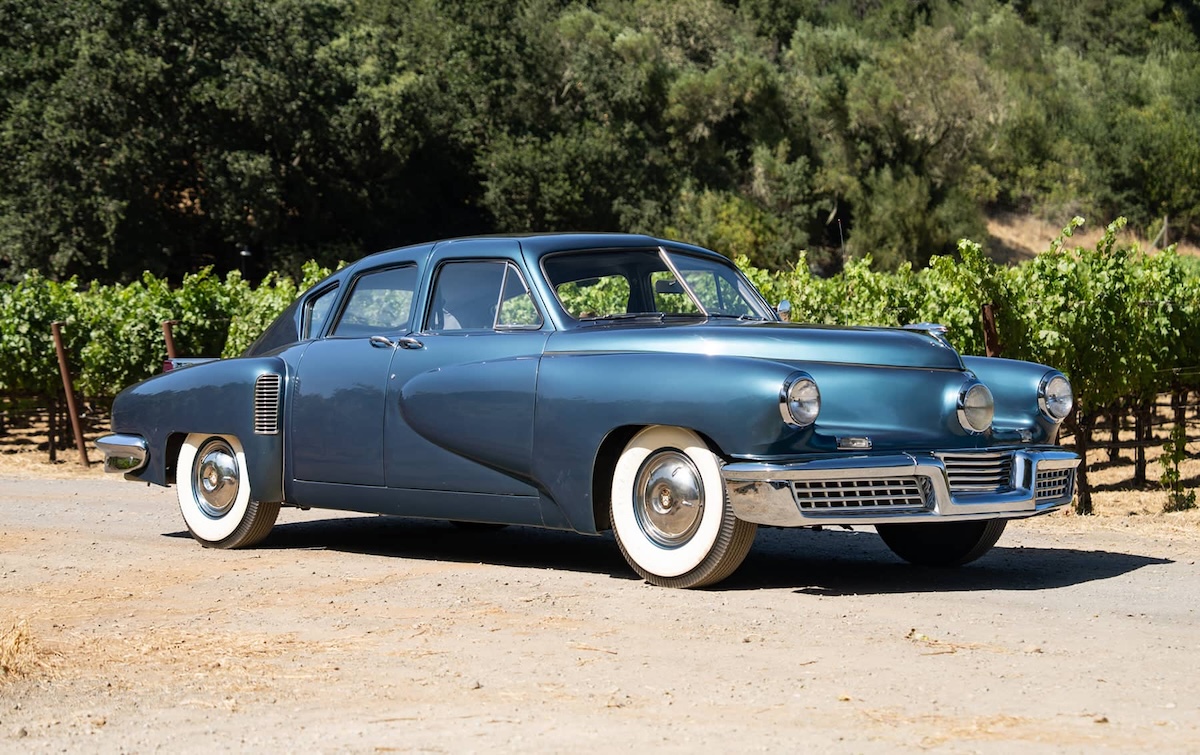
The car looked low and surprisingly athletic with a fastback roof, broad shoulders and air intakes incorporated into the rear wings. Its proportions were created by the engine position. Instead of placing a large engine beneath a traditional bonnet, Tucker installed the power unit behind the passenger compartment.
Mounted in the centre of the nose, there was the famous “Cyclops Eye”. It turned with the steering to illuminate the road through corners, thus becoming Tucker's visual signature. Several earlier cars had experimented with directional lighting, but it was an extremely unusual feature on a post-war American production car.
A Helicopter Engine
To propel the car forward, the maker selected a 334-cubic-inch, horizontally opposed six-cylinder engine developed for the Bell 47 helicopter. The air-cooled engine was converted to water cooling for automotive use and installed in the rear of the car.
It produced approximately 166 horsepower and a healthy 372 lb-ft of torque. These figures were great for 1948, especially when combined with the car’s aerodynamic shape. The 0–60 mph time was around ten seconds and an estimated maximum speed of 120 mph. For a large family sedan weighing approximately 4,200 pounds, this was serious performance.
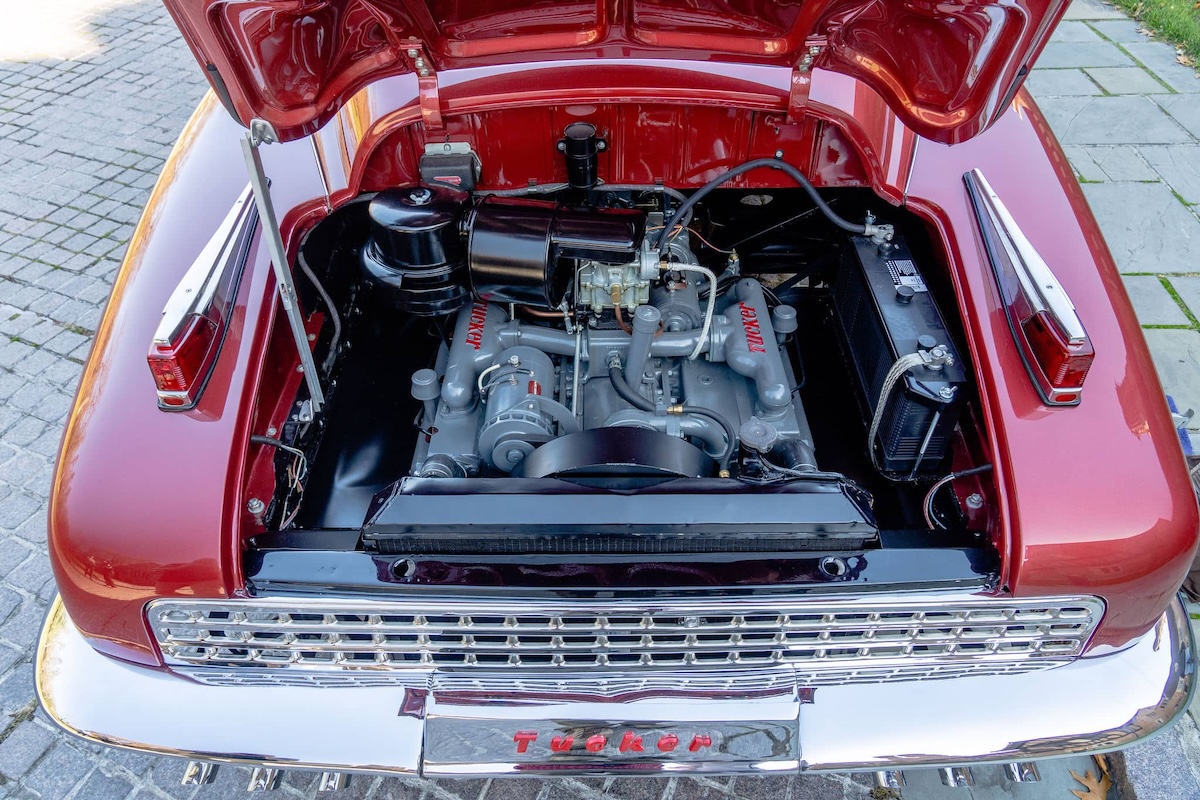
Transmission development was less straightforward. Most completed cars used modified four-speed pre-selector gearboxes originating from the front-wheel-drive Cord 810 and 812. The layout made some mechanical sense because a transmission designed to drive the Cord’s front wheels could be adapted to drive the Tucker’s rear wheels when the complete arrangement was turned around. Tucker also developed an automatic transmission called the Tuckermatic, but only a very small number of cars received it. This is one reason why individual Tucker chassis can differ considerably from each other.
Safety Before Safety Was Fashionable
Perhaps the most important part of the Tucker story is the attention to passenger protection.
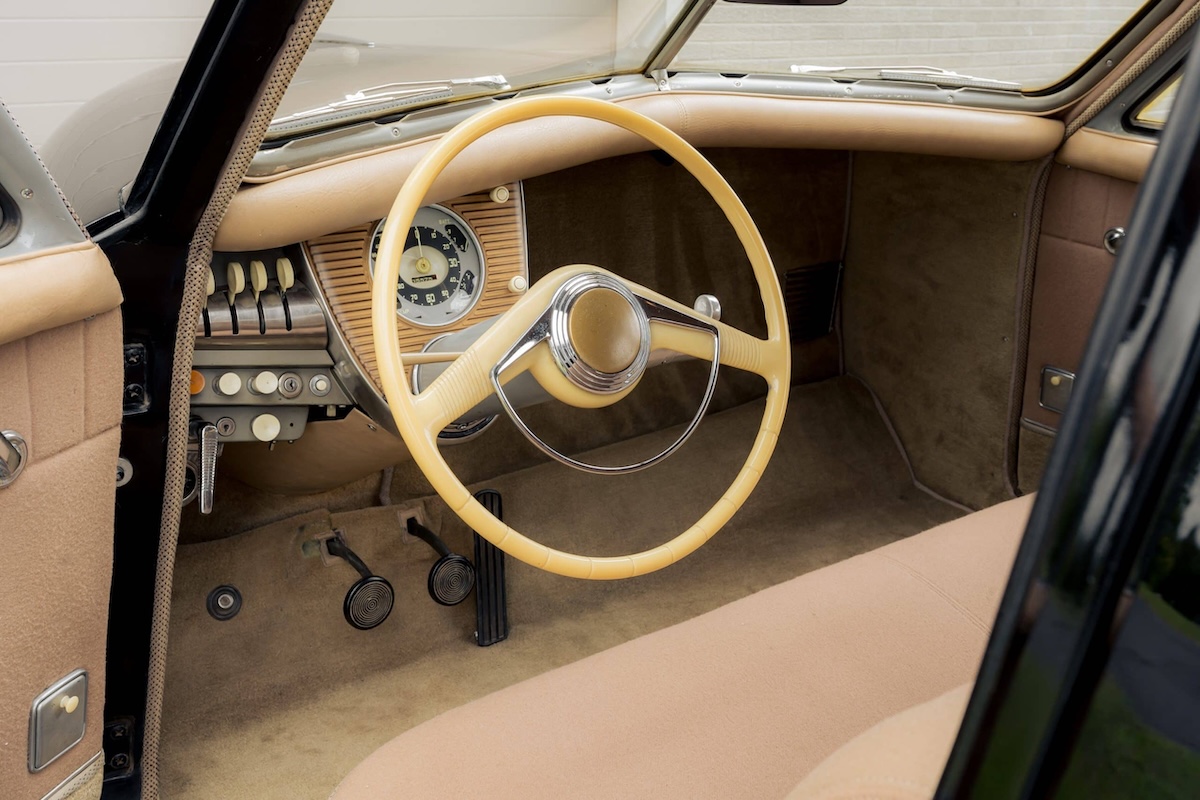
The dashboard and doors were padded and the controls were grouped closely around the steering wheel. The windscreen was designed to pop out during a collision rather than break inward towards the occupants. The steering mechanism was positioned behind the front axle to reduce the chance of it being pushed into the driver.
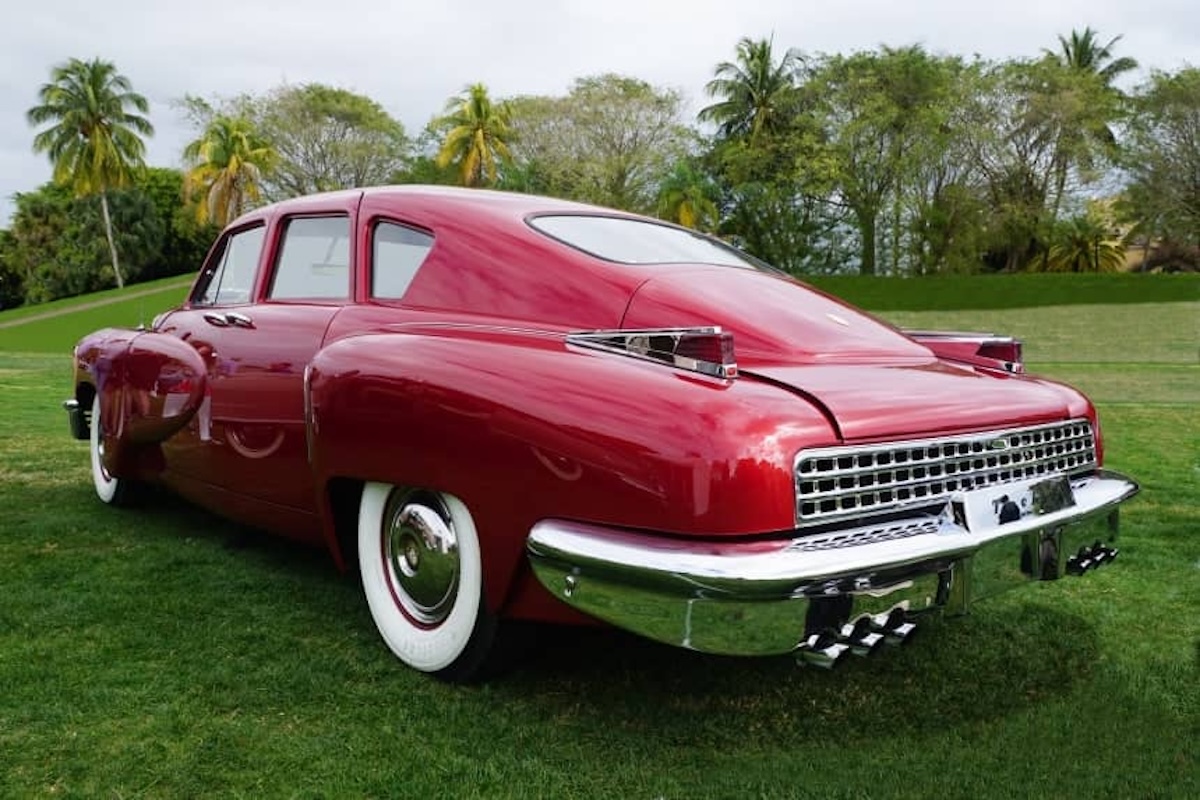
The doors extended into the roof, providing more space when entering the low car. The passenger compartment also had a relatively open area beneath the dashboard, promoted as a place where occupants could move during an unavoidable accident. The Tucker also had four-wheel independent suspension. It used rubber-based components instead of conventional steel springs, although several different suspension arrangements were tested during the short production period. Not every feature promised in early Tucker publicity reached the finished cars. Fuel injection, disc brakes and the original torque-converter transmission were among the proposals abandoned because of engineering or production difficulties. Tucker’s advertising was often several kilometres ahead of his factory.
Did Detroit Destroy Tucker?
The failure of the Tucker Corporation is often presented as a simple battle between one brave inventor and the powerful American automotive establishment. It is a wonderful story, especially after watching the 1988 Francis Ford Coppola film Tucker: The Man and His Dream.
Starting a completely new car company is brutally expensive. Tucker raised millions through stock sales, dealer franchises and an unusual accessories programme. Customers could purchase items such as radios, seat covers and luggage before receiving their cars, gaining a preferred position on the waiting list.
These fundraising methods attracted attention from the United States Securities and Exchange Commission. Tucker and several associates were eventually charged with fraud. They were acquitted of all charges in January 1950, but the investigation, negative publicity, production delays and strained finances had already caused enormous damage.
There has always been suspicion that the established manufacturers or their political allies helped to remove an unwanted competitor. However, conclusive evidence for a coordinated Detroit conspiracy is difficult to find. Tucker was most likely defeated by underfunding, too much technical ambition, political pressure and the almost impossible cost of creating a new automobile from nothing.
The original prototype, commonly known as the Tin Goose, was followed by 50 Tucker 48s. According to the Tucker Automobile Preservation Society, 47 of the original 51 cars survive. This is an extraordinary survival rate and shows how quickly people understood that these cars were historically important.
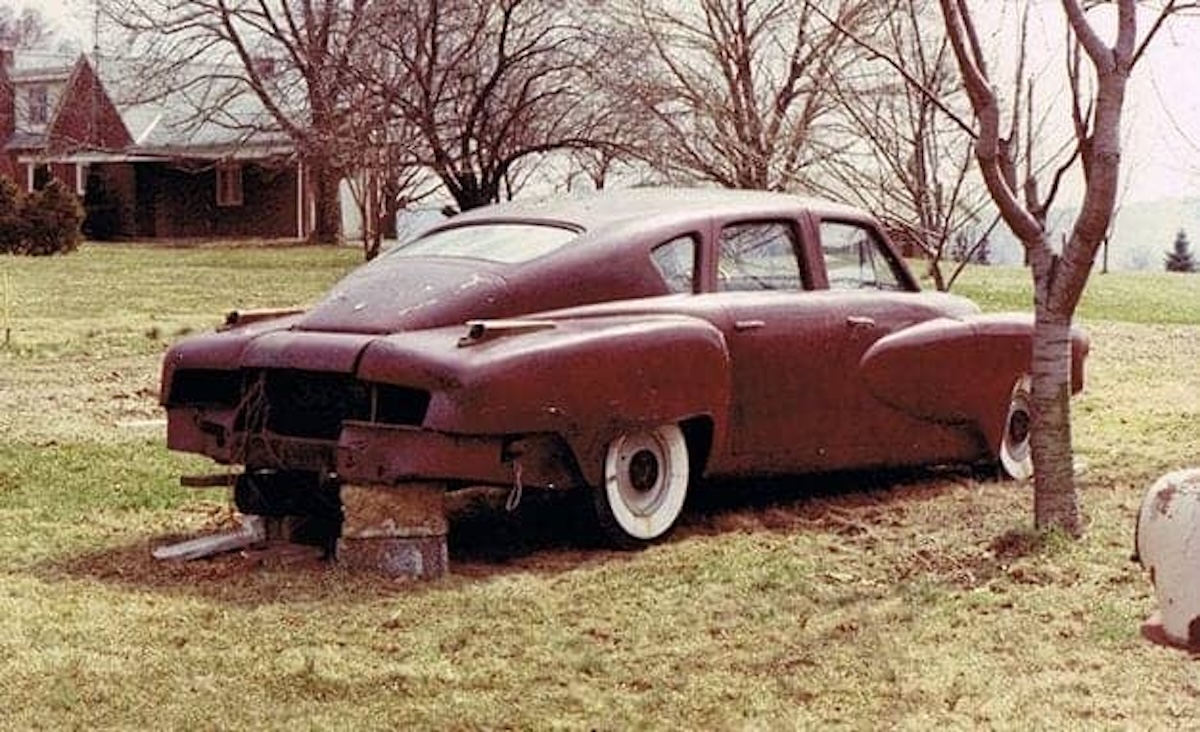
Today, an original Tucker is a million-dollar collector car, with the best-known examples sometimes selling for considerably more. Ownership is not simply a question of having enough money. Every chassis has its individual history, specifications and restoration story.
American engineering, optimism and confident salesmanship. That’s Tucker in a nutshell. Some of the ideas did work, some were unfinished and others existed mainly in advertising. But an actual car was produced, and it was far more interesting than many vehicles built by companies with much greater resources. The Tucker 48 is difficult not to admire. It is imperfect, overambitious and surrounded by mythology, but perhaps that is why we still talk about it today..
---
We invite you to start your journey by exploring our broad selection of Car Categories. After that, feel free to visit the Classic Passion Shop, where you’ll find some of the best products from our partners — thoughtful picks for every enthusiast looking to add something special to their collection. You can also buy gift cards with cryptocurrency through CoinGate Gift Cards.