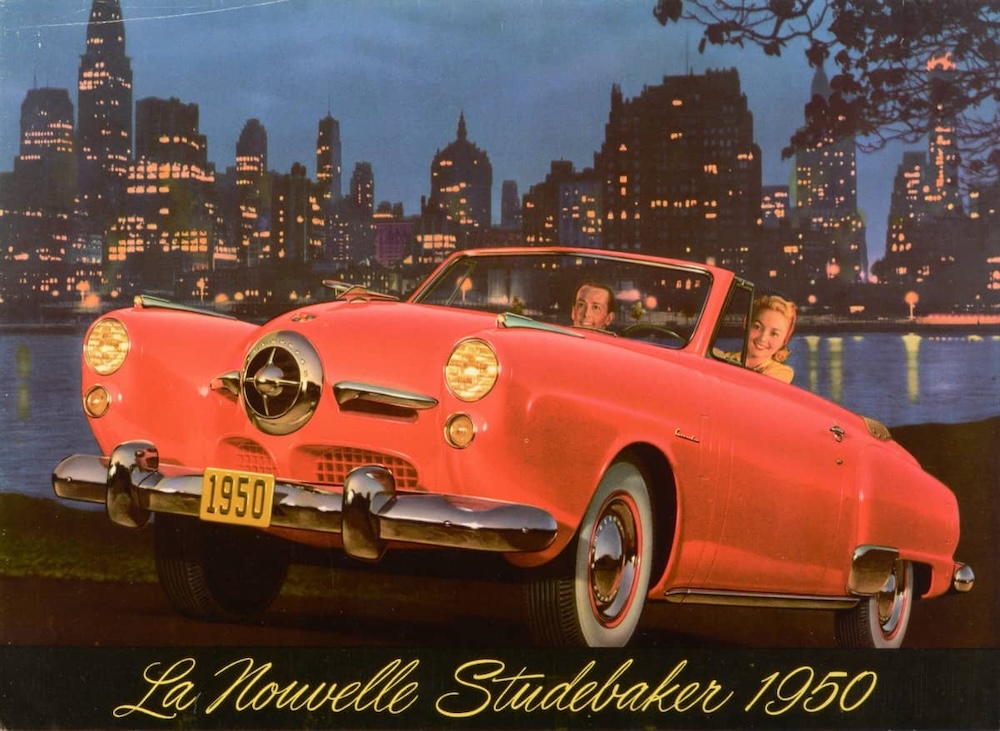
In the theatre of American car design in the 1950s, few machines entered the stage with quite the same expression as the 1950 and 1951 Studebakers. That great, protruding centrepiece at the nose, variously described as a bullet, a spinner, or an aircraft intake, made these cars impossible to ignore. Whether one considers them beautiful is another matter entirely, but memorable? Absolutely.
Studebaker was not some overnight opportunist chasing post-war optimism. The company had been around since 1852, long before it ever built a motor car, making wagons for a very different America. Its first steps into the automotive world came in the early 1900s, and rather appropriately for a company that often seemed slightly ahead of itself, those first vehicles were electric. By the 1950s, Studebaker was a proper car manufacturer, operating from South Bend, Indiana, and fighting for attention in a market increasingly dominated by the Big Three in Detroit.
The Jet Age
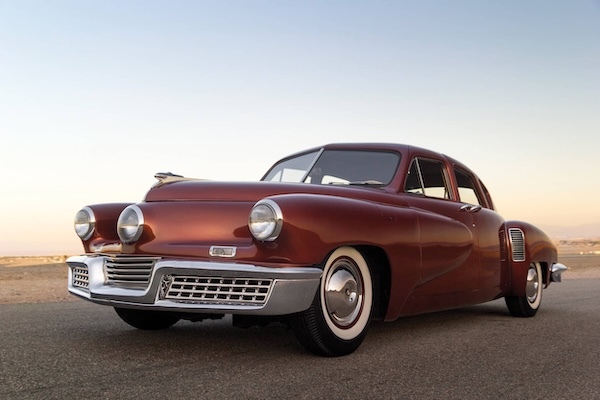
The late 1940s were filled with aeronautical dreams. America had emerged from war with jet aircraft, streamlined trains, and a public hungry for the future. The 1949 Ford had already introduced a clean, rounded, modern look, while the Tucker 48 had placed a dramatic third headlamp in the centre of its face. There was a growing sense that cars should look different now that the war was over. Speed, science, and progress had to be displayed, even while parked outside the grocery store.
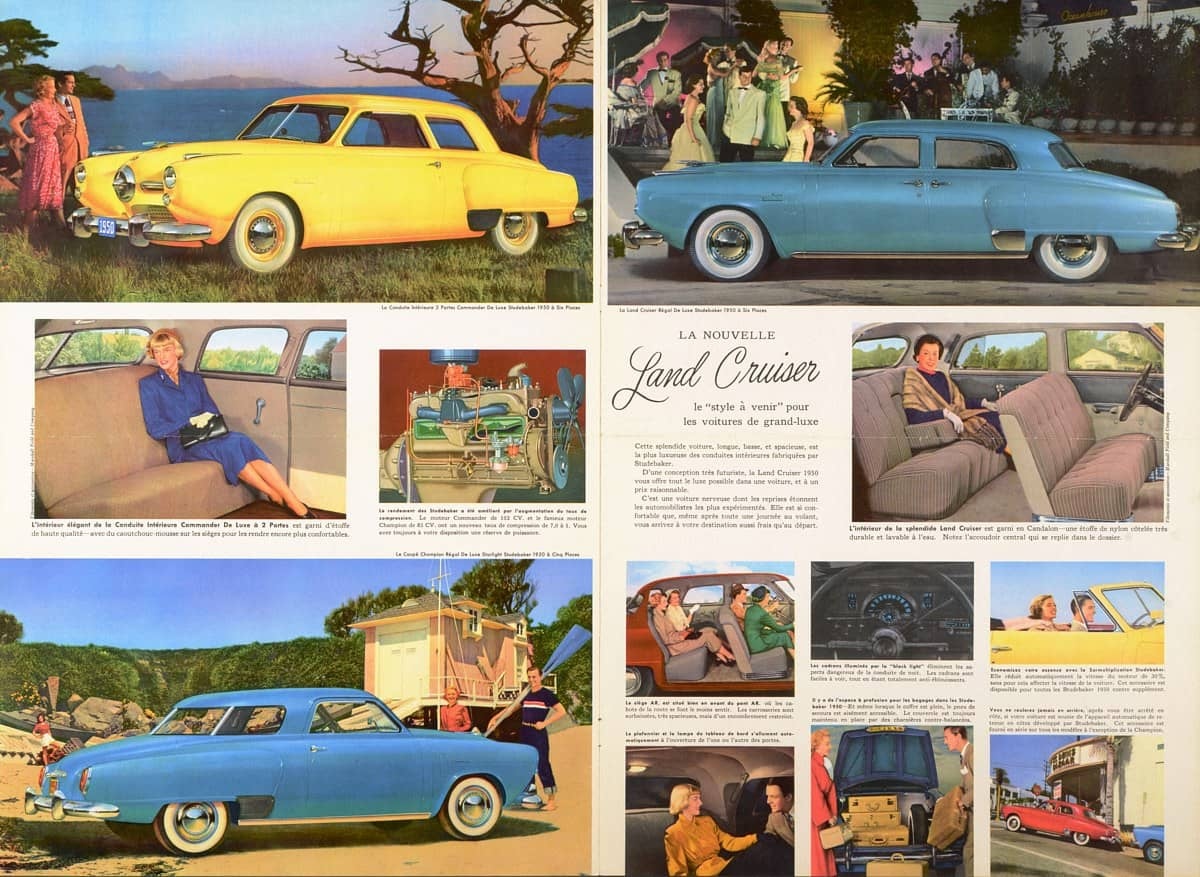
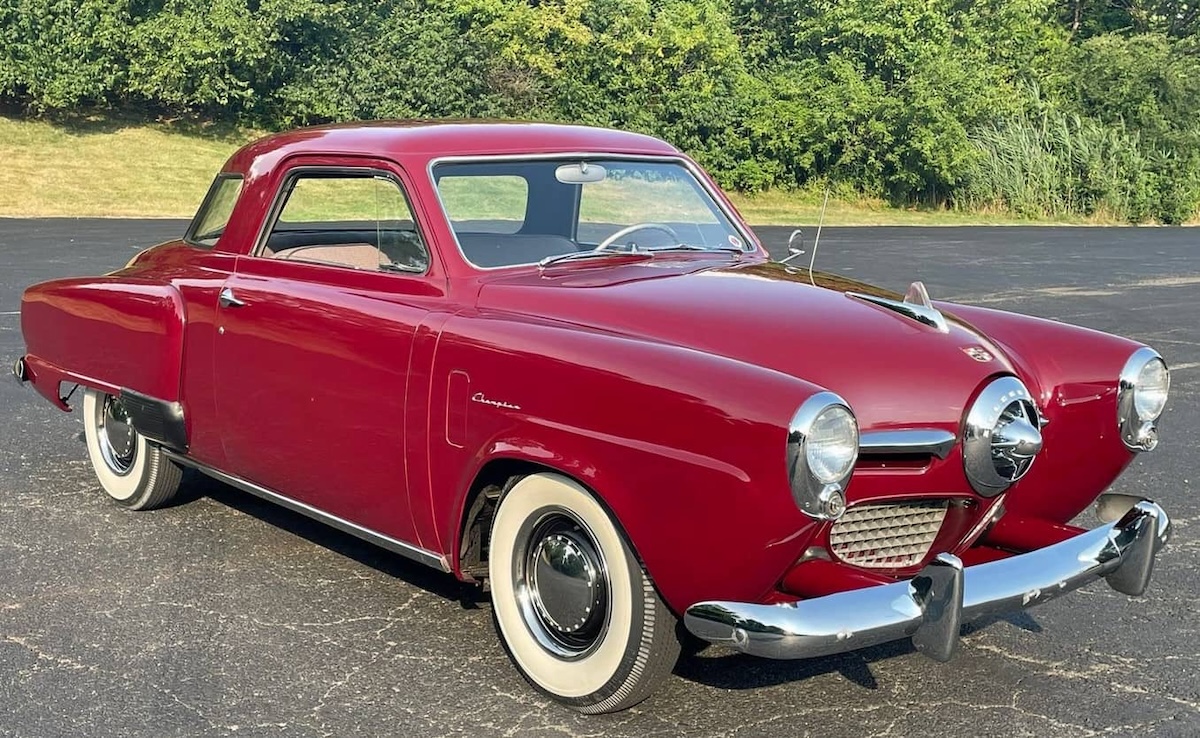
Studebaker’s answer was bolder than most. The 1950 Studebaker Champion’s front end looked like a fighter aircraft’s nose grafted onto a family car. The pontoon wings, central spinner, and tall stance gave it an almost cartoonish energy. Studebaker called it the “Next Look”, a phrase that now feels slightly desperate. Yet at the time, the company genuinely believed it had created something trend-setting.
Design
The styling came through Raymond Loewy Associates, a name already deeply associated with American industrial design. Loewy’s firm had worked on everything from locomotives to consumer products, and its relationship with Studebaker dated back to the 1930s. But as with many famous design houses, the reality was more complicated than the signature on the brochure. Designers such as Virgil Exner and Bob Bourke played vital roles in shaping Studebaker’s post-war identity. Loewy was a brilliant promoter, and perhaps just as talented at taking credit as he was at selling ideas. Still, the result was unmistakable. Studebaker looked different.
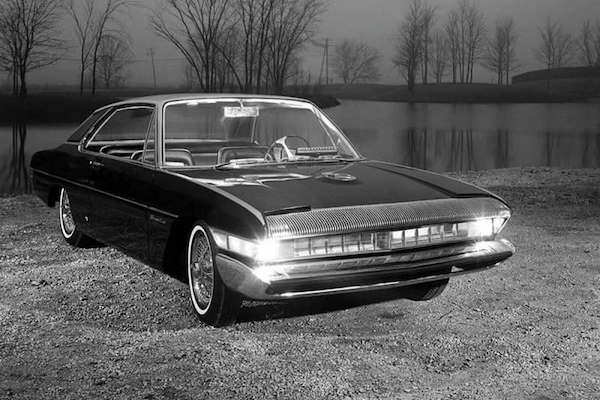
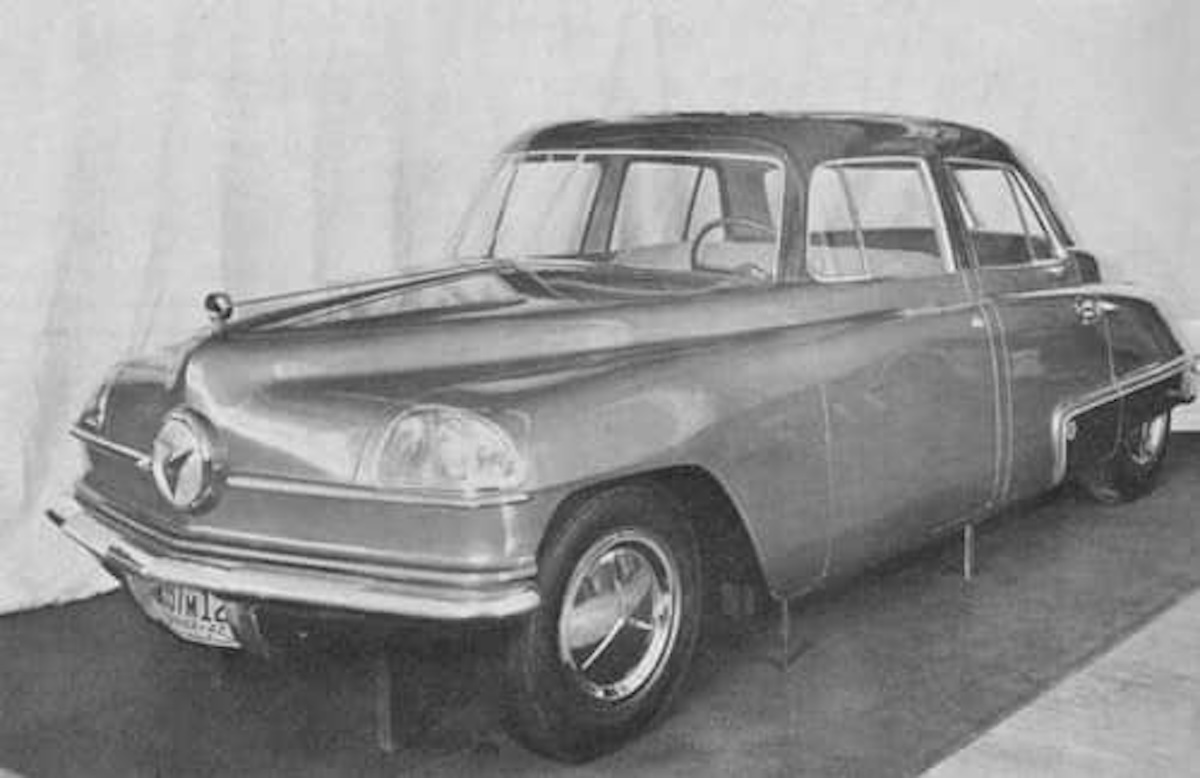
There had been earlier thoughts along similar lines. As far back as 1943, Studebaker designers had explored post-war proposals with softened, aircraft-inspired forms and a suggestion of a central nose. Some of those early models were arguably more elegant than the production car, with cleaner surfaces and a more sophisticated front treatment. But by the time the 1950 car reached showrooms, the idea had grown more dramatic and more exaggerated.
Market position
Beneath the styling, however, the bullet-nose Studebakers were not quite as revolutionary as they looked. Much of the basic structure was carried over from the 1947 to 1949 cars, which themselves had been significant because Studebaker was one of the first American manufacturers to launch genuinely new post-war models. The 1950 update brought the famous nose, new trim, revised lighting, and other changes, but it was evolution wearing the costume of revolution.
The 1950 cars were introduced in August 1949, ahead of many rivals, and dealers reported heavy showroom traffic. Visibility certainly mattered for an independent manufacturer standing against Chevrolet, Ford, and Plymouth. Studebaker was not going to beat the “low-price three” by blending in. Its advertising even urged buyers to make it “four to see instead of three”, positioning Studebaker as the extra choice every sensible customer should consider.
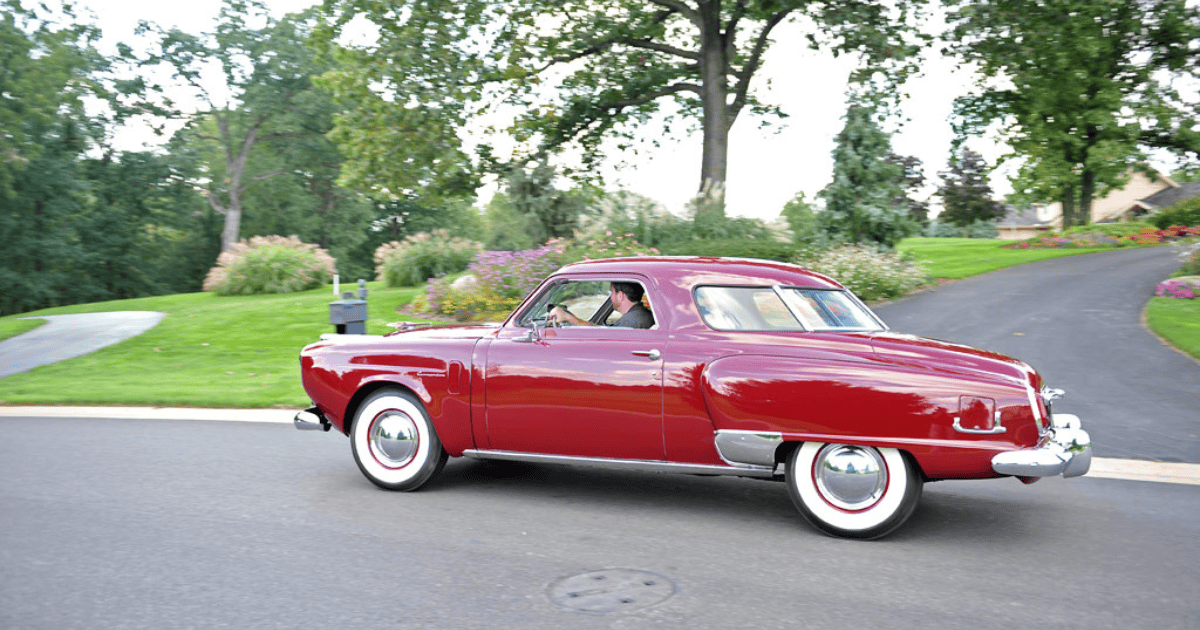
Buyers could choose the lower-priced Champion or the more upmarket Commander, with sedans, convertibles, and coupes available. The most charismatic of all was the Starlight Coupe, whose wraparound rear glass gave the car one of the most distinctive cabin profiles of the period. Sitting in the rear must have felt unusually airy for the time, especially compared with the more enclosed, formal shapes that still populated American roads.
The 1950 cars gained a new double A-arm front suspension with coil springs and improved dampers, while the rear retained leaf springs. The company also introduced an automatic transmission developed with BorgWarner’s Detroit Gear division. Studebaker, along with Packard, was one of the few independents to develop its own automatic. It was air-cooled, had a hill-holder feature, and even included safeguards to prevent reverse from engaging at inappropriate speeds. Ford reportedly showed interest in using it, but Studebaker declined.
Sales were respectable
In 1950, Studebaker sold around 343,000 Champion and Commander models, enough to keep the South Bend factory busy and profitable. A third shift was added, workers were hired, and for a moment the company seemed to have momentum on its side. In 1951, sales dropped to about 268,000, but this was still far from disaster. By independent-maker standards, the bullet-nose cars had done their job.
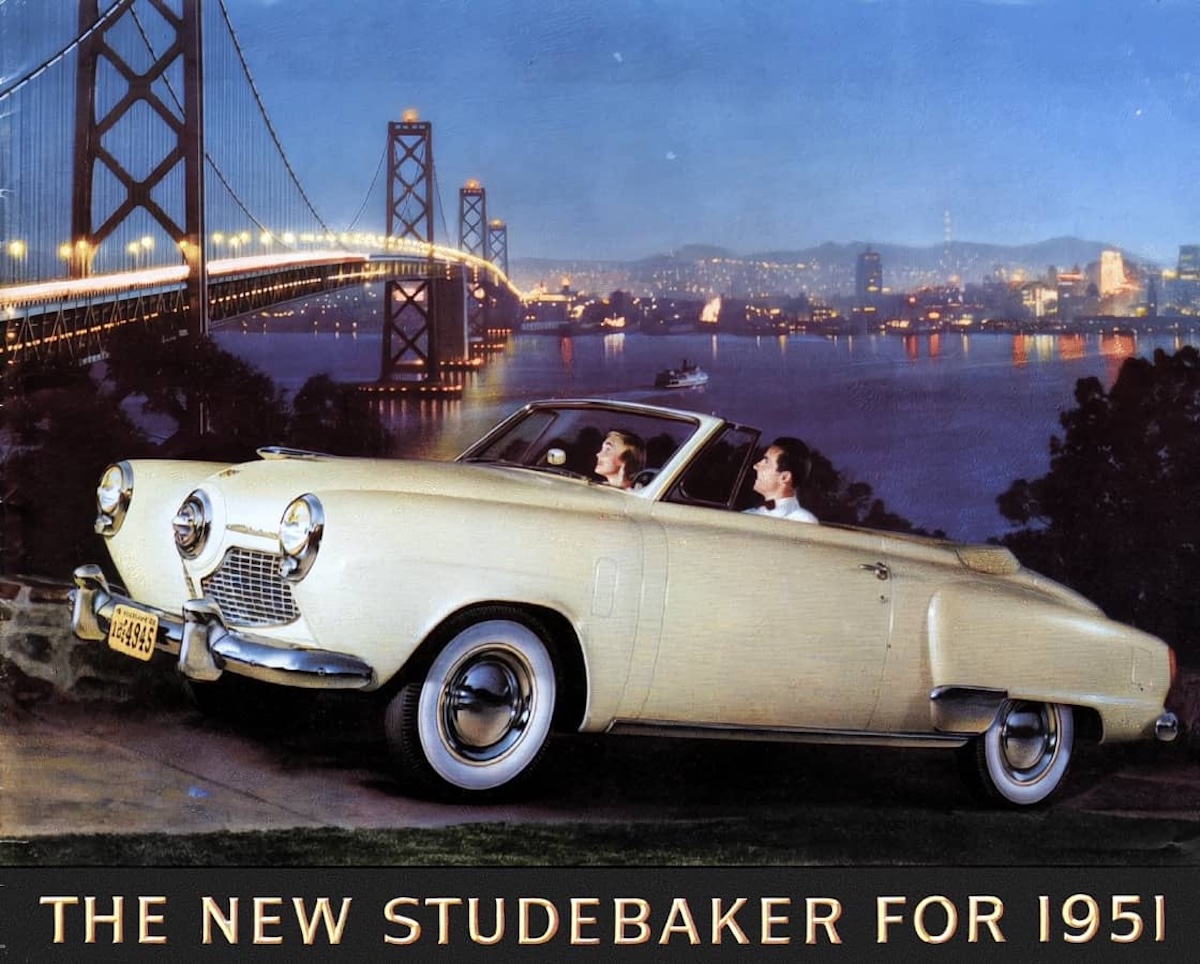
The 1951 model brought a slightly toned-down nose, with a smaller spinner, altered grille texture, and a painted ring around the central feature rather than the previous chrome treatment. More importantly, Studebaker introduced one of its great technical achievements: a new 233 cubic inch overhead-valve V8 for Commander and Land Cruiser models. At 120 horsepower, it was a strong and modern engine, and it arrived well before Chevrolet, Pontiac, and even Buick had their own overhead-valve V8s in production. In some areas, Studebaker really was ahead.
A slow end
Of course, the bullet-nose look did not become the future. America did not fill with spinner-fronted saloons. By 1953, Studebaker had moved on to the famously elegant Loewy coupes, among the most beautiful American cars of the decade. The company itself would later struggle, merge, shrink, and eventually fade from car production. But for one bright moment at the dawn of the 1950s, Studebaker was on top of the mountain.
The result remains one of the great oddities of American motoring. The bullet-nosed Studebaker is a reminder that car design is at its best when it risks being wrong. It may not have predicted the future, but it captured the feeling of a nation that believed the future had already begun.
---
We invite you to start your journey by exploring our broad selection of Car Categories. After that, feel free to visit the Classic Passion Shop, where you’ll find unique products from our partners — thoughtful picks for every enthusiast looking to add something special to their collection.