Five-cylinder engines usually bring to mind turbocharged Audis, old Volvos or the warbling noise of a Group B rally car. Honda is rarely part of that conversation. Yet during the 1990s, the company produced a sophisticated family of naturally aspirated inline-fives and installed them in their front-wheel-drive platforms.
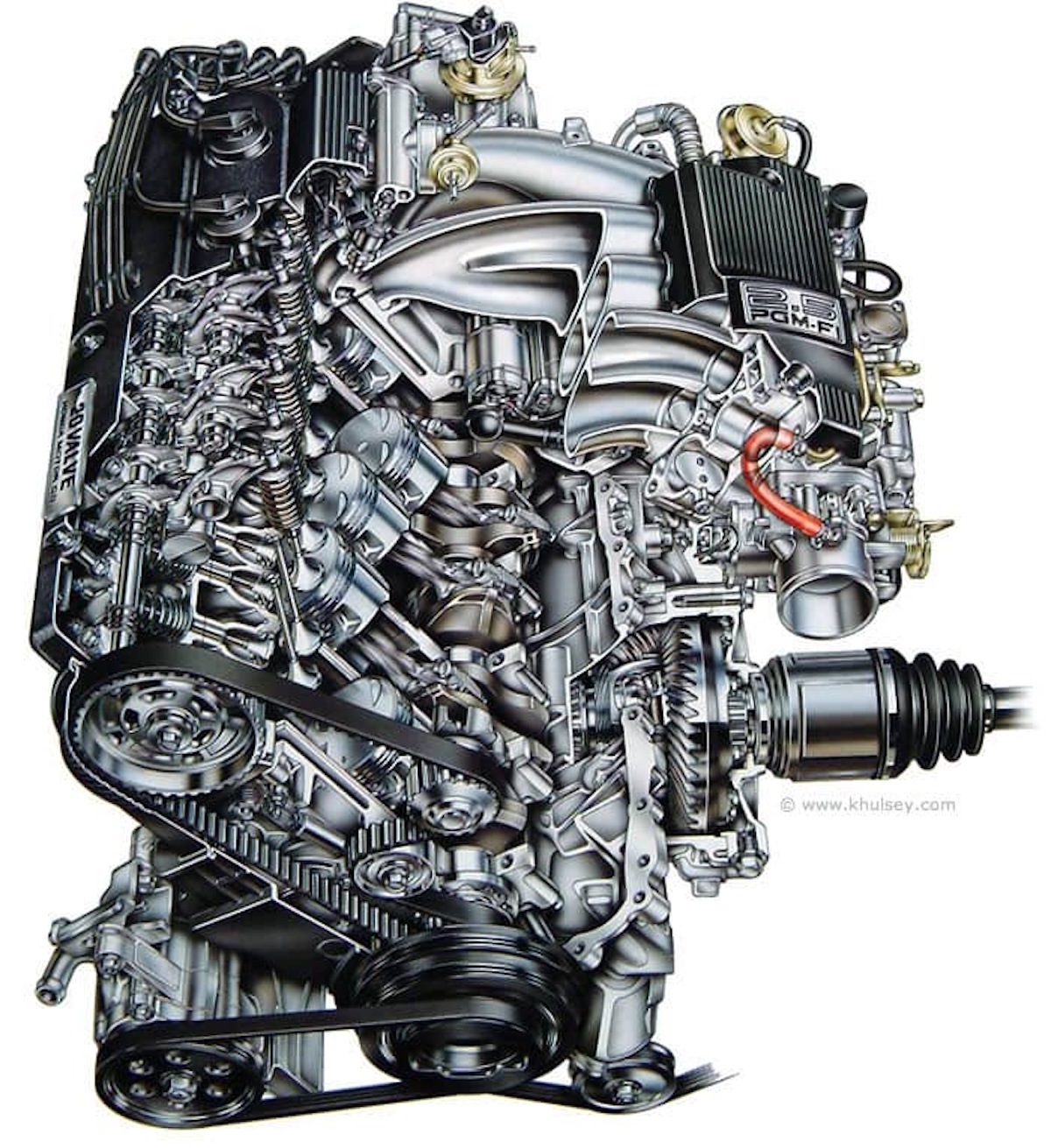
This was the G-series, beginning with the 2.0-litre G20A and later growing into the 2.5-litre G25A. It was a smooth, compact engine, and packed with clever engineering. It was also mounted longitudinally, tilted by 35 degrees and arranged so that one of the front driveshafts passed through the engine’s lower structure. Even during Honda’s most adventurous period, that was an unusual way to build a family car.
Looking for a Fifth Cylinder
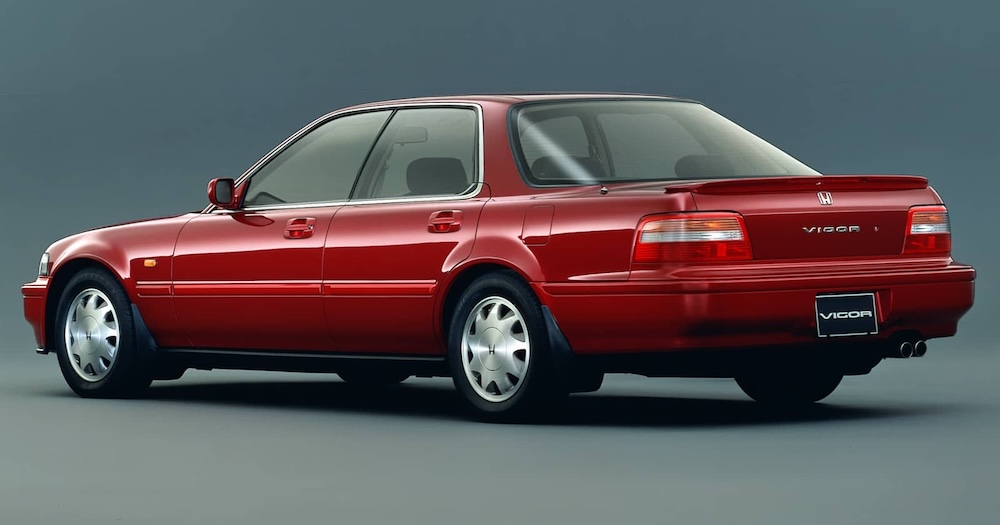
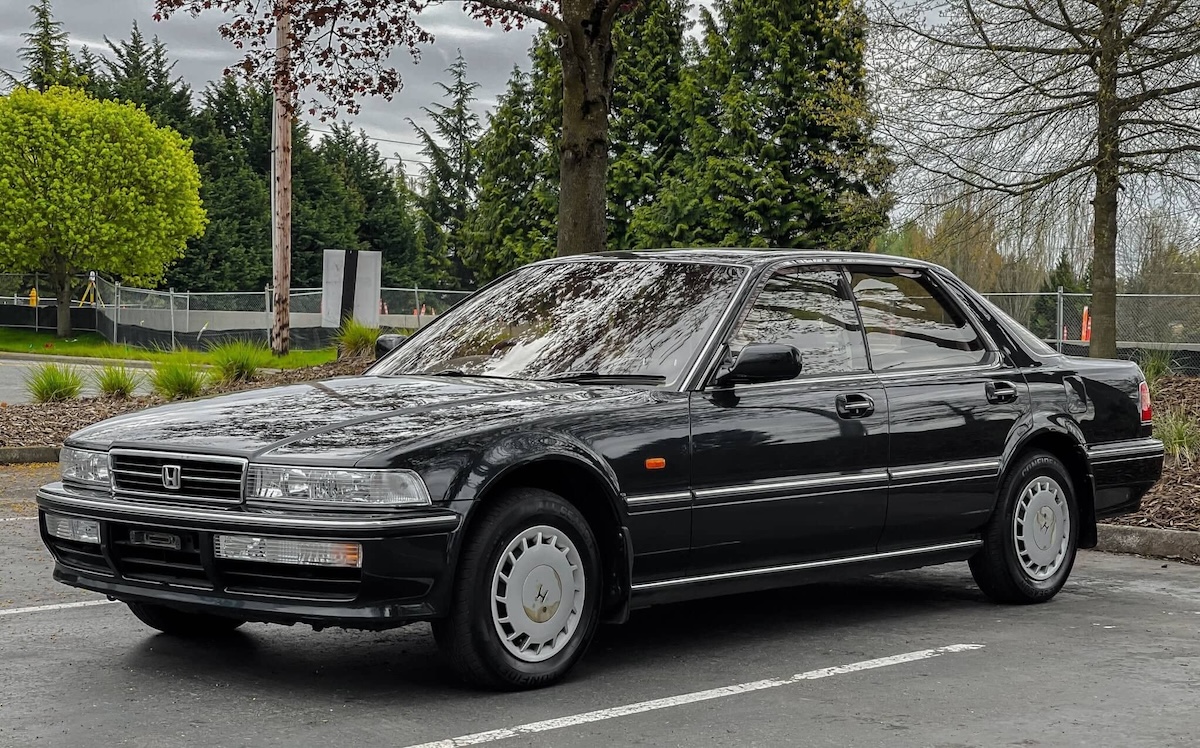
The story began in 1989, when Honda launched the fourth-generation Accord. Ordinary Accord and Ascot versions retained the familiar combination of a transversely mounted four-cylinder engine and front-wheel drive. Above them sat two more models: the Accord Inspire and Vigor.
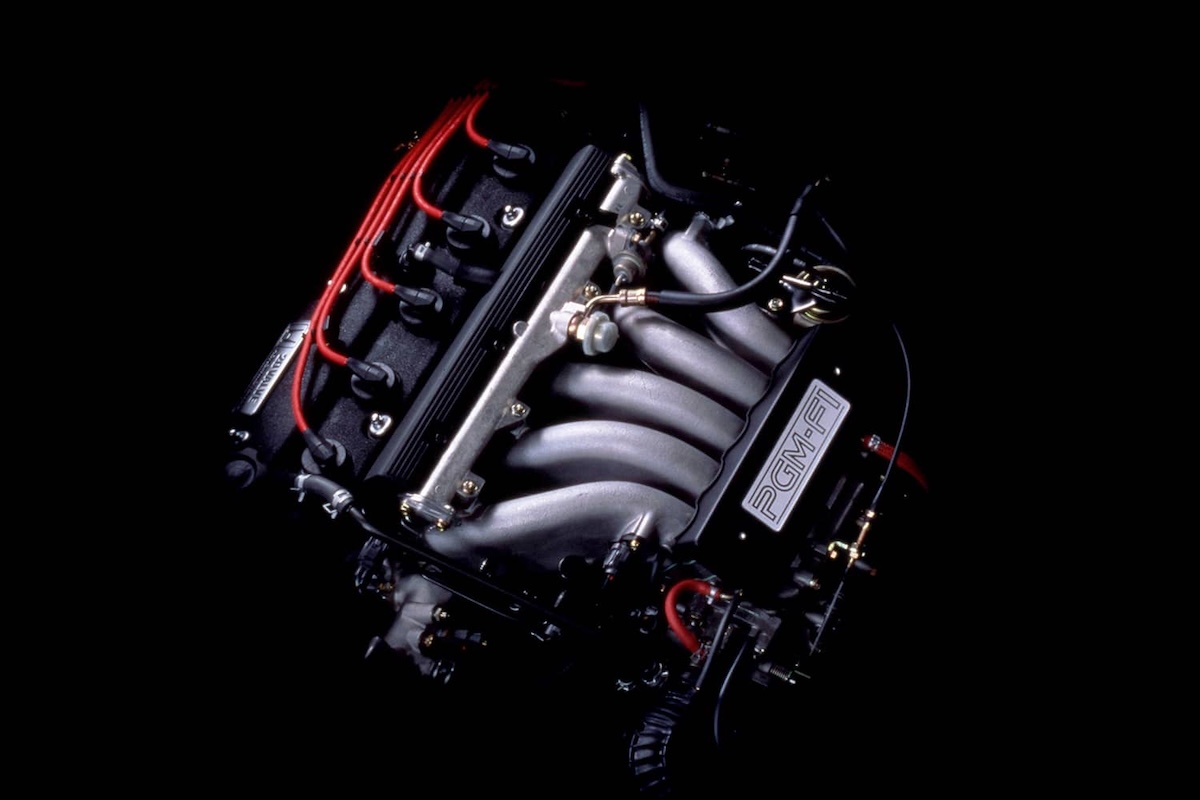
Honda wanted these cars to feel more sophisticated than a conventional compact saloon. A four-cylinder was considered too ordinary, so engineers developed a 2-litre inline-five called the G20A. Five cylinders offered a compromise between the packaging and economy of a four-cylinder and the smoothness of a larger six. There was also a certain technical distinction to it. Audi had already made the five-cylinder respectable, while Honda believed it could adapt the layout to its own high-revving, naturally aspirated philosophy. The original Japanese-market G20A produced 160 horsepower at 6,700 RPM. That was quite healthy for a naturally aspirated 2.0-litre engine in 1989.
There was no VTEC and the specification sounded very conservative: a single overhead camshaft and no turbocharger, but each cylinder still had four valves, giving 20 in total, while the combustion chambers, ports and intake system received some more development.
The Driveshaft
Honda mounted the five-cylinder longitudinally, in the same direction as an engine in a rear-wheel-drive car. The Vigor and Inspire still drove their front wheels, though, so the transmission and differential had to perform a complicated piece of choreography.
Honda called the arrangement “FF Midship.” The engine was pushed behind the front axle to improve weight distribution and steering feel, while the differential sat beside it. This meant that a driveshaft needed to cross beneath the engine.
An upright five-cylinder would have required a high bonnet and raised the centre of gravity. Honda’s solution was to lean the engine 35 degrees to the right. The crankcase and aluminium oil pan were then formed with a passage through which the driveshaft could run.
The front-heavy proportions associated with many front-wheel-drive cars were reduced, and there was no transmission tunnel or propeller shaft running to the rear wheels. Honda could therefore preserve a spacious cabin while moving the powertrain’s mass closer to the centre of the car. The arrangement also gave the Inspire and Vigor their long bonnet and unusually formal profile. The block was die-cast aluminium with an open-deck, Siamese-bore construction. Eliminating coolant passages between adjacent cylinders helped shorten the engine. A deep-skirt crankcase increased rigidity.
An inline-five produces a firing event every 144 degrees of crankshaft rotation. That creates the familiar off-beat exhaust note, but it also introduces an end-to-end rocking motion that an inline-six avoids. Honda fitted a balance shaft beside the crankshaft. It rotated in the opposite direction at engine speed, using weights at either end to counter the five-cylinder’s primary rocking couple. A torsional damper on the crank pulley addressed twisting vibration in the relatively long crankshaft.
A multi-stage intake system altered the effective flow area and runner characteristics across four operating ranges. Each cylinder had primary and secondary intake paths, with shutter valves controlling the secondary passages. The idea was to exploit intake inertia and resonance at different engine speeds, filling in dips in the torque curve rather than chasing one dramatic peak.
The exhaust manifold was similarly unconventional. Honda experimented with different arrangements before selecting a 5-3-1 design matched to the engine’s 1-2-4-5-3 firing order. Cylinders one and four were paired, as were two and three, while the fifth initially received its own pipe. The three pipes then merged into one.
From Two Litres to 2.5
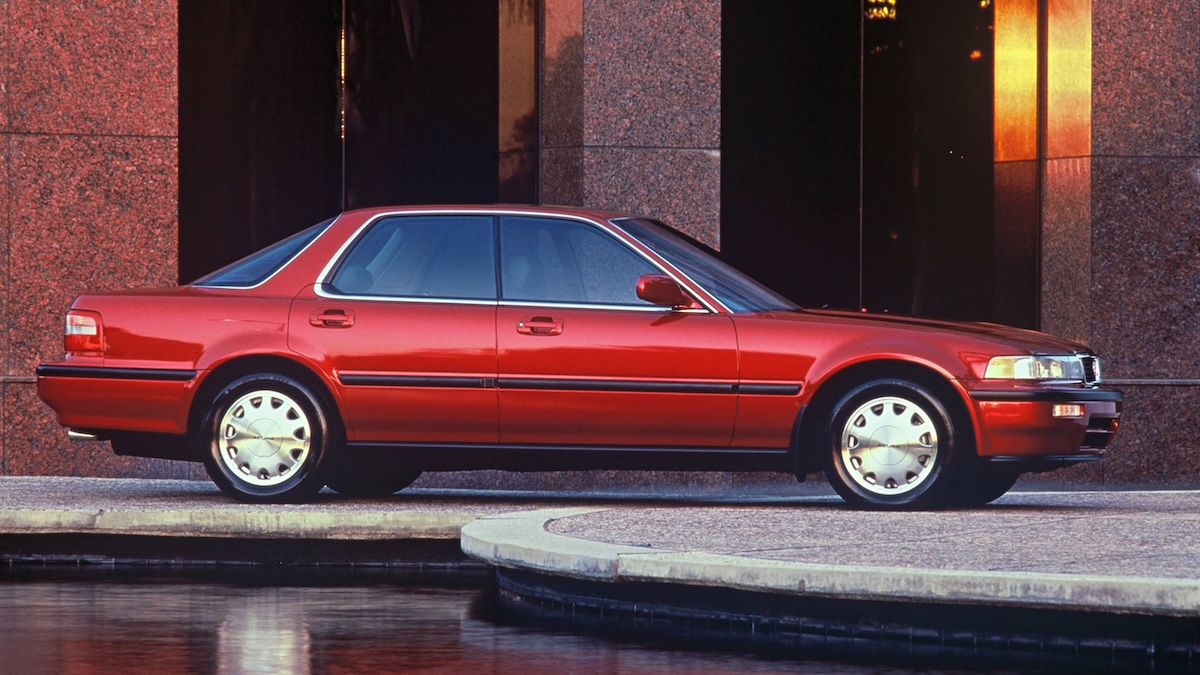
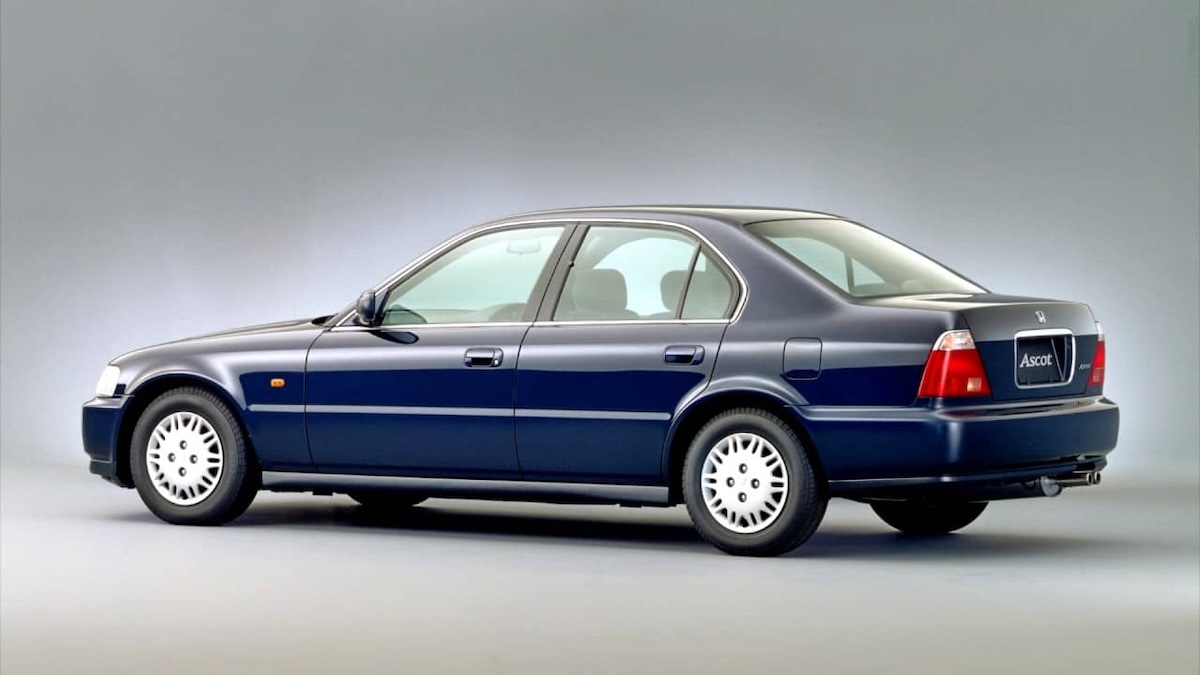
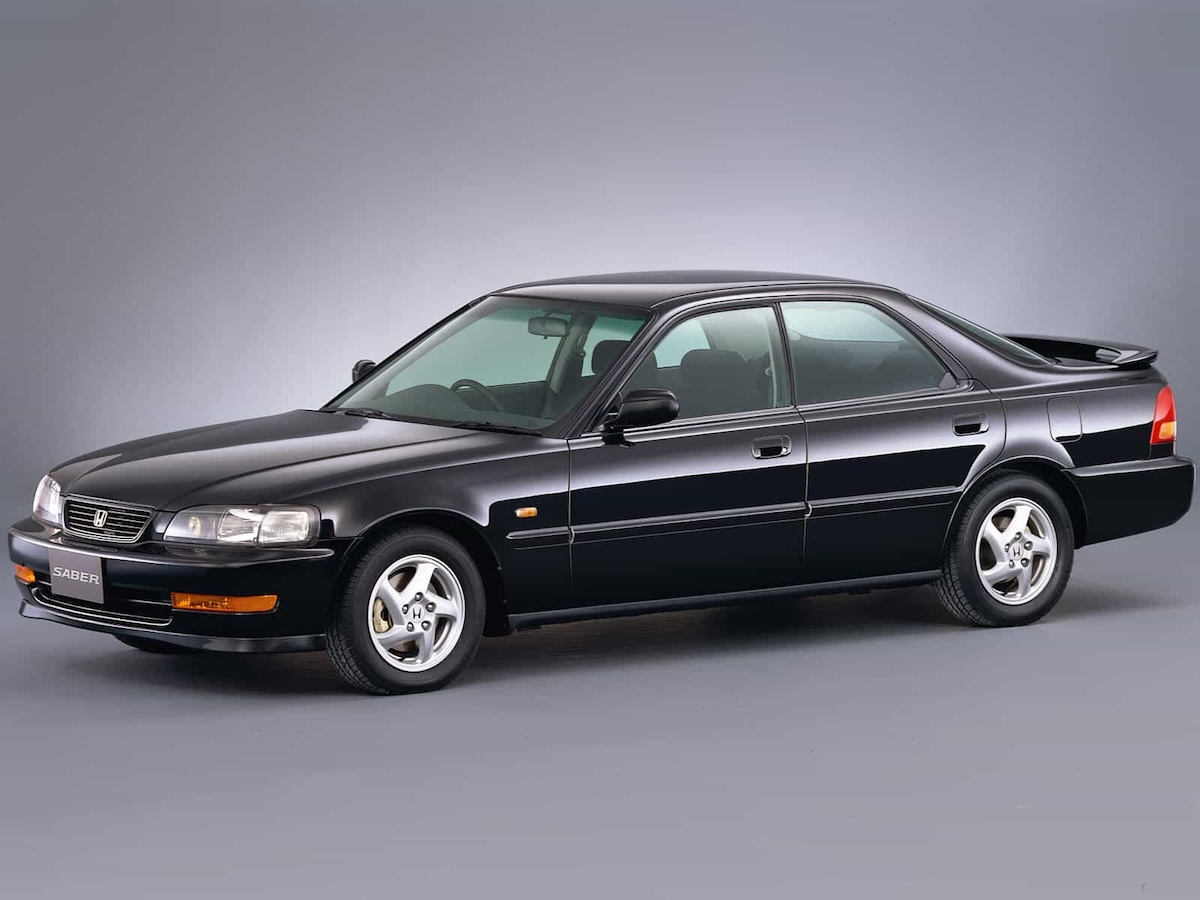
In 1992, Honda enlarged the engine to create the 2,5-litre G25A. In its Japanese premium-fuel specification, it produced 190 horsepower at 6,500 rpm. The 2.5-litre engine reached North America in the Acura Vigor, where it offered buyers something genuinely different from the V6 engines used by most rivals. Honda also installed five-cylinder engines in later versions of the Inspire and Saber, as well as the Japanese-market Ascot and Rafaga saloons introduced in 1993.
None became a major performance icon. These were refined executive cars, and their discreet styling did little to advertise the machinery underneath. Unless the owner opened the bonnet or accelerated hard enough to reveal the five-cylinder exhaust note.
The experiment ended in 1998. The next Inspire and Saber adopted compact, transversely mounted V6 engines, gaining more interior space and a layout that was easier to share with other models. The brilliant FF Midship five-cylinder had become an engineering island. The five-cylinder worked, but the world decided that a V6 was easier to explain. Honda has never built another production car engine quite like it. And few manufacturers would.
With modern modular engine technology, a 5-cylinder engine makes less and less sense. That is why Volvo and Audi have strayed away from them in a world that’s ruled by CO2 efficiency, production costs and regulations. And that’s a real shame, because the inline-5 is one of the most characterful engines out there, one that helped the aforementioned Audi and Volvo from their strong brands in the 80s and 90s. It did some good for Honda, but what doesn’t make money, quickly gets the axe.
---
Looking for your next classic or enthusiast car? Explore Car Categories on Dyler. You can also discover automotive-inspired products at Classic Passion Shop or find some of the best digital gift cards at CoinGate Gift Cards.