Few vehicles empty a house faster than an ice cream van. It simply turns into the street, plays eight seconds of distorted music and waits for every child within half a kilometre to begin negotiating with their parents. Yet the ice cream van was not invented all at once. It evolved from hand-pushed carts, refrigerated delivery trucks, American soft-serve machines and some surprisingly clever British engineering.
If one person deserves most of the credit, it is Harry Burt, a confectioner from Youngstown, Ohio. In 1920, Burt developed a chocolate coating that would harden around a block of ice cream. His daughter Ruth liked the result but complained that it was messy. Burt’s son suggested inserting one of the wooden sticks used for the family’s Jolly Boy lollipops. Thus ice cream on a stick was born. More importantly for automotive history, Burt needed a way to sell it and make it mobile.
From Pushcart to Truck
Mobile ice cream was not new. Vendors had been pushing insulated carts through cities long before the motor vehicle became common. In Great Britain, Wall’s would later become famous for its “Stop Me and Buy One” refrigerated tricycles. Such vehicles brought ice cream directly to customers, but their range was determined by the strength of the person pedalling or pushing them.
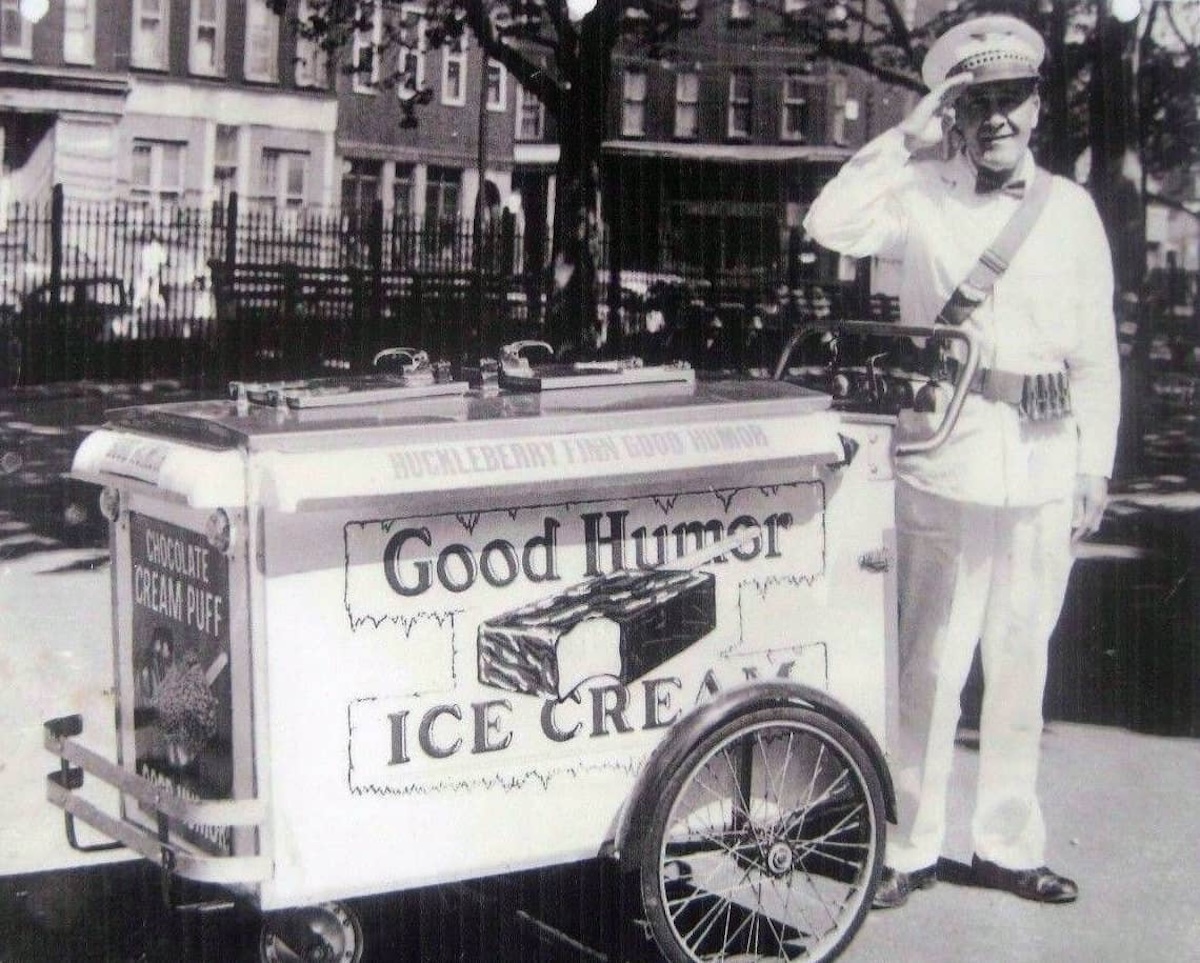
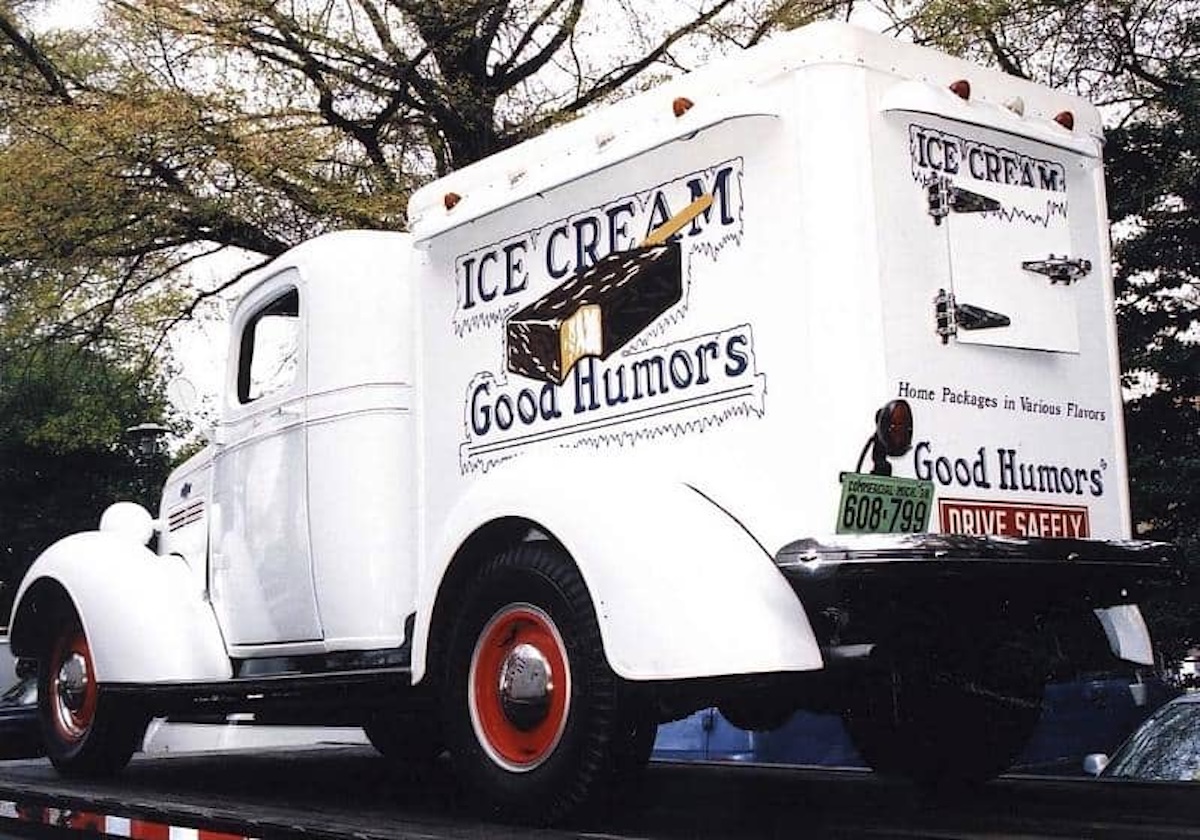
Burt added an engine. Shortly after creating the Good Humor bar on a stick, he equipped a fleet of 12 street-vending trucks with freezers. According to Good Humor’s company history, each truck also received a set of bells, with the first reportedly borrowed from his son’s bobsled.
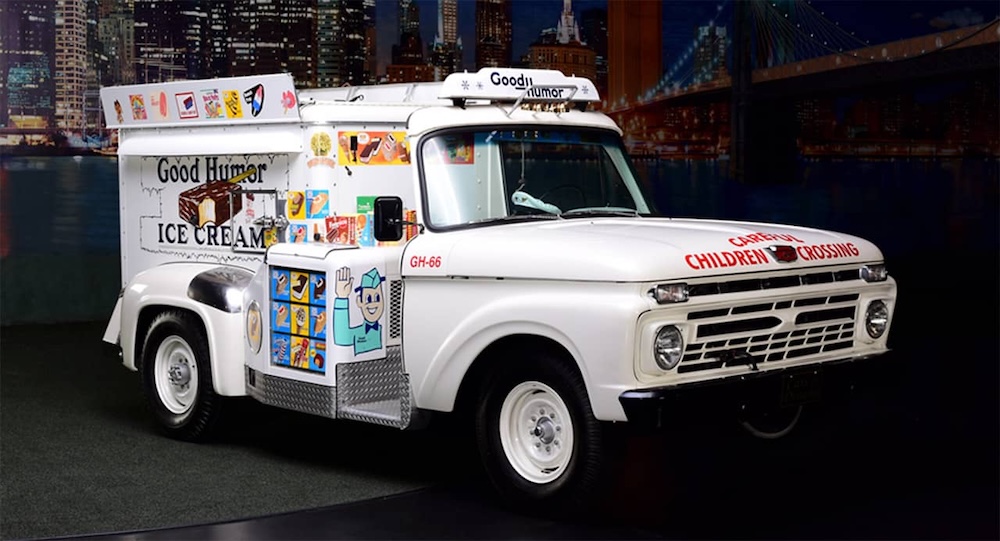
This is generally accepted as the beginning of the motorised ice cream truck. It was not yet the walk-in van with a serving window that most people imagine today. The early Good Humor vehicle was closer to a commercial pickup carrying an insulated freezer body. Its cargo consisted of individually packaged frozen treats rather than soft ice cream produced on board.
The truck solved several problems at once. It covered more territory than a cart, carried greater stock and allowed the company to control the condition of its products. Street ice cream had acquired a questionable reputation because of poor ingredients and unreliable sanitation. Good Humor answered with gleaming white vehicles and drivers dressed in spotless white uniforms.
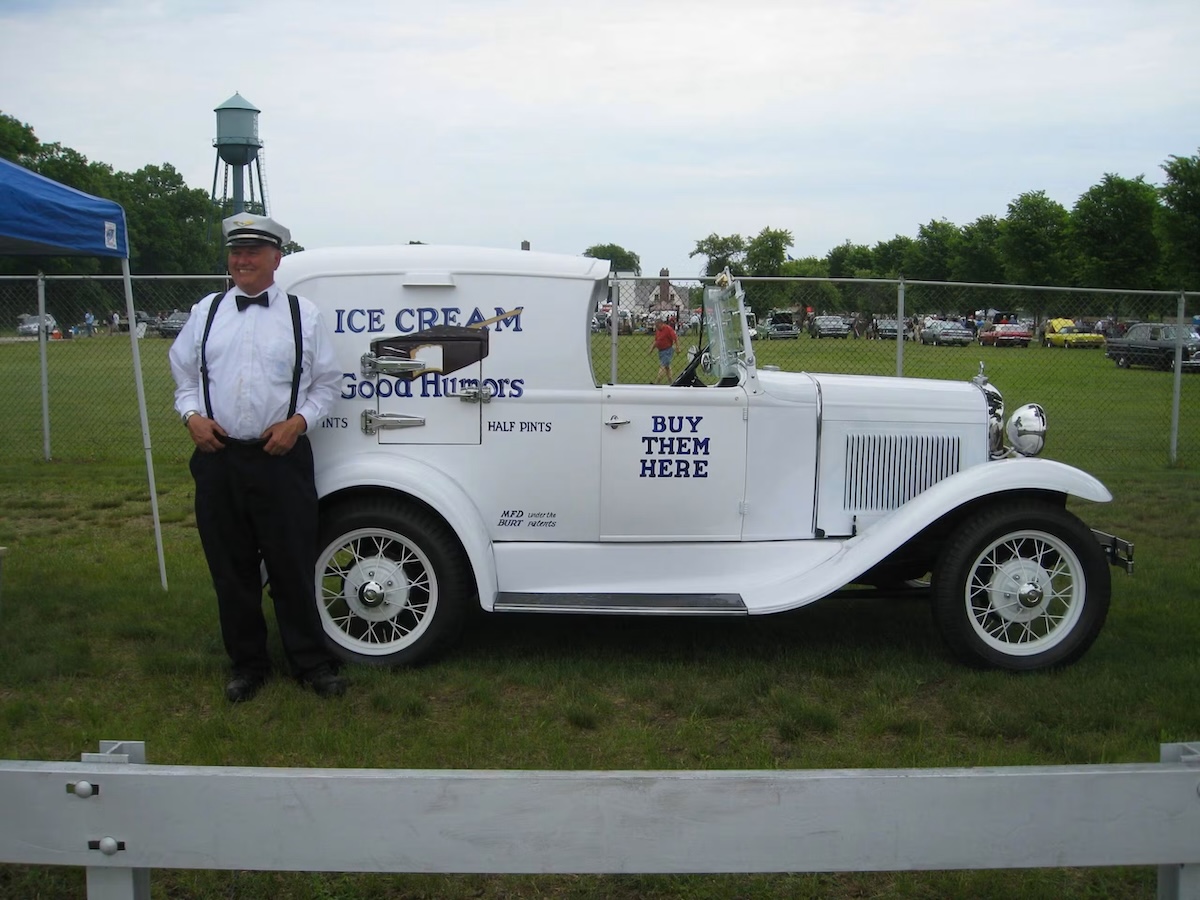
The presentation was deliberately clinical. Drivers were trained to behave politely, tip their hats to women and salute men. It all suggested cleanliness. By the end of the 1920s, Good Humor had settled on the white refrigerated pickup as its standard vehicle. The company expanded rapidly, and by the 1950s it operated around 2,000 trucks. A commercial vehicle had become part of the American summer.
The Ice Cream Truck
Harry Burt’s bells created a sales territory around every truck. The familiar musical version appeared soon afterwards. In 1929, Los Angeles Good Humor operator Paul Hawkins worked with organ builder Louis Bacigalupi to install a mechanical music box on a truck. It repeatedly played a short section of the Czech folk tune Stodola Pumpa. The crude loop performed the same job as Burt’s bells but required no effort from the driver.
That idea eventually produced one of the most recognisable sounds in motoring. The melody had to be simple, repetitive and audible through a cheap loudspeaker over the noise of a commercial engine.
The Modern Soft-Serve Van
The vehicle we now recognise as an ice cream van appeared in the post-war period. Good Humor’s trucks carried ready-made products, but soft serve required an entirely different machine. A proper soft-serve van must store liquid mix, freeze and aerate it, drive an internal beater and dispense the finished product immediately. Refrigeration equipment, water supplies, sinks, storage, ventilation and a service counter all have to fit inside a relatively small commercial vehicle.
The Conway brothers helped establish this format when they founded their business in Philadelphia in 1956. Their step vans allowed the operator to stand inside, reach the machinery and serve customers through a side window. This layout proved so effective that Good Humor eventually moved away from its pickup-style bodies and adopted step vans as well.
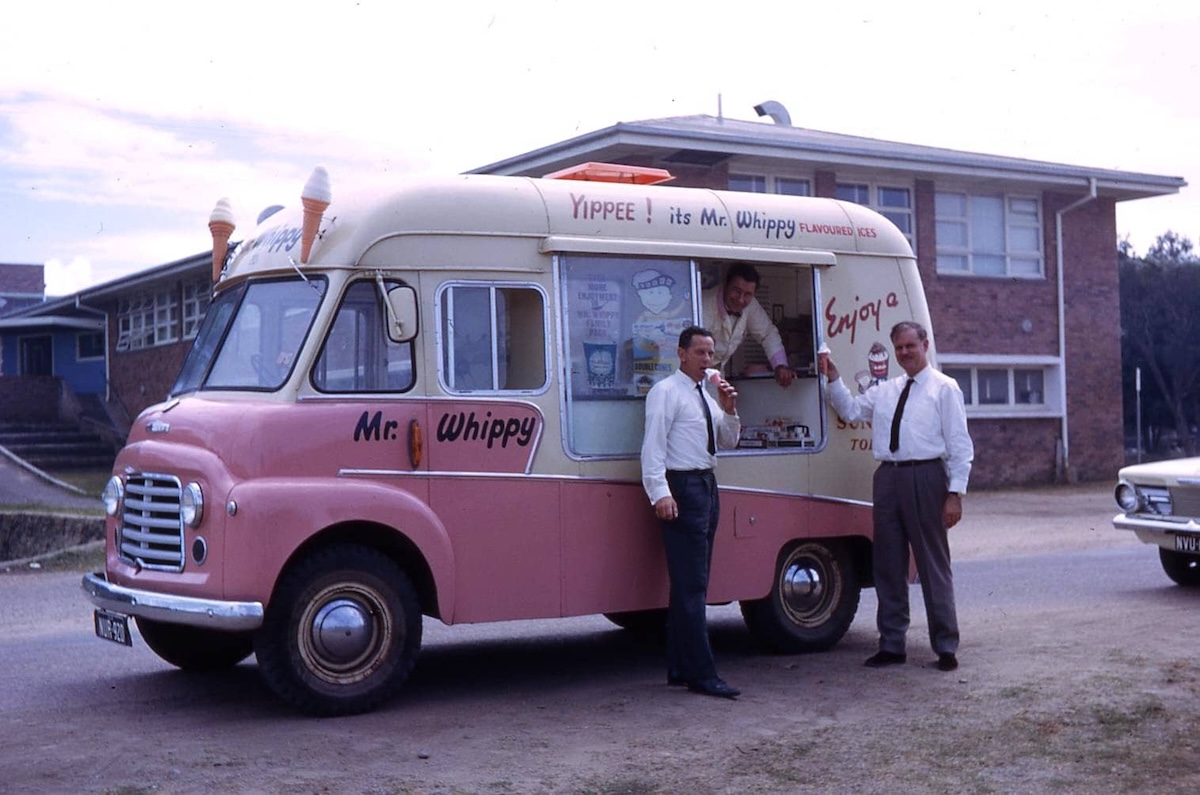
The idea reached Britain quickly. In 1958, Bryan Whitby established Mr. Whippy in Birmingham. Its colourful vans and freshly dispensed soft ice cream helped define the British version of the vehicle. And no, Margaret Thatcher did not invent it. Britain’s future prime minister worked as a food research chemist before entering politics, which later produced the popular story that she invented soft serve. The product, its machinery and mobile vending operations were already being developed in America.
An Unexpected Piece of Automotive Engineering
British manufacturers soon began treating the ice cream van as a specialised commercial vehicle rather than a freezer conversion. Bedford, Austin, Commer and later Ford Transit chassis became familiar foundations, often wearing elaborate coachbuilt bodies with large illuminated signs and raised roofs.
One important advance came from Crewe in 1962, when a direct-drive system that allowed the van’s engine to power the ice cream machinery without a separate generator was invented. The principle remains in use today.
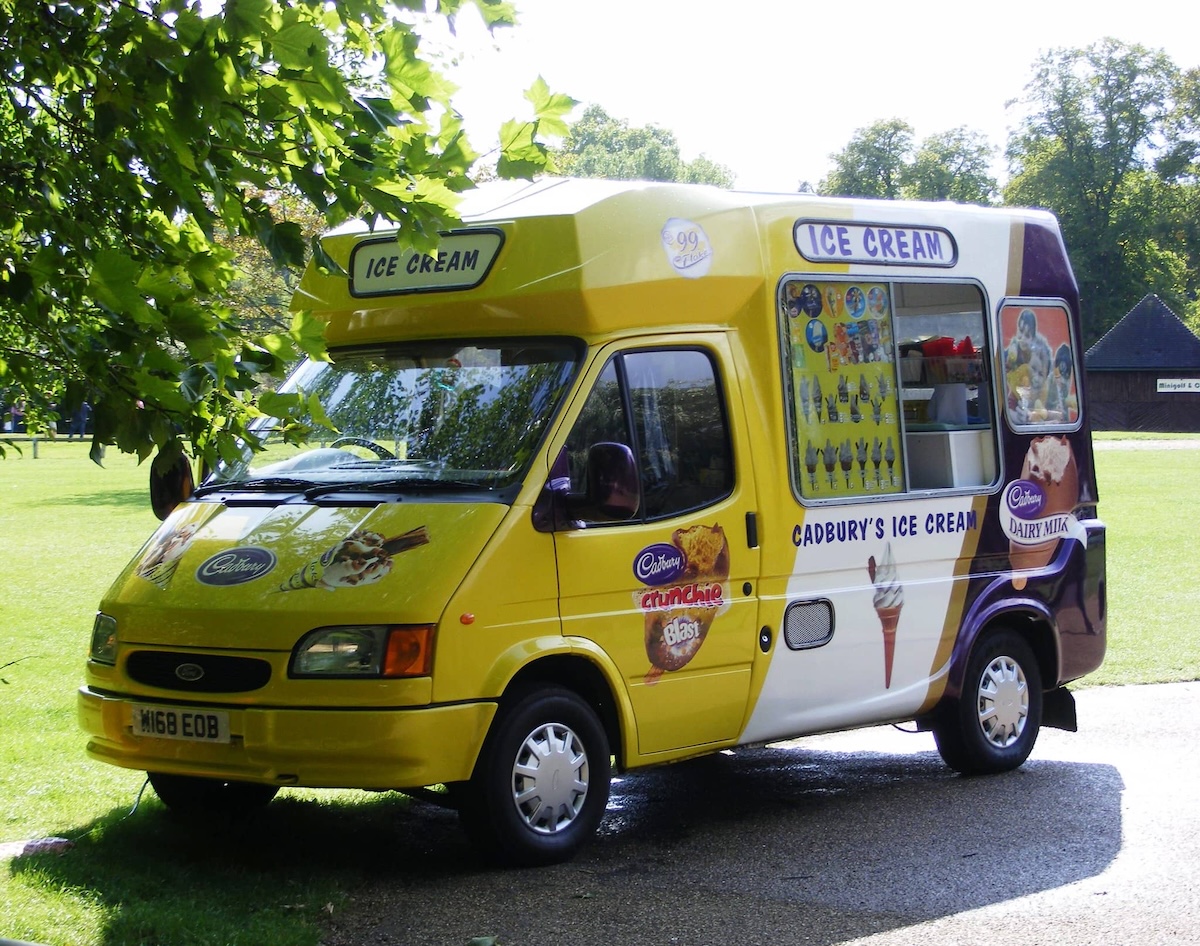
It explains why the traditional van often sits with its engine running while parked. The engine is operating the equipment producing the ice cream. Modern battery systems however are beginning to replace that arrangement, reducing noise, fuel consumption and exhaust emissions.
So, who invented the ice cream van? Harry Burt created the first widely recognised motorised ice cream truck in 1920. Paul Hawkins helped give it music. The Conway brothers turned it into a mobile soft-serve parlour, while specialists such as Bryan Whitby developed the machinery that made the British van practical.
---
Looking for your next classic or enthusiast car? Explore Car Categories on Dyler. You can also discover automotive-inspired products at Classic Passion Shop or find some of the best digital gift cards at CoinGate Gift Cards.