The 1960s were not a quiet decade for the motor car. It was a time when engineers still believed the future could be shaped with imagination, enough funding, and enough polished aluminium. The Space Age had arrived, the Cold War was pushing technology forward at a frightening pace, and American industry was full of confidence. In that atmosphere, even the most ordinary forms of transport seemed ready for reinvention.
General Motors was one of the companies most willing to think on this scale. Petrol was cheap, roads were expanding, and the American car market was booming. Yet GM engineers were not satisfied with simply refining the piston engine. They were looking beyond it. They imagined a world where cars, trucks, and buses might use something far more exotic than regular gasoline. They looked towards the golden liquid of the jet age — turbine fuel.
It sounds absurd today, but at the time it made a certain kind of sense. Jet aircraft had transformed long-distance travel. Turbines were smooth, powerful, and technically glamorous. They represented progress. GM was trying to design the transport system of tomorrow.
A truck from another planet
One of the most striking results of this thinking was the General Motors Bison, revealed at the 1964 New York World’s Fair. Even by concept vehicle standards, it looked extraordinary. It looked like a complete rejection of everything people expected from commercial transport.
The Bison had a dramatic forward-tilting cab, two steerable front axles, and a highly unusual trailer designed for flexible cargo use. GM wanted to show that heavy transport could become more efficient, more adaptable, and more advanced. The Bison was presented as a glimpse of a future in which freight vehicles would be cleaner, more powerful, and easier to operate over long distances.
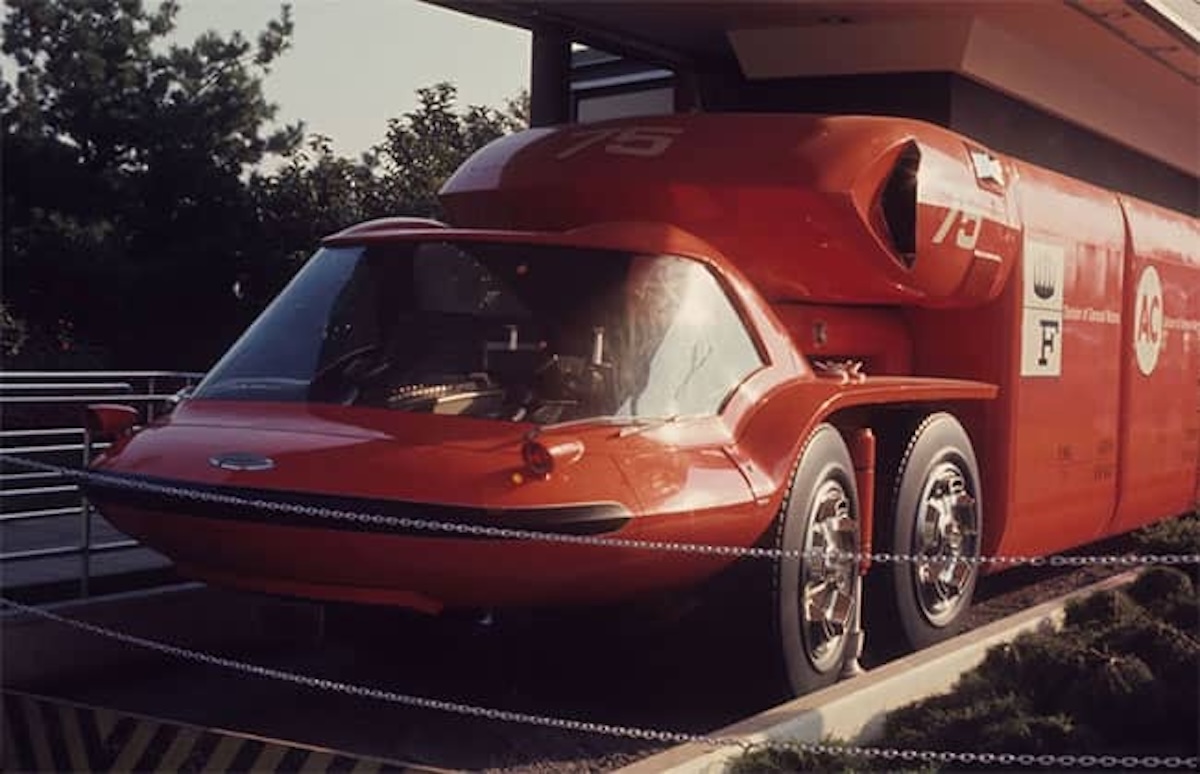
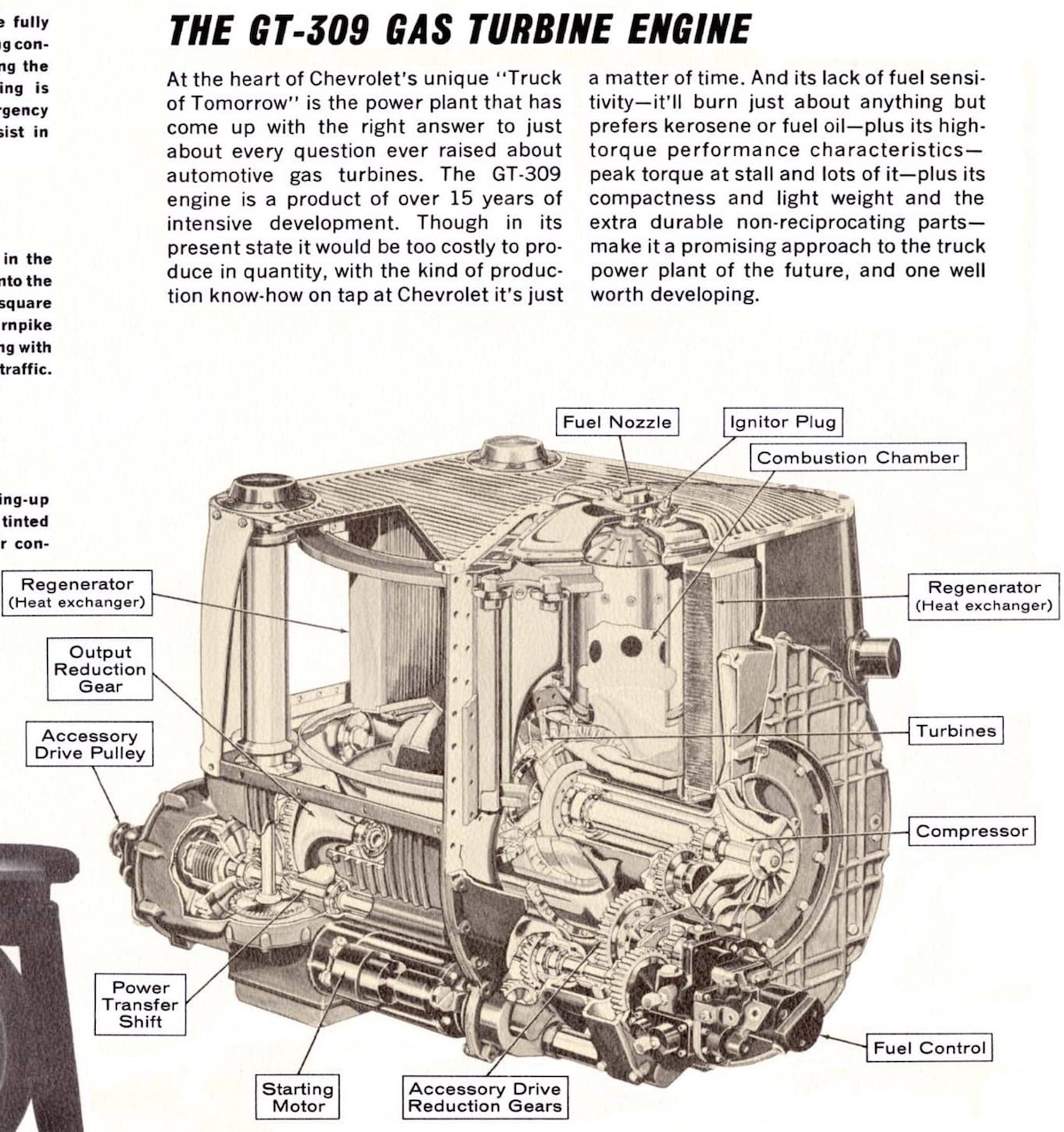
At the heart of the concept was GM’s GT-309 gas turbine engine. With two turbine units, it could spin up to around 35,000 rpm and produce a claimed 1,000 horsepower. The engine was also promoted as having a cleaner exhaust than conventional heavy-duty internal combustion engines of the period. In an era before modern diesel emissions systems, that point mattered.
The Bison was meant to be one of the stars of the New York exhibition. In another year, perhaps it would have been. But 1964 had other plans. At the same event, Ford introduced the Mustang to the public. The Bison, for all its drama, was pushed into the background. Only one concept is believed to have been built. That almost makes it more fascinating.
Chevrolet Turbo Titan
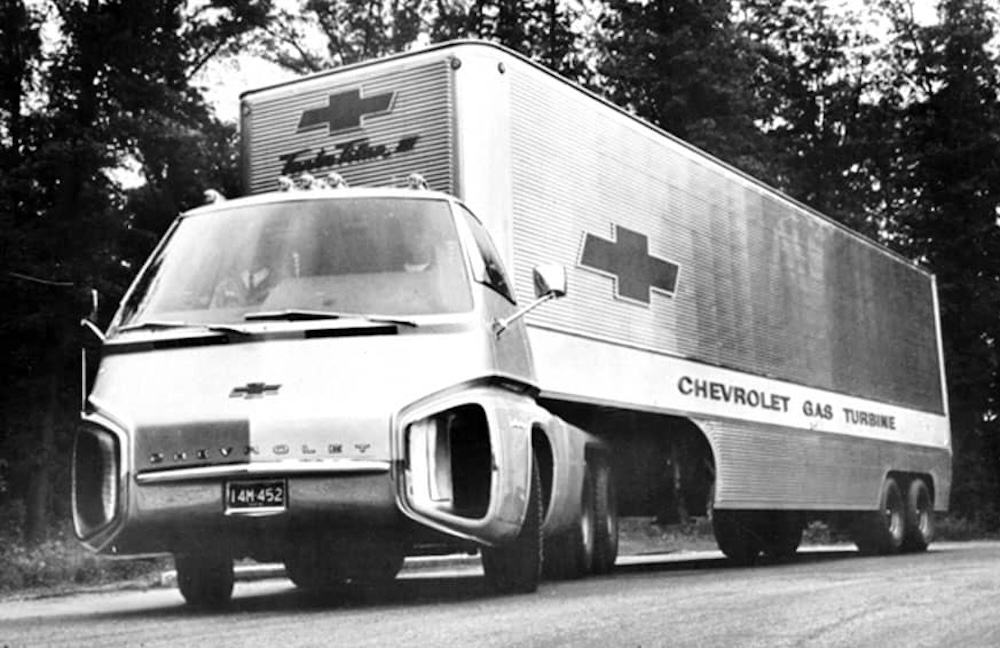
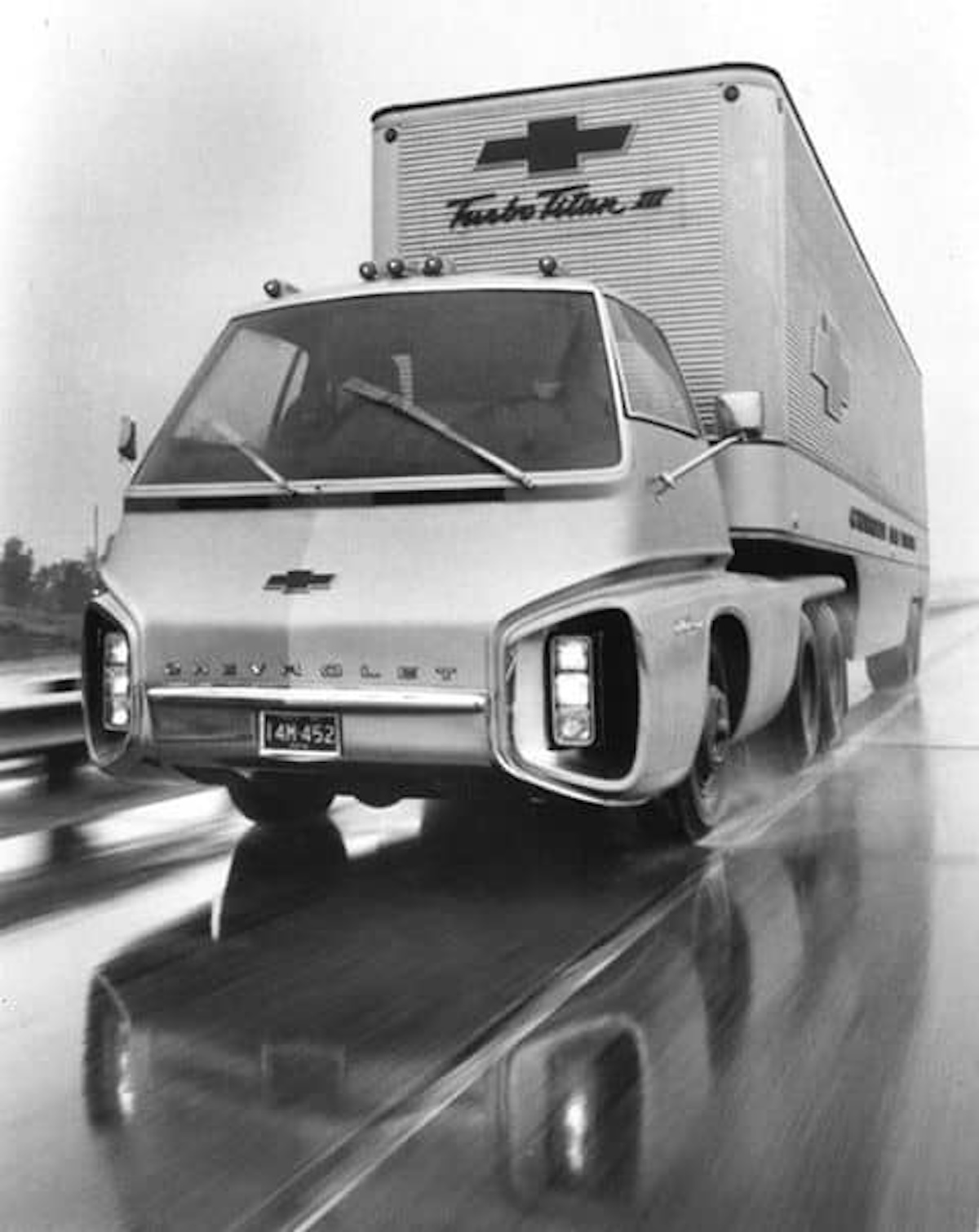
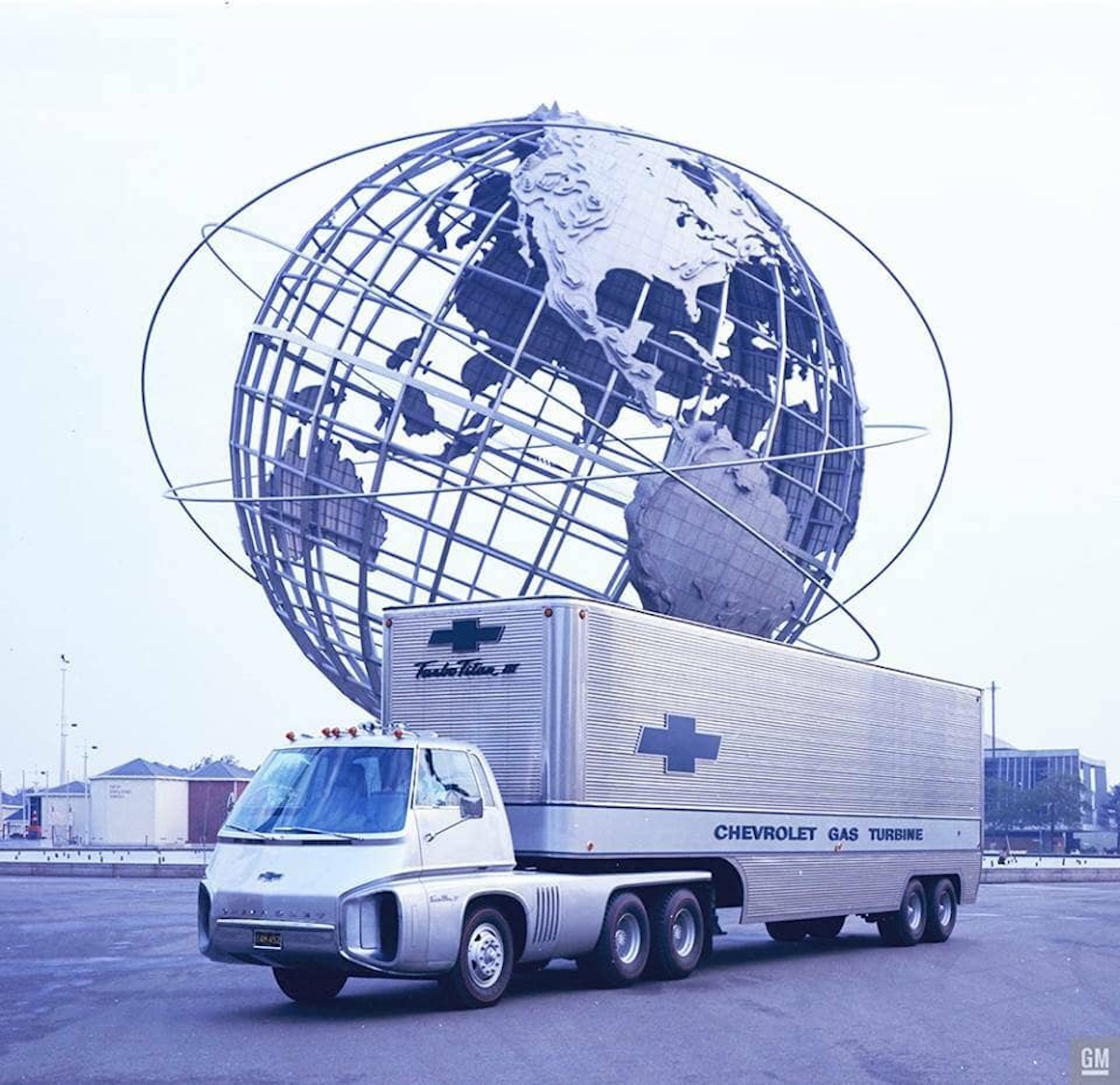
If the Bison was the grand theatre of turbine trucking, the Chevrolet Turbo Titan III was a more focused attempt to imagine how such a vehicle might actually work. It was still wildly futuristic, but there was a greater sense of development behind it. Its body was made using fibreglass and steel. GM had spent well over a decade studying turbine-powered trucks, and the Turbo Titan III was one of the most complete expressions of that work.
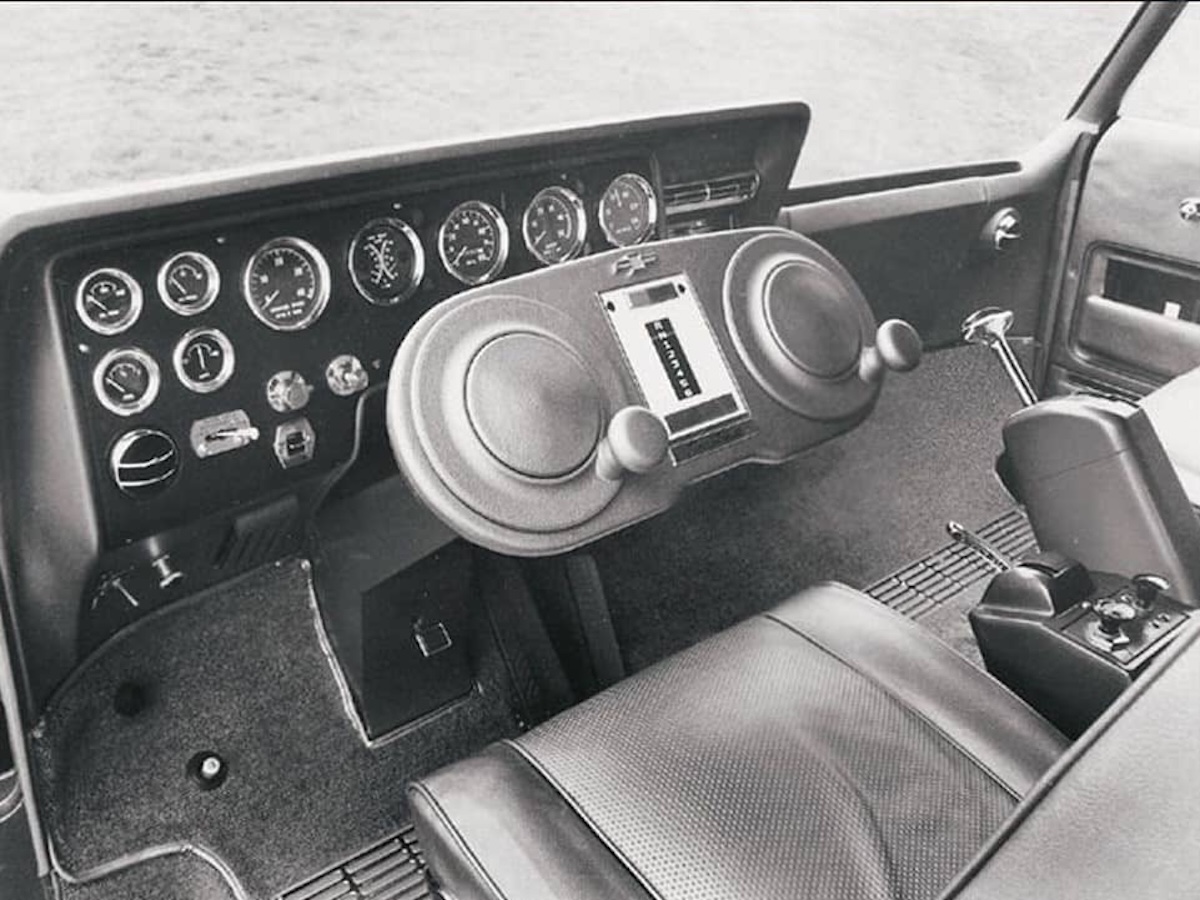
The cabin was pure Space Age optimism. Inside, the driver was treated like a pilot. There was a specially designed seat with an almost astronaut-like appearance, and the interior was trimmed with leather. The centre of the cabin featured a chrome T-shaped selector for the six-speed automatic transmission.
Then there was the steering. Calling it a steering wheel would be generous, because it was not really a wheel at all. Instead, the driver faced two circular control plates that looked as though they had been borrowed from a rotary telephone. By turning them, the driver operated the power steering system and controlled the front wheels. It was a brave idea, but also a reminder that concept vehicles often explore possibilities that production vehicles wisely avoid.
The front section of the body could be opened electrically. Its most memorable visual detail was the placement of the headlights within side air intakes. The rear bodywork was sharply tapered for aerodynamic efficiency, giving the truck a long, sloping, alien appearance.
Why turbine trucks never took over
The turbine-powered road vehicle had serious problems. The technology was impressive, but it was not practical enough to replace conventional engines. Petrol and diesel remained cheap, familiar, and increasingly well developed. Piston engines were easier to manufacture, easier to service, and far better suited to the real-world needs of private and commercial transport.
The cost of turbine engines was another major obstacle. They were expensive to build and required materials and tolerances that made sense in aviation, but less sense in everyday road vehicles. They also behaved differently from piston engines, especially at low speeds and during stop-start driving. For trucks crawling through traffic, the advantages were harder to justify. New American regulations also changed the environment in which these vehicles would have needed to exist. The future was becoming more complicated. Safety, emissions, cost, and reliability all mattered.
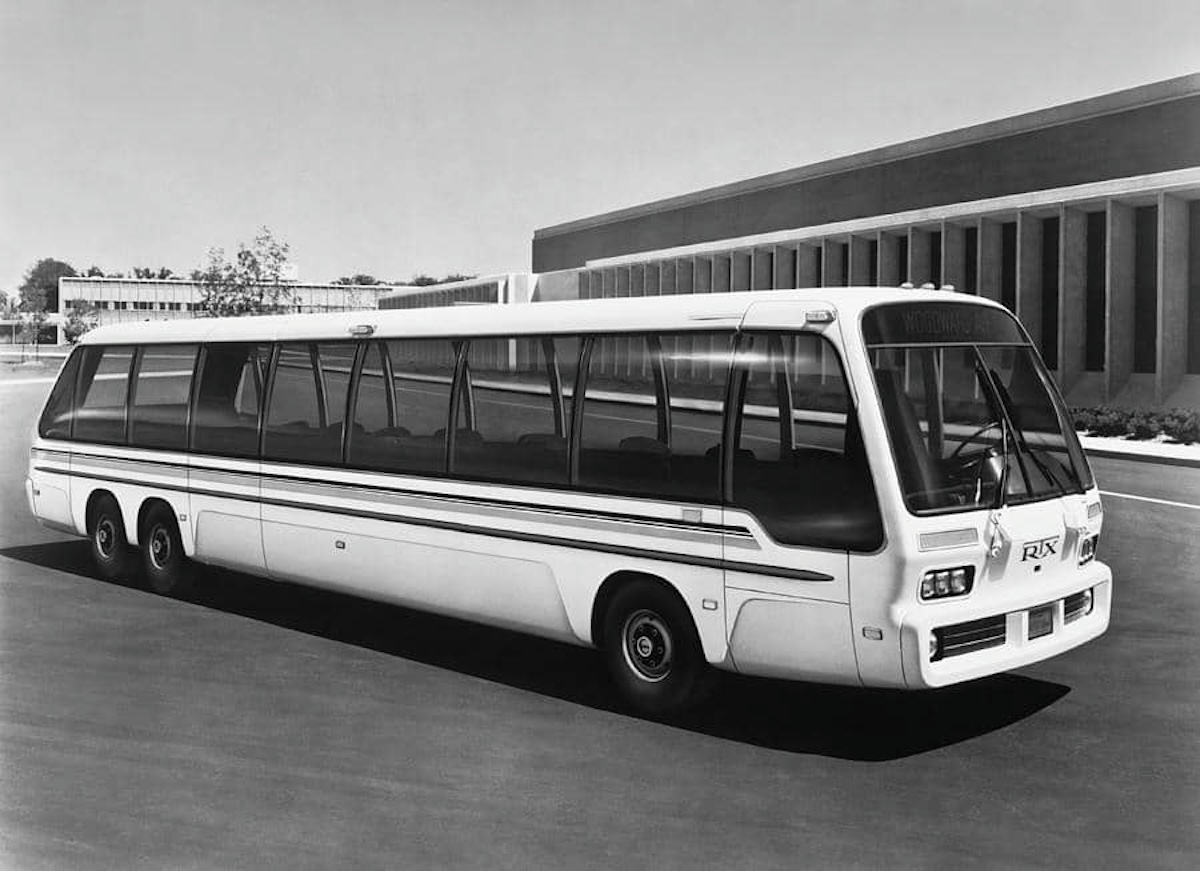
The GT-309 engine was also tested in public transport concepts, including experimental buses such as the Turbo-Cruiser and the Rapid Transit Experimental vehicle. But the result was the same. The technology did not move into mass production.
A brilliant wrong turn
It is easy to laugh at these machines now. A turbine-powered truck with telephone-dial steering and a spaceship cabin sounds like something from an optimistic comic book. Yet that would be unfair. The Bison and Turbo Titan III were created in a period when the boundaries of automotive engineering still felt open. These vehicles failed because the world did not need them badly enough. Conventional engines improved. Diesel trucks became more efficient. The economics did not work. The turbine future remained a dream.
The Bison and Turbo Titan III belong to a lost age of corporate experimentation, when a major manufacturer could present a turbine-powered truck and expect people to take the idea seriously. They are reminders that progress is not always a straight line. Sometimes it is a spectacular detour.
---
We invite you to start your journey by exploring our broad selection of Car Categories. After that, feel free to visit the Classic Passion Shop, where you’ll find unique products from our partners — thoughtful picks for every enthusiast looking to add something special to their collection.