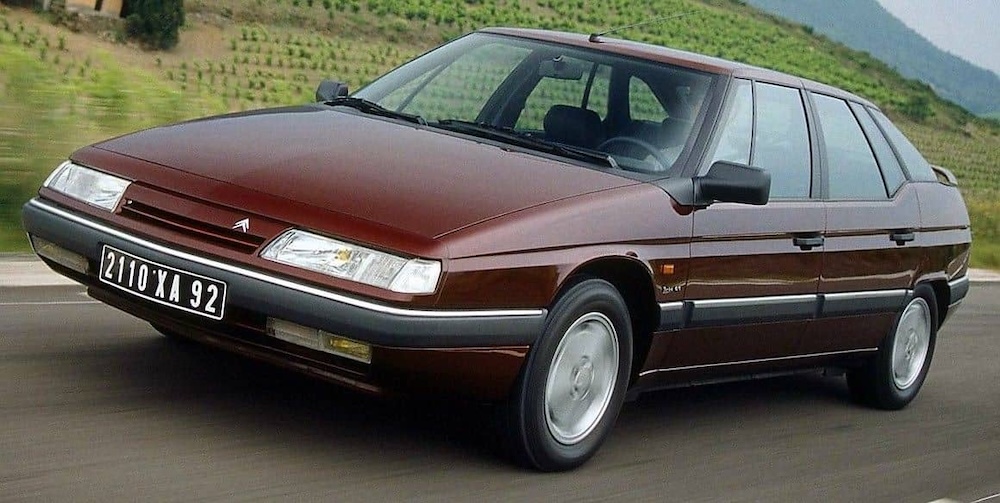
There are cars that simply exist and there are cars that happen. The Citroën XM emerged like a sculpture that somehow survived an argument between ten different designers. It united conflicting ideas about what a car should look like into one inspiring, deeply strange and thoroughly French creation.
To a casual observer, the XM can look like a failed geometry experiment. It’s all angles and lots of glass but live with it for a bit and it transforms. What looked odd becomes fascinating. You start to see why someone might want to drive it endlessly and when not driving, simply admire it with a cup of coffee and a quiet smile.
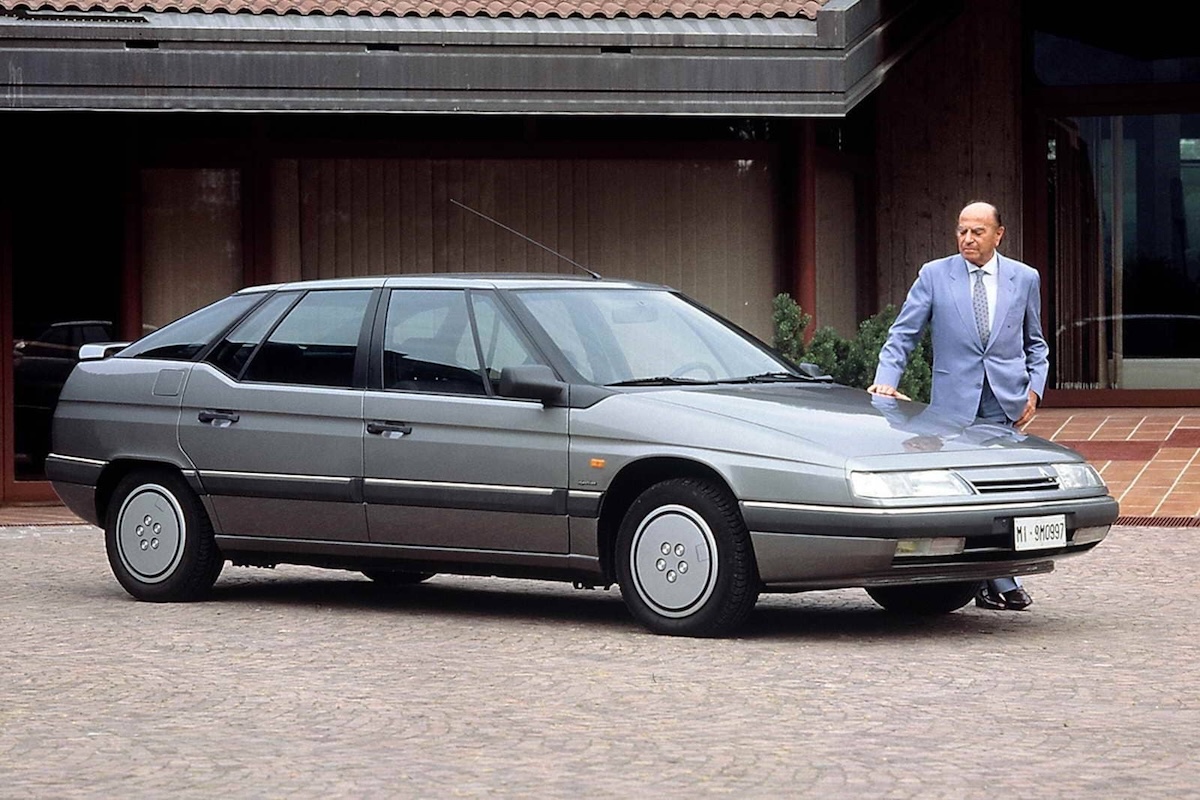
The XM was the big Citroën, the heir to a dynasty: DS, SM and CX. Each of them had defined eras of French innovation, symbols of technical boldness and national confidence. The XM, launched in 1989, didn’t quite manage to fill those legendary shoes but its attempt was so sincere, so determined that you can’t help but admire it. Its biggest asset, naturally, is its design and not just in the sense of styling or surface beauty. Real design is about the relationship between form, function and proportion. Judged by that measure, the XM is a masterpiece.
Officially, its design came from Gruppo Bertone under the direction of Marc Deschamps, a man who wasn’t afraid to borrow inspiration from his rivals. And if you look closely, the XM feels like a grand conversation between European designers of the late ’70s and early ’80s.
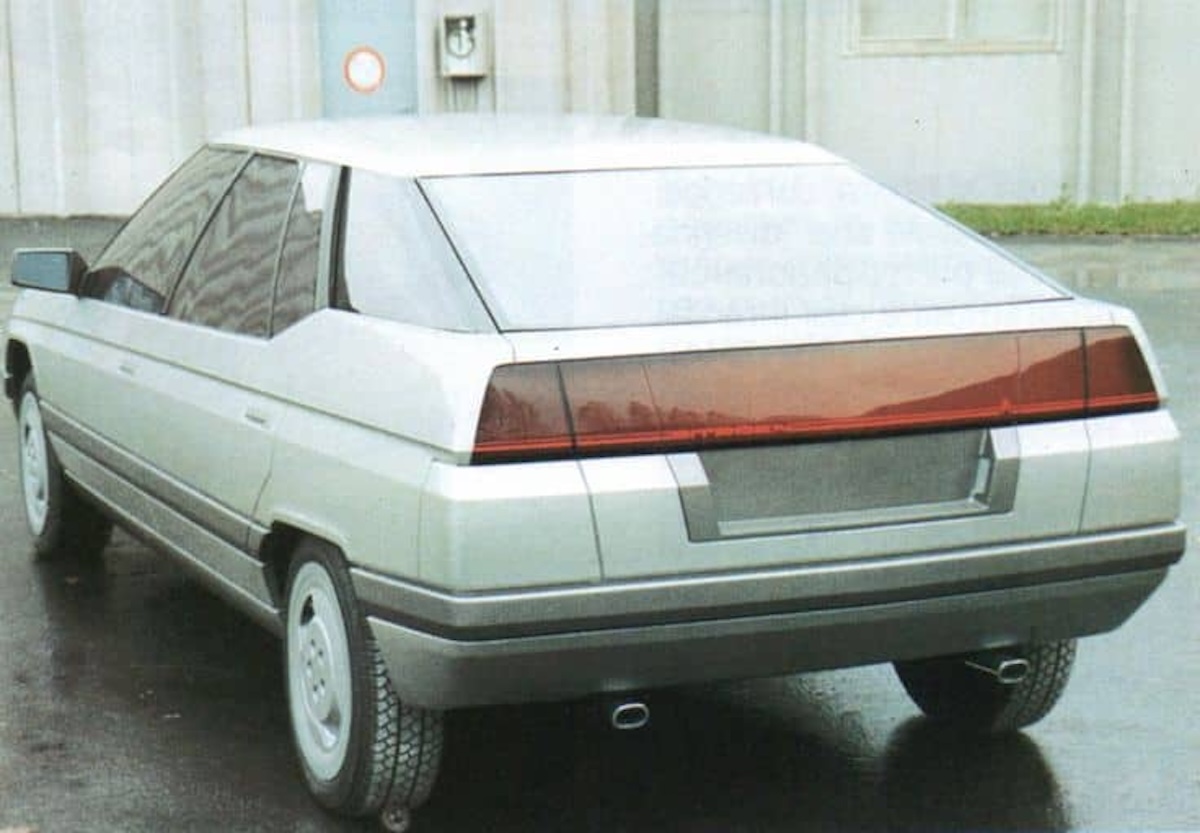
You can start with the 1974 Lotus Eclat, whose lowered window line became a staple of sleek automotive design and helped shape the XM’s bright airy cabin. Then there was the 1979 Bertone Tundra, a sharp-edged concept that influenced everything from the Volvo 480 to the BX and beyond. From Giugiaro’s 1980 Lancia Medusa came the long wheelbase and cab-forward stance, while the 1980 Ferrari Pinin and 1982 GM Aero concepts inspired the hidden pillars and smooth glass transitions. Even the Mazda MX-81, also drawn under Deschamps, left traces in the XM’s surfaces and proportions. It’s almost impossible to name another production car that united so many ideas, not just from Citroën’s own lineage but from the whole European design scene. From Bertone to Pininfarina, GM, Giugiaro and back to Bertone. The XM gathered them all and made them French.
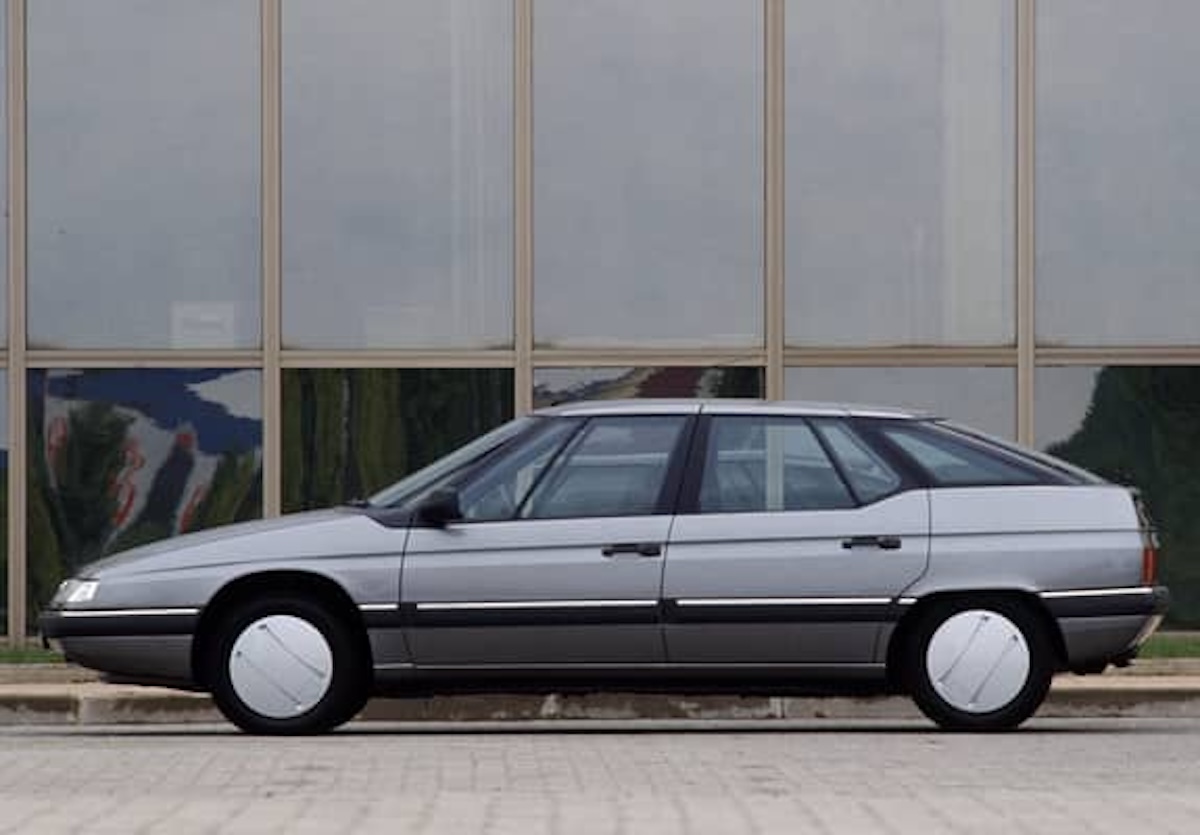
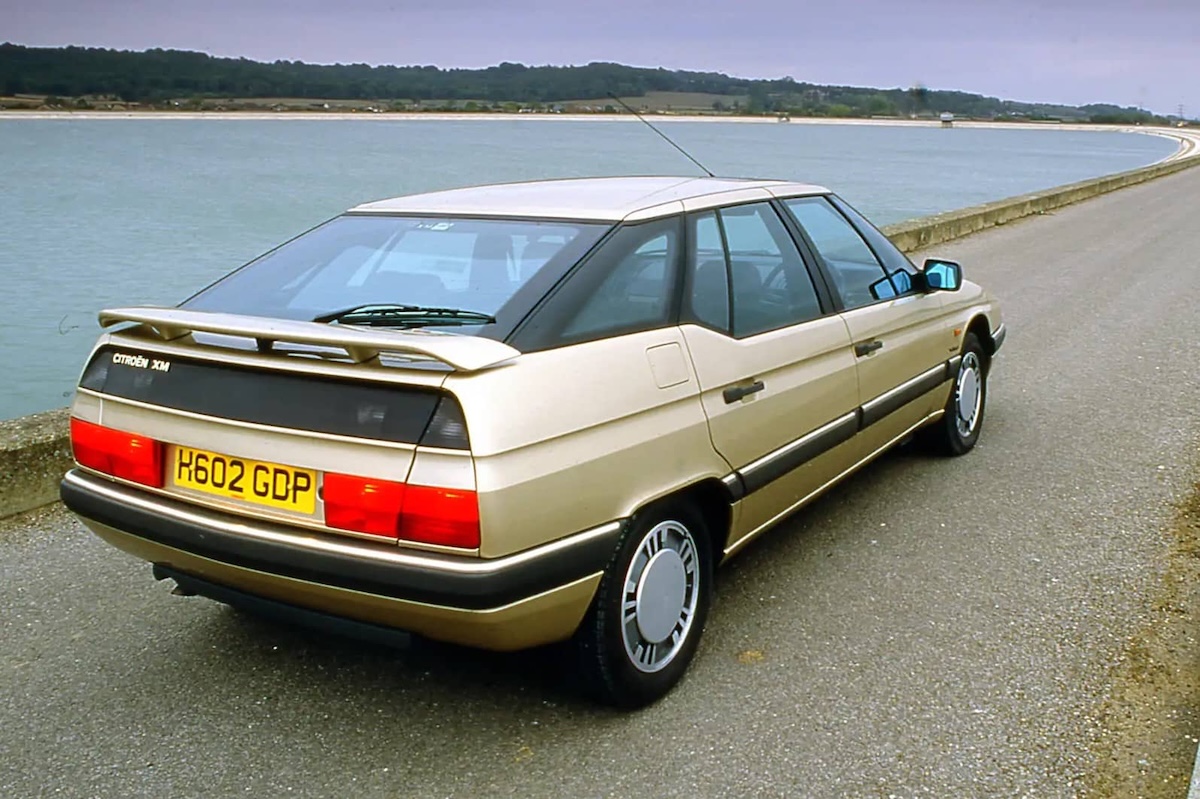
And yet, the XM looked forward. It was sharp as autumn air, futuristic, angular but with warmth. It was built from broken planes and folded volumes, with thirteen glass panels forming a greenhouse-like cabin and a front end that’s shockingly low. In its lowest suspension setting, the bonnet sits lower than the top of a normal sedan’s wheels. The chopped Kammback rear end rises high, giving it that distinct, almost wedge-like tension, think Lamborghini Diablo meets executive saloon. The off-centre Citroën badge on the nose felt like a wink to early computer graphics. Sometimes the XM looks like an explosion of ideas. But from most angles, it’s a unified object, one of the finest examples of postmodern car design. Especially with those classic Technic wheel covers that seem to seal it all together.
And then there’s something you only notice later: the XM isn’t just futuristic, it’s subtly retro. Unlike the cartoonish nostalgia of cars like the Fiat 500 or PT Cruiser, the XM whispers its heritage. Its stepped window line nods to the two-door SM, as do the rear lights, which echo that car’s horned taillamp “cap”. The horizontal stance and clean futurism are inherited from the CX. Even the name connects past and future – take the “X” from CX, the “M” from SM, and you get XM, a perfect blend of prestige and progress.
The XM was developed alongside the Peugeot 605. They shared a platform, transmission and much of their electrical systems which, as owners soon discovered, was both a blessing and a curse. The hydropneumatic suspension and futuristic body were Citroën-only but the wiring nightmares were shared. Early 605s and XMs suffered from failing connectors, fragile plastic clips and damp-sensitive electronics.
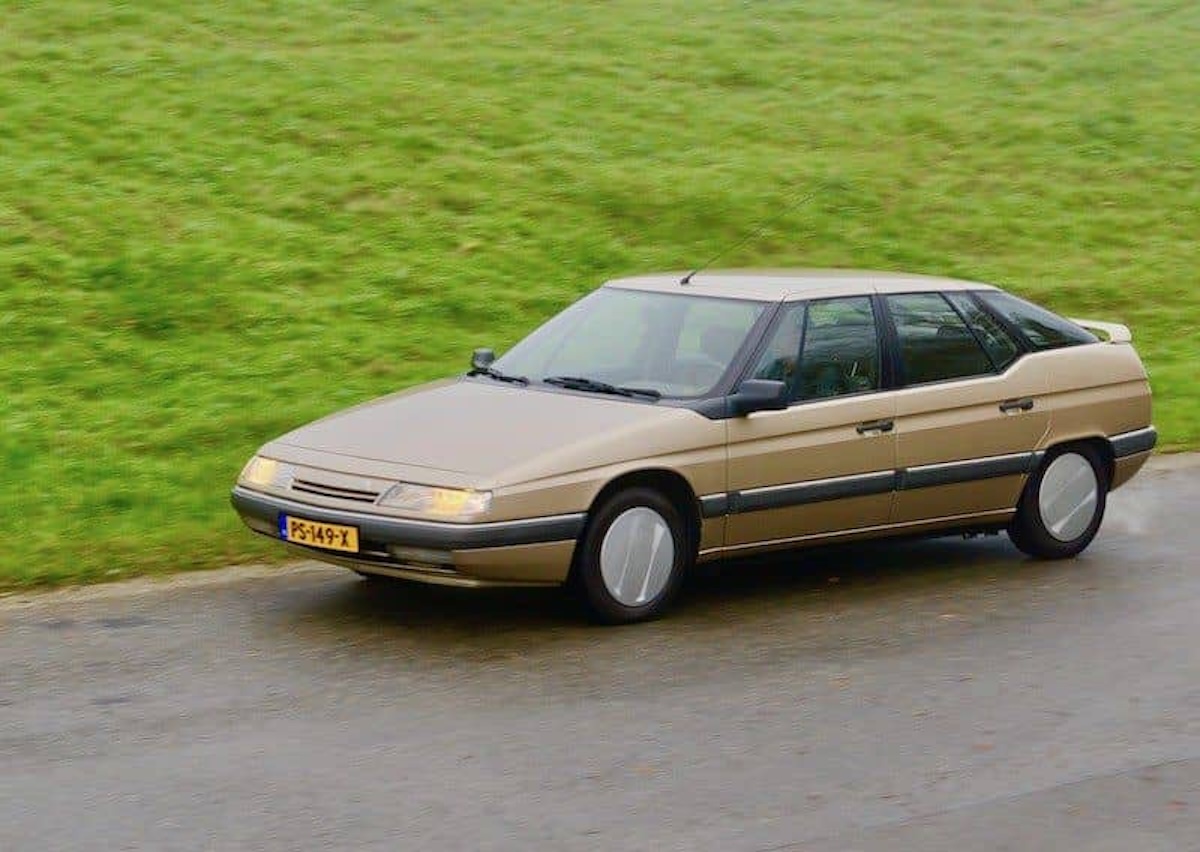
Still, Citroën didn’t stop innovating. The XM introduced Hydractive suspension – a more advanced version of the CX system with two extra spheres and electronic control that adjusted damping in real time. Signals from the steering, throttle, brakes and gearbox were processed by a computer to stiffen or soften the rear suspension depending on what the front wheels had just encountered. The result was both more comfortable and more stable, the sort of magic only Citroën could engineer. Even without electronics, a well-sorted hydropneumatic Citroën felt like it floated on magnetism. The car refused to lean in corners, ironed out bumps with eerie calm and constantly hissed and adjusted itself like a living organism. Under acceleration, the rear squatted like a retriever about to leap; under braking, it stayed perfectly level.
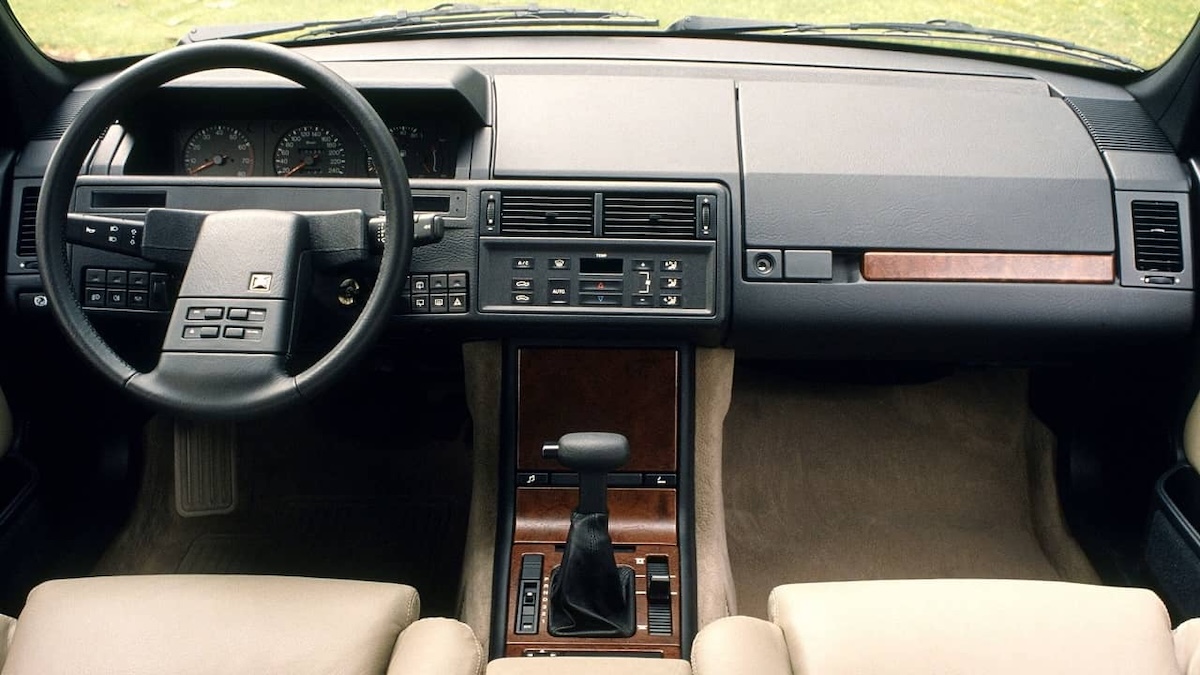
Inside, the XM felt like a cathedral of comfort. The cabin was tall, spacious and flooded with light. The dashboard had that wonderful stepped layout with its own suspension-fluid gauge, because of course it did. Rear passengers sat slightly higher than those in front to enjoy the view through the glasshouse. Behind the wheel, the XM still feels special. The ergonomics were surprisingly modern and the turning circle was small enough to shame smaller cars. Low dashboard, high console, wood trim flowing like a small waterfall and visibility so good you feel like a monarch surveying your domain.
Of course, today the XM is far from relevant. It’s complicated, its electronics are eccentric and its suspension can terrify the uninitiated. But compared to modern cars stuffed with redundant software, the XM’s systems feel purposeful, mechanical poetry rather than bloatware.
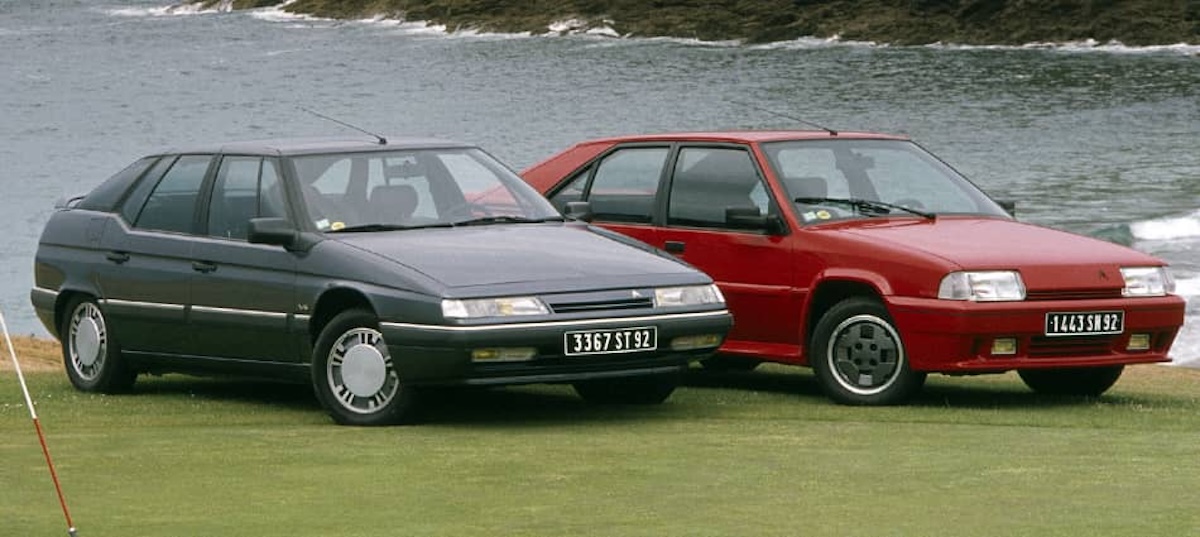
Production ran from 1989 to 2000 with a modest 330,000 built. Rivals like the BMW 5 Series or Mercedes E-Class outsold it several times over. An update in 1995 improved reliability, introduced faster Hydractive response and new engines but it lost some of the early magic. Gone were the spaceship dials, the avant-garde wheel covers and the minimalist badges. It became a large Xantia. By 1997, sales had dropped below 10,000 a year. In June 2000, the last XM left the Rennes-La-Janais factory. Its replacement wouldn’t arrive for years. The XM wasn’t perfect, but it was soulful and unlike anything else on the road. It was Citroën at its best: brilliant, flawed, romantic and slightly mad. And for those of us who still believe cars should have character, that’s exactly what makes it unforgettable.
---
Start your adventure by exploring our wide range of Car Categories. Then, step into the Classic Passion Shop and discover unique products from our partners — must-haves for every true enthusiast looking to elevate their collection!


