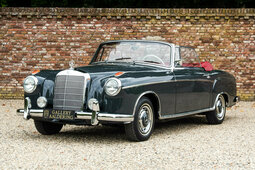
A seller types a VIN into a free valuation tool, gets a tidy number, and lists a restored 1960s convertible at that price. Three weeks later the phone is silent, or worse, a buyer's inspector finds repaint over rust repair and the negotiation falls apart. The number was not wrong because the tool was bad. It was wrong because the tool answered a different question than the one the sale was asking.
For ordinary used cars, automated valuation works well. For oldtimers, muscle cars, youngtimers and anything modified or rare, it is only the first step of a proper valuation.
Why a VIN Estimate Is Only a Starting Point
Digital valuation platforms, including dealer-side systems built on VIN decoding, configuration data and market pricing from companies like ChromeData and J.D. Power, work from structured inputs: the decoded VIN, year, make, model, trim, mileage, region, condition grade and comparable transactions. That is exactly right for a three-year-old crossover with thousands of near-identical sales behind it.
A decoded VIN tells you what the car was built as. It cannot tell you what the car is now. A numbers-matching coupe and one with a swapped engine decode identically, yet the market treats them as different cars.
This is where an inspection-based opinion earns its fee. When a car is rare, heavily modified, recently restored or hard to compare, owners often turn to independent chrome auto appraisers who document the physical car and explain the value, rather than just returning a figure from a database.
Know Which Value You Actually Need
"What is it worth?" has several honest answers, and mixing them up is the most common reason sellers misprice. A dealer's trade-in number will always sit below a private-sale number, because the dealer must recondition, market and resell the car.
The terms below cover the values a classic owner is most likely to meet:
| Term | Practical Meaning |
|---|---|
| Trade-in value | What a dealer expects to pay to acquire the car, normally below retail |
| Private-party value | The likely transaction range between two individuals |
| Asking price | What a seller advertises, not necessarily what the car sells for |
| Market value | An estimate built from relevant market evidence and the car's characteristics |
| Actual cash value | The figure insurers commonly use in total-loss claims, subject to policy and law |
| Agreed value | A value set in advance with a collector-car insurer, backed by documentation |
An asking price is a hope, not evidence. Closed sales, whether from auction results or documented private deals, carry far more weight than a page of unsold listings.
The Steps to Value a Classic Car Before You Sell
A defensible number comes from a process, not a lookup. This sequence works whether you do the groundwork yourself or hand it to a professional:
- Define the purpose. A sale, an insurance policy, a financing application, an estate division and a dispute can each call for a different value and a different level of documentation.
- Identify the car precisely. Record the VIN, year, make, model, trim, body style, engine, transmission, options, mileage, title status and registration location.
- Separate factory specification from present condition. Confirm what the car left the factory as, then note every deviation: repaint, engine swap, non-original wheels, upgraded brakes.
- Gather the paper trail. Restoration invoices, service records, photographs, title documents and any earlier appraisal all belong in one folder.
- Inspect the car honestly. Look at paint quality, panel fit, corrosion, underbody, signs of accident repair, mechanical operation, cold-start behavior and whether key components are correct for the model.
- Choose genuinely comparable cars. Match body style, specification, condition level and rarity, then adjust for mileage, provenance, location and sale date. A driver-quality car does not compare with a concours restoration.
- Settle on a range and write down the reasoning. A range with stated sources and assumptions is more credible than a falsely precise figure.
- Revisit it when things change. A restoration, an accident, a major repair or a shift in the collector market can make an old valuation useless.
Where Classic Car Valuations Go Wrong
The costliest error is assuming that restoration spend equals added value. A buyer pays for the quality of the result and the originality of the car, not for the invoice total. A six-figure restoration on a model with a modest market ceiling rarely returns what it cost.
Condition language causes trouble too. "Excellent" is not a standardized legal or market term, so a report should define the grade and show the evidence behind it. Sellers who call a car excellent and buyers who read it as concours-level are starting a dispute before the first call.
Other frequent mistakes are easy to avoid once you know them:
Using ordinary used-car data for a rare collector vehicle, ignoring title brands such as salvage or rebuilt, treating a dealer's low trade-in offer as proof of retail value, and reusing an appraisal prepared for insurance to justify a sale price. Each one swaps the right question for a convenient one.
Age Rules and Registration Do Not Set Value
Owners sometimes assume a car becomes "classic" at a fixed age, and that the label brings a fixed value logic with it. There is no universal definition. Some insurers look for vehicles around 20 years old and restrict use to club events, exhibitions and recreational driving, but requirements differ by carrier and state.
Registration rules differ as well. California's historical plates apply to vehicles manufactured after 1922 that are at least 25 years old, and California's DMV separately requires insurance for any vehicle operated or parked on public roads. New York issues historical plates to vehicles manufactured more than 25 years before the current calendar year and requires an insurance identification card marked "HISTORICAL" for that registration.
None of that tells you what your car is worth. It only tells you which paperwork applies. Check your state DMV and your insurer before relying on any age threshold.
It also pays to check who is qualified to sign a valuation. Vehicle-appraiser licensing is state-specific: Oregon's administrative rules, for example, ask applicants for a vehicle-appraiser certificate for an application, fees and generally two years of relevant experience, with an approved education program able to substitute in some circumstances. Many states have no such certificate, and banks, insurers and courts often set their own qualification standards.
The practical test for any appraiser is simple: whether they have handled your category of vehicle, whether they will inspect the car in person, and whether their report names its sources, market area and limitations. A number that arrives with its reasoning attached is one a buyer, lender or insurer can actually use.
---
We invite you to start your journey by exploring our broad selection of Car Categories. After that, feel free to visit the Classic Passion Shop, where you'll find unique products from our partners — thoughtful picks for every enthusiast looking to add something special to their collection. And if crypto is part of your world, you can discover some of the best gift cards to buy with cryptocurrency through CoinGate Gift Cards.