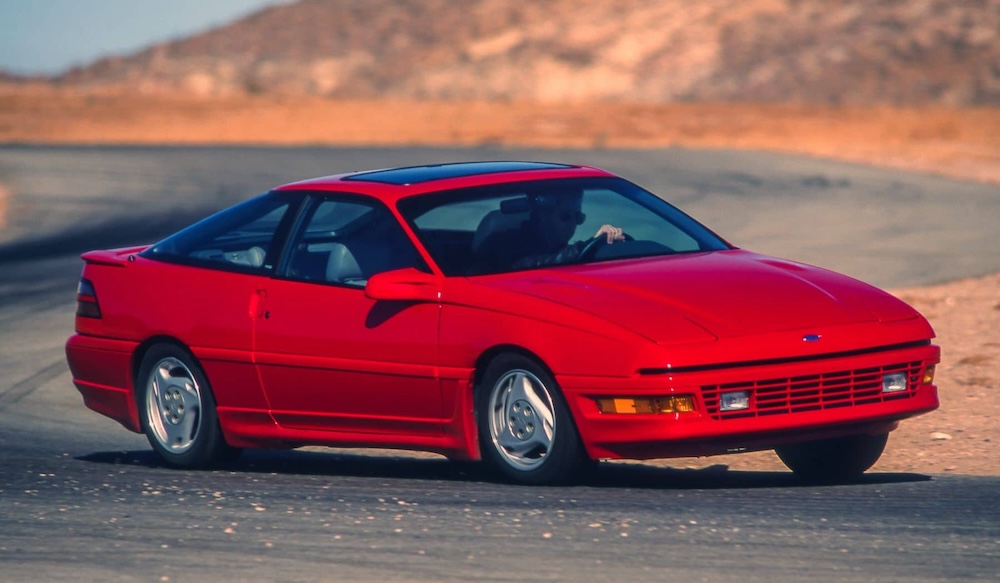
Of all the affordable, front-wheel-drive sports coupés of the late 20th century, the first-generation Ford Probe has become one of the most thoroughly forgotten. And yet it was hardly alone. The era was crowded: Mazda MX-6, Mazda 323 and Mazda 626 Coupé, Toyota Celica, Nissan 100NX, Honda Prelude, Honda Integra and Honda CRX, Mitsubishi Eclipse, Volkswagen Scirocco and Volkswagen Corrado, Opel Calibra, Fiat Coupé, Alfa Romeo Spider, Audi Coupé, Rover coupés and several others. These cars thrived thanks to sheer availability and accessible pricing.
In the early 2000s, a tidy first-generation Ford Probe could be bought for almost nothing. They were used cars in the sleek new era of the early 2000s where BMW Z4s and Audi TTs were dictating the new way of style and substance. However, by buying an early Probe, you got rear lights that looked like they belonged on a Ferrari, pop-up headlights straight out of Maranello, and if you were lucky enough to find a decent imported GT, even an LCD instrument cluster and air conditioning. Films like Fast and Furious, games such as Need for Speed, car magazines, and the rapidly spreading Max Power tuning culture across Europe gave these cars a second wind just as their age ticked into double digits.
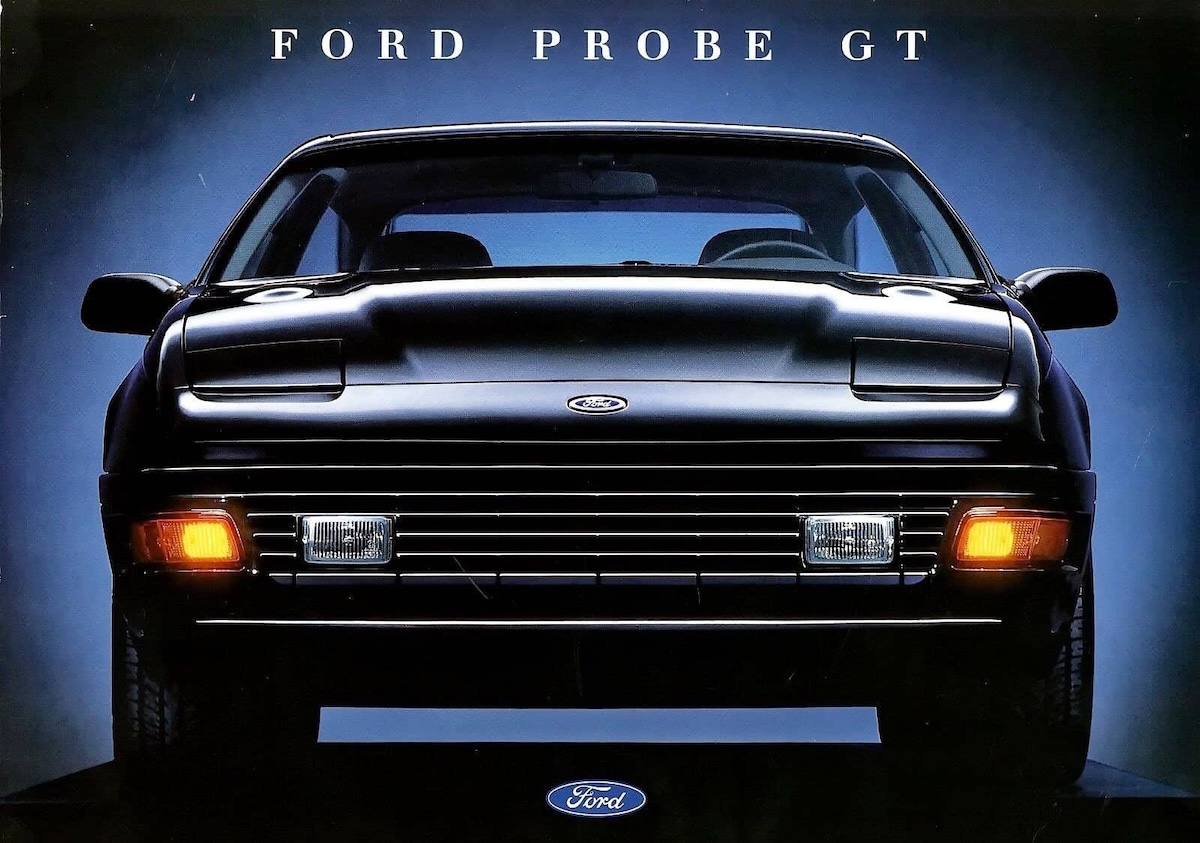
What makes the Probe truly fascinating is not its nostalgia appeal, but the role it was meant to play. It was designed to replace the Fox-platform Ford Mustang: an aging, inefficient, rear-wheel-drive relic whose formula no longer fit a world of rising fuel prices, cleaner cities, and tightening safety regulations. The plan was bold. The Mustang would be rebadged as Mustang Classic, quietly phased out, and the car we know as the Probe – internally referred to as the ST-16 – would become the new, front driven Mustang.
The New Mustang
The project, whose roots stretch back to 1979, triggered cultural shockwaves inside Ford. Replacing the company’s icon with something entirely different was deeply unpopular. Economic reality dictated the need for a lighter, more modern car, but for many FoMoCo employees who genuinely cared about Ford’s heritage and traditional American automotive values, this felt like climbing into a coffin. Despite the resistance, the Ford Probe happened. On paper, the business plan made perfect sense. Ford needed a new car without massive investment and this was the time when the Americans started collaborating with Mazda. The Japanese company wanted to expand its presence in North America and operate a large factory without bearing the full responsibility of selling every car produced there. Each side got what it needed. Ford helped Mazda navigate American administrative and legal systems, while Mazda shared its manufacturing expertise.
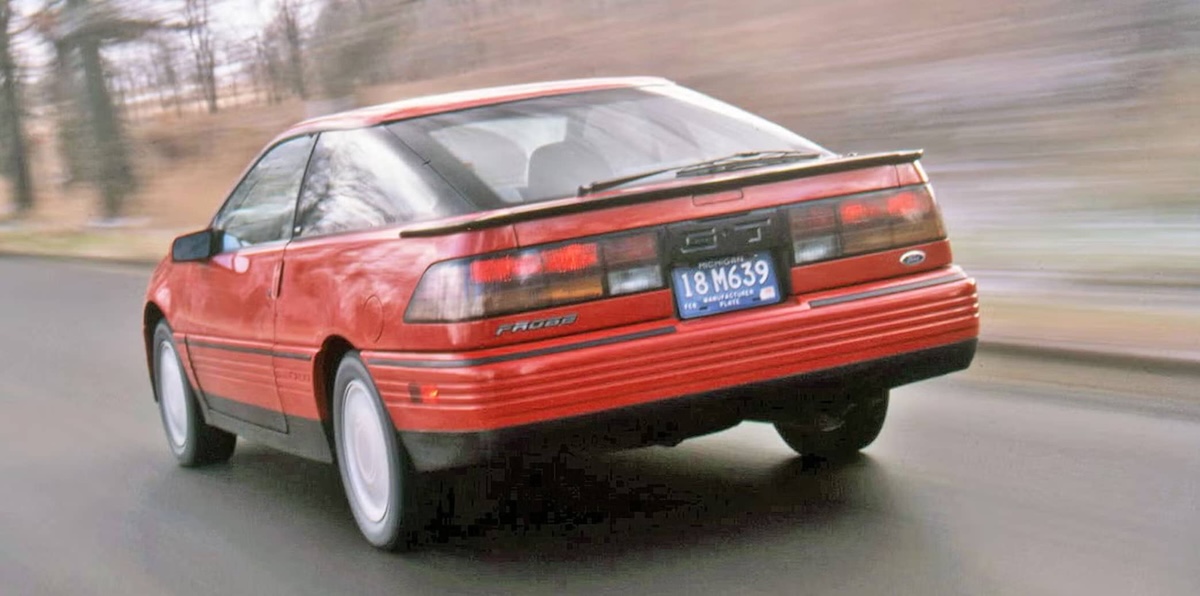
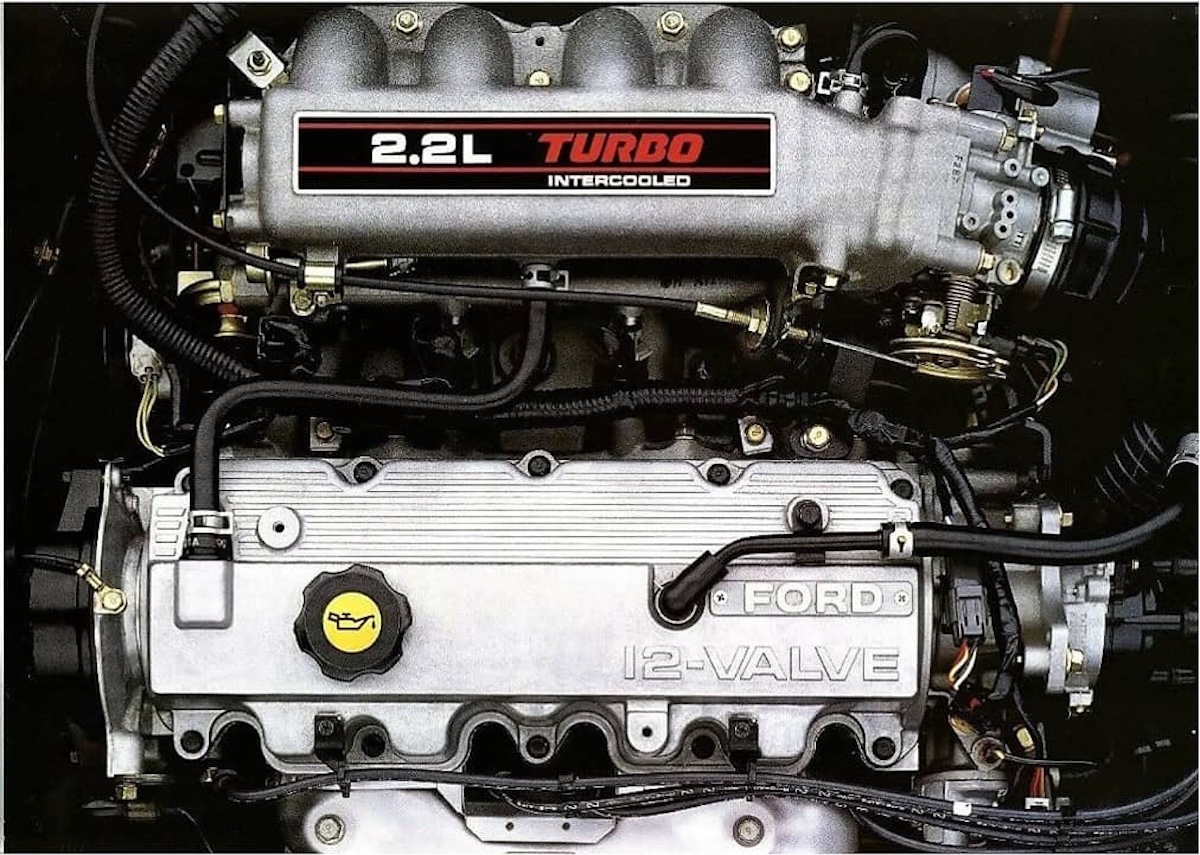
The new Mazda plant was located at Flat Rock, Michigan, a former Ford facility. Alongside the Probe, production of its technical sibling, the Mazda MX-6, began in 1992. The two cars were nearly identical. Both featured front-wheel drive with transversely mounted engines: Mazda-sourced four-cylinder units and proprietary V6s. Both used fully independent suspension, including a double-wishbone setup at the rear. In GT form, power rose from a modest 110 horsepower to 145 at a relatively low 4,300 rpm, thanks to an IHI turbocharger and intercooler. Despite its Japanese engineering, the Probe made no attempt to look Japanese. Its styling was deliberately American. A high nose and oversized rear lights catered to US tastes. So did the suspension, soft and comfortable, making the car act as more of a GT, rather than a sports car.
The Probe carried the pride of its intended destiny, but just months before launch, Ford lost its nerve. Fearing backlash from dealers and loyal customers, the company reversed course. The Mustang would live on. While a small skunkworks team, operating on a minimal budget, quietly developed the 1994 Mustang, sales of the second-generation Probe declined steadily until production ended altogether in 1997.
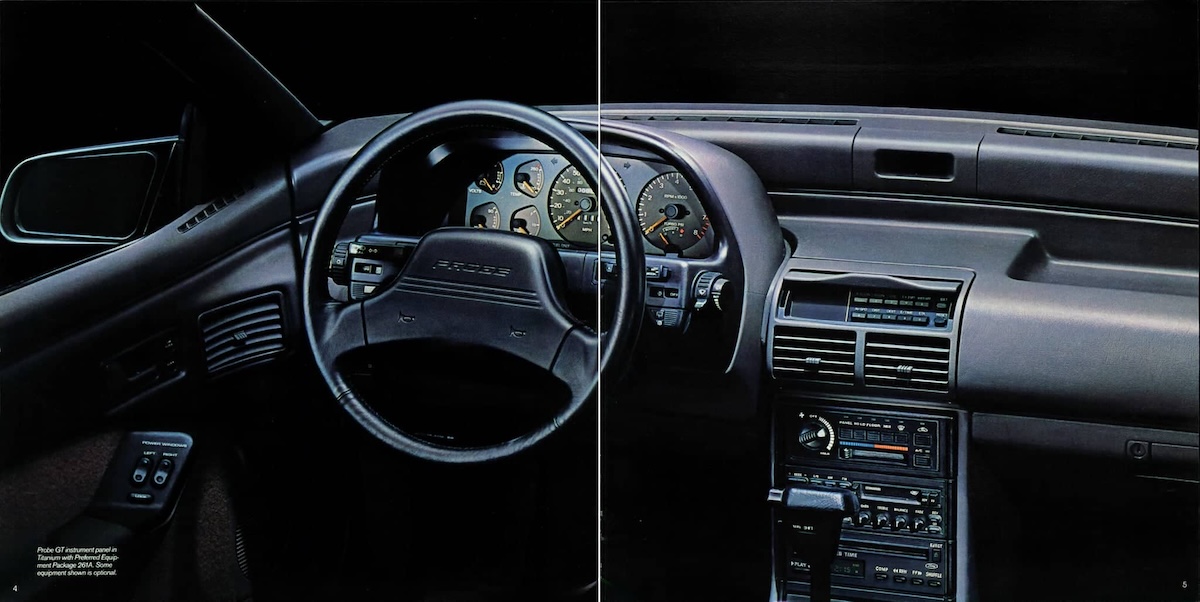
The GT
Where Japanese influence mattered most, under the bonnet, it remained unmistakable. American manufacturers could build powerful four-cylinder engines, but not reliably. With its Japanese heart, the Probe GT delivered near-identical acceleration to a five-litre Fox-body Mustang. In 1989, Car & Driver recorded a 0-100 km/h time of 6.7 seconds. Just half a second slower than the Mustang, and marginally quicker than equivalent Chevrolet Camaro and Pontiac Firebird models. On the road, the numbers make sense. In second and third gear, these 12-valve turbocharged Probes surge forward, sweeping the speedometer with such urgency that you begin to doubt it really has only 145 horsepower. Brief pauses between gear changes allow the turbo to wake again, and the car continues its whistle down the road. I once had the chance to drive such a Probe, and I can attest this is true.
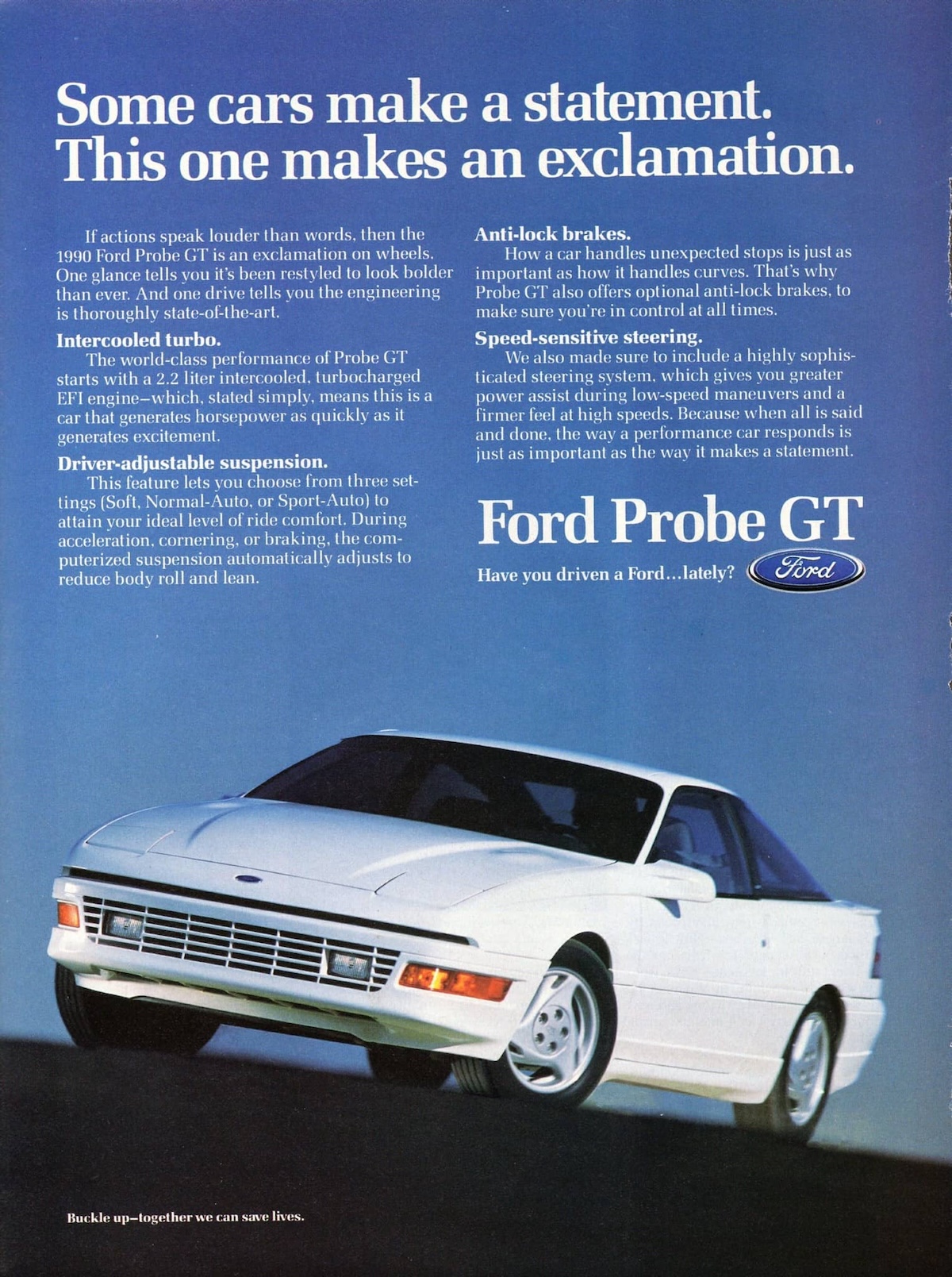
Irony defines the Probe’s legacy. Intended to replace the Mustang, it was instead overshadowed by the very wild horse it was meant to succeed, quietly laid to rest without a successor of its own. It vanished, much like the rest of its segment. Shifting market demands, rising expectations of quality among American buyers and economic downturns slowed the entire US automotive industry. Factories disappeared. GM’s Tarrytown plant in New York and many other Detroit-era production sites are gone.
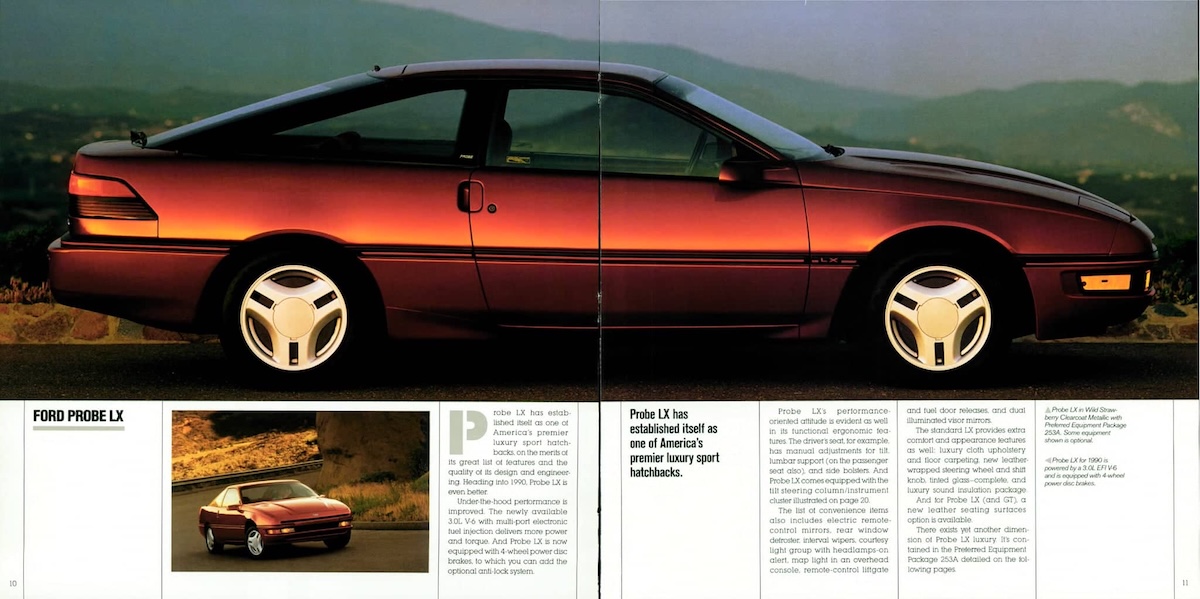
For most people today, the Ford Probe is a speck of dust from a previous life. But people like you and I remember these cars and we smile when we see one in the wild. After a long silence, the name is spoken again, and its sound triggers a wave of memories. And the great thing is, nice examples are still cheap. And why not buy one? It is a wonderful way to own an inexpensive, reliable, idiosyncratic car with a Japanese soul, deep American history and a lively engine, in case it’s the GT. For those who remember the era, it will be pure nostalgia. For children passing by, it is an unfamiliar, old-school Ferrari with pop-up headlights.
---
We invite you to start your journey by exploring our broad selection of Car Categories. After that, feel free to visit the Classic Passion Shop, where you’ll find unique products from our partners — thoughtful picks for every enthusiast looking to add something special to their collection.