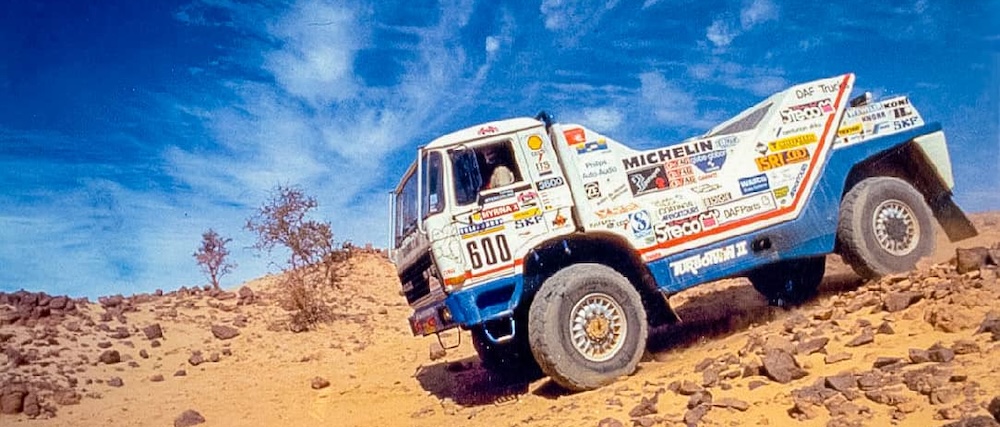
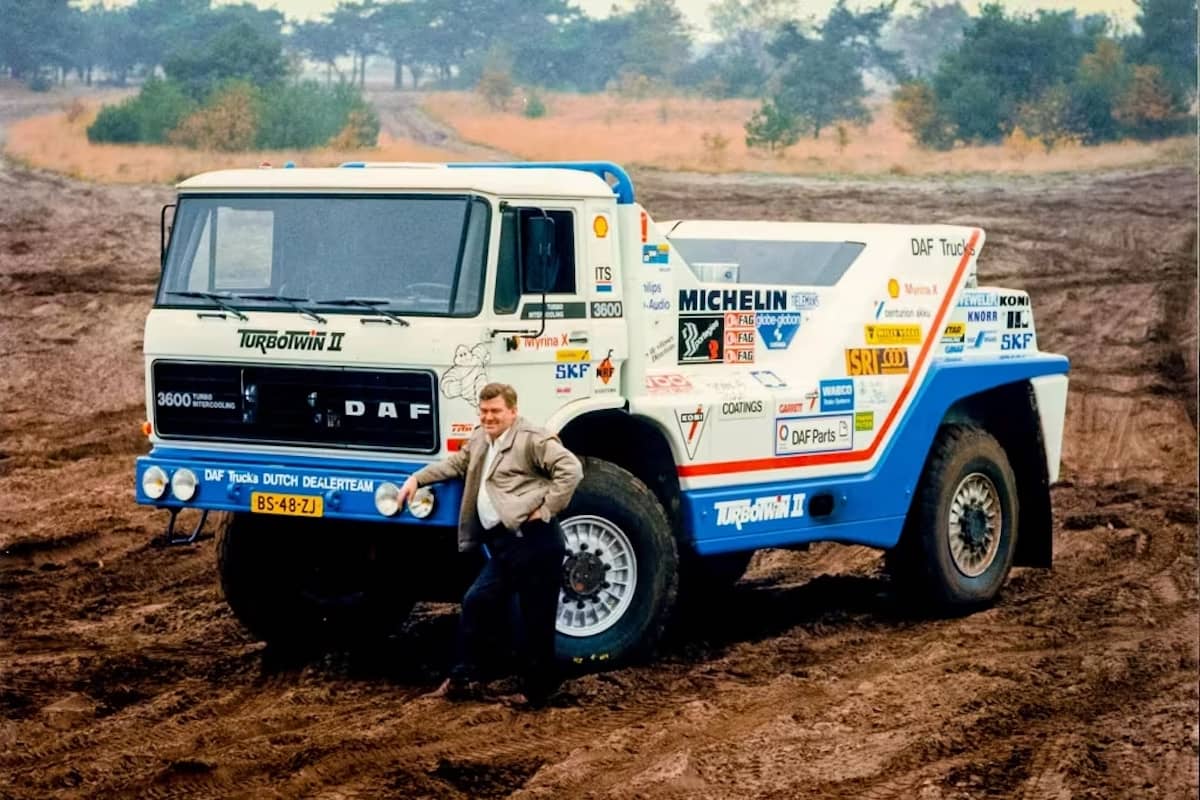
It is difficult to think of anything that produces bigger clouds of black smoke than a straight-piped BMW 530d owned by some local hooligan, complete with cloth seats, fake M5 badges, and wheels the size of tractor rims. But if there is a worthy competitor, it might just be this short-lived Dakar legend. The machine in question is the DAF Turbo Twin X2. And if we have ever claimed that a car had impressive technical specifications, those words may need to be taken back, because surpassing the numbers behind this DAF is genuinely difficult. For starters, it did not even rely on a single engine.
It is worth looking at how this truck came to exist in the first place. Dutch rally driver Jan de Rooy had spent many years competing for the DAF team in the Paris-Dakar Rally, one of the toughest and most punishing motorsport events in the world. By the mid-1980s, he had become convinced that his team could build an outright winner, a machine capable of beating the dominant factory efforts from Peugeot and Porsche, who were collecting victories with remarkable consistency. De Rooy persuaded the Dutch manufacturer to back a radically different concept.
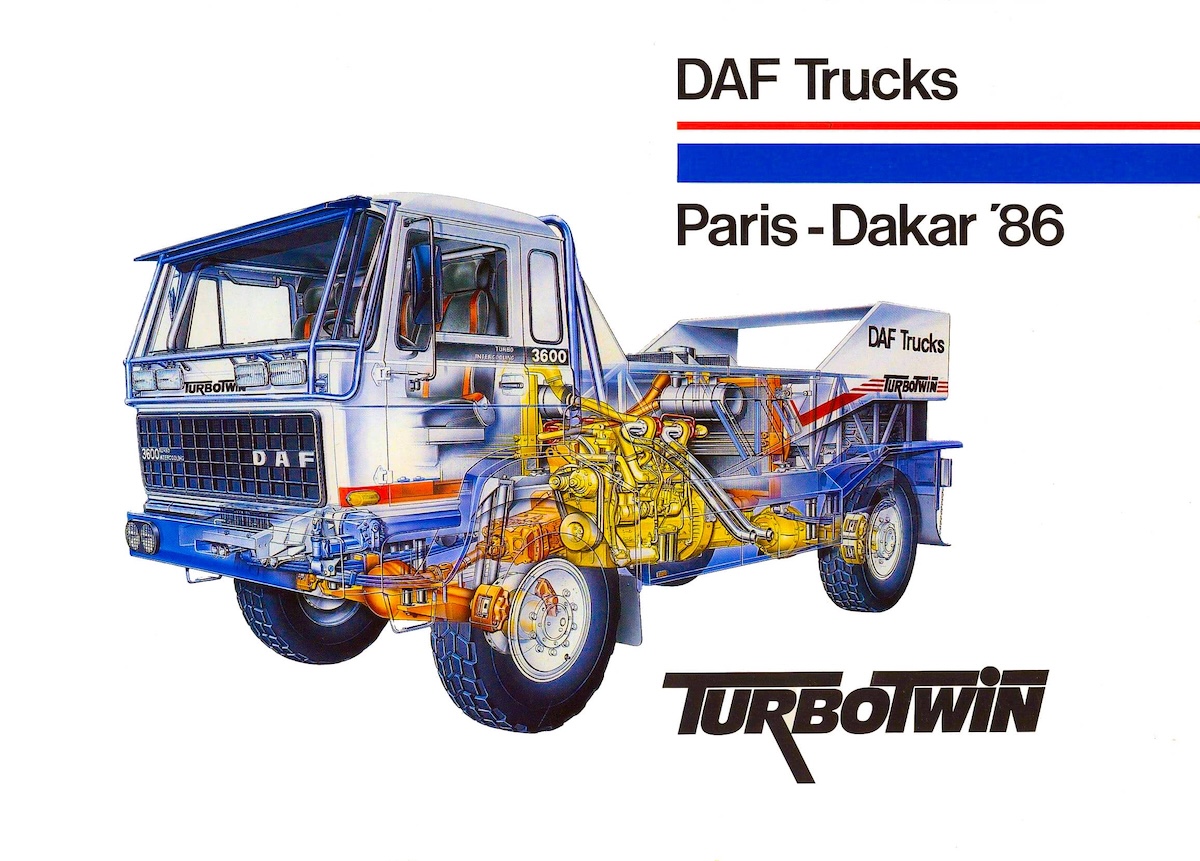
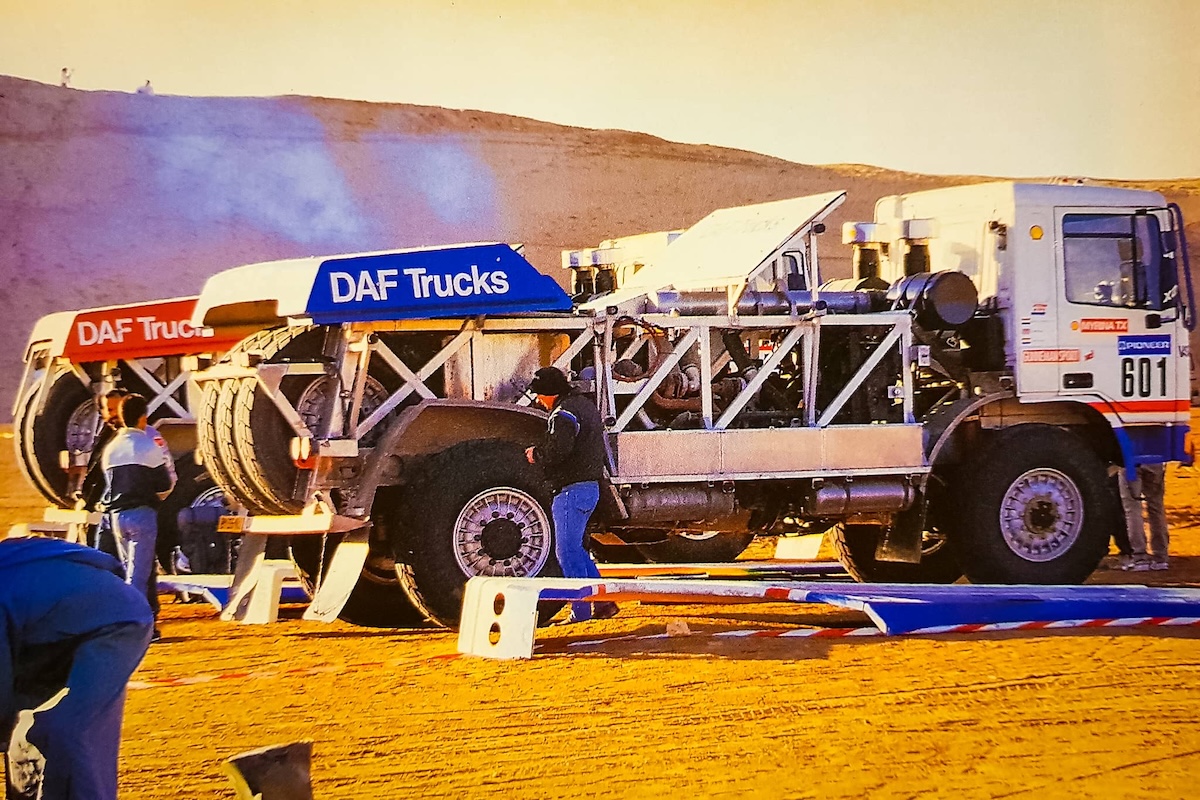
Instead of developing a conventional heavy racing vehicle, the team designed a spaceframe aluminium chassis built specifically for strength and weight reduction. This approach dramatically reduced mass while maintaining the structural rigidity needed to survive thousands of kilometres. Into that structure, engineers installed two turbodiesel engines placed side by side, an arrangement rarely seen even in experimental racing machinery.
Each of them displaced 11.6 litres, and together they produced around 1000 horsepower, with each engine driving a separate axle. This unusual configuration meant the truck effectively had two independent drivetrains operating in parallel. If one engine could move a truck through the desert, two might transform it into something unstoppable. The first machines built under this philosophy appeared under the name FAV 3600 4×4 TurboTwin, instantly attracting attention for their sheer audacity. They would eventually become one of the most outrageous and technically fascinating vehicles ever to compete in the Dakar Rally.
After several prototypes were developed and tested in competition, the project reached its ultimate form in the DAF 95 Turbo Twin X2. This final evolution pushed the idea even further. Each of the two 11.6-litre inline-six turbo-diesel engines produced around 610 horsepower, giving the truck a combined output of roughly 1220 horsepower. Torque figures were equally absurd, reaching a combined total of about 4700 newton metres.
The engines relied on six turbochargers, three of them using variable geometry. The truck was equipped with two automatic transmissions controlled by a single gear lever, and the entire machine weighed around 10,500 kilograms. Despite that mass, the Turbo Twin X2 was capable of accelerating from 0 to 100 km/h in roughly eight seconds and reaching a top speed of about 240 km/h. Numbers like that should not belong to something weighing over ten tonnes, yet in the late 1980s they were very real.
The monstrous torque and the scream of six turbochargers made the DAF something truly special in the Dakar Rally. It was seriously threatening its competition and seemed ready to dominate it. Jan de Rooy’s vision appeared to be coming true.
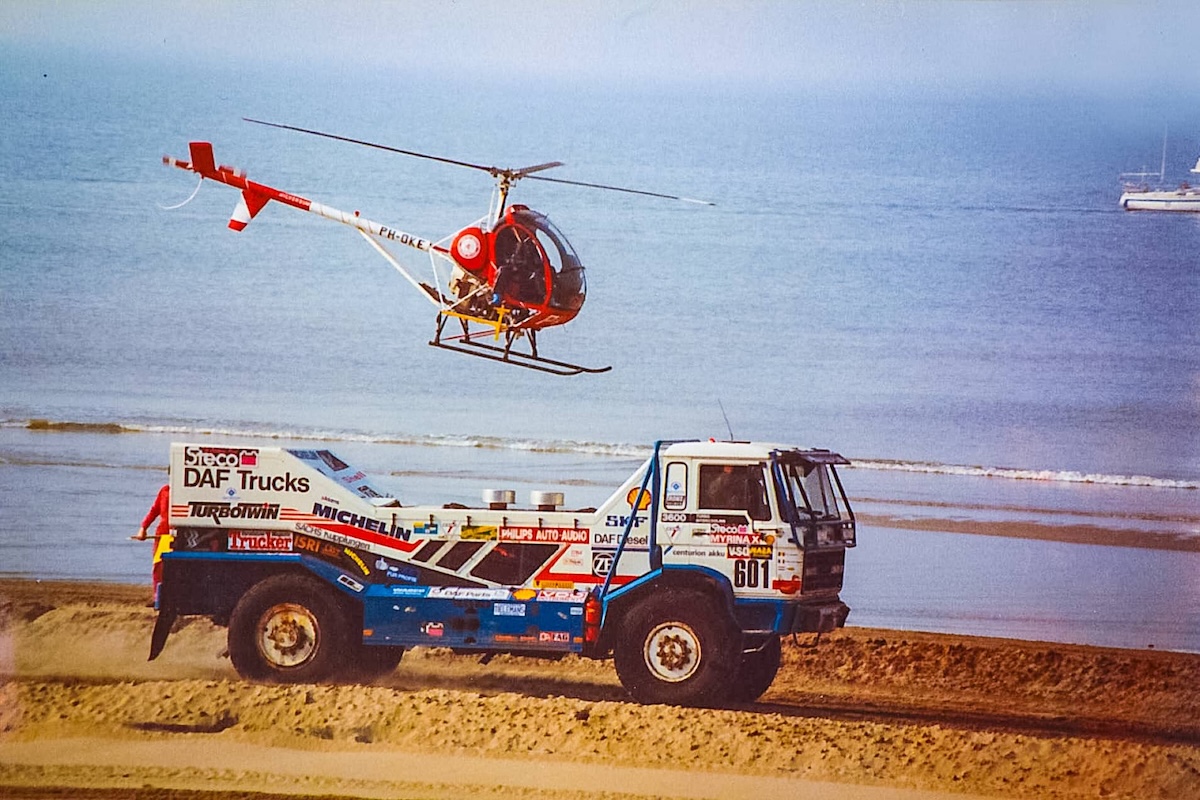
One of the truck’s most famous moments in Dakar history occurred in 1988, when the Turbo Twin X2, reportedly travelling at around 200 km/h across the desert, overtook a Peugeot 405 T16. The sight must have been surreal: a massive racing truck, weighing more than ten tonnes, blasting past one of Peugeot’s purpose-built rally raid machines in the middle of the Sahara. It was a moment that perfectly captured the madness and ambition of that era in motorsport.
However, the same extreme performance that made the truck so impressive also exposed the dangers of pushing technology too far. Motorsport in the 1980s often advanced faster than safety regulations could keep up with, and the Dakar Rally was no exception.
During the eighth stage of the 1988 rally, tragedy struck when one of the DAF trucks, which was running in third place at the time, lost control and rolled over multiple times. Reports indicate that the truck rolled six times during the crash. Navigator Kees van Loevezijn was thrown from the vehicle through the window and tragically lost his life. The remaining crew members suffered serious injuries.
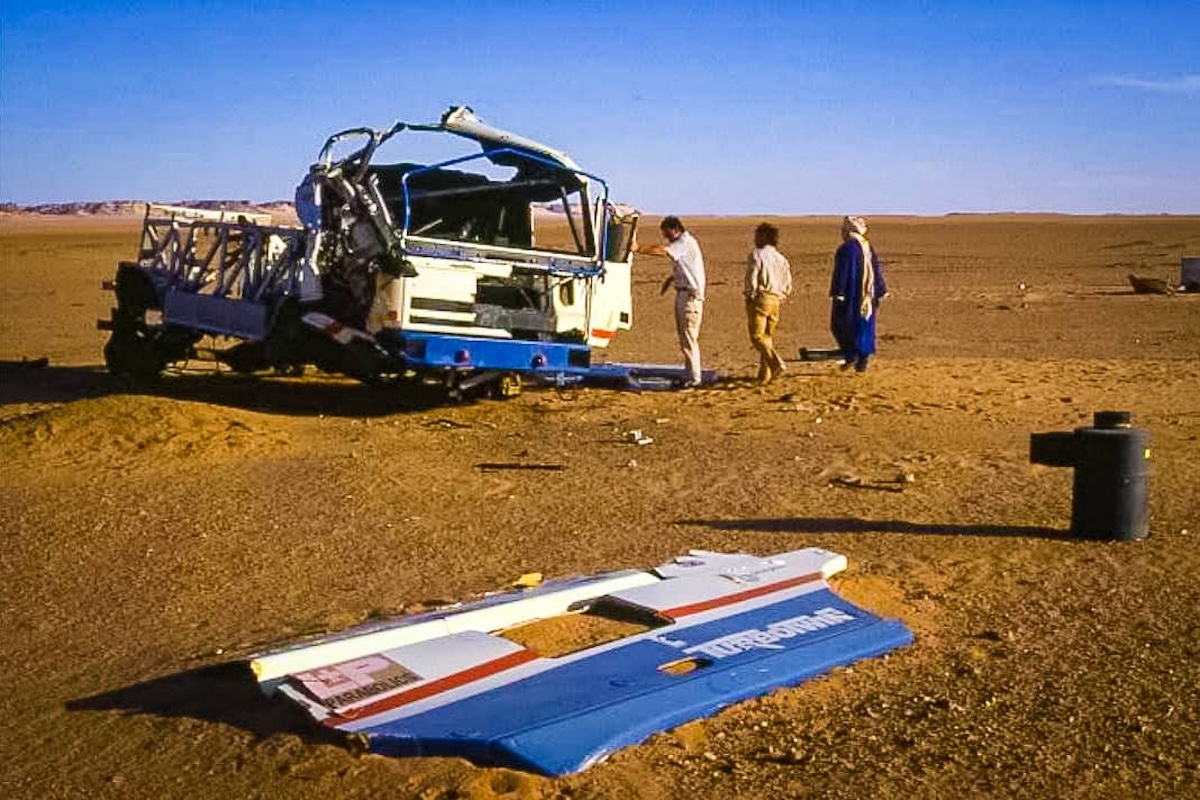
The accident sent shockwaves through the rally world. The incredible speeds achieved by trucks like the Turbo Twin had already raised concerns, but this tragedy forced organisers to confront the issue directly. As a result, trucks were banned from the Dakar Rally for the 1989 edition and allowed to participate only as assistance vehicles rather than competitors. When trucks eventually returned to the event, new regulations restricted their specifications and preparation. The era of wild engineering experimentation was effectively over.
Jan de Rooy himself stepped away from Dakar competition for many years and did not return to the rally until 2002. By then, the sport had changed dramatically, with stricter safety rules and far more controlled vehicle development. The kind of engineering freedom that allowed a twin-engined, six-turbo racing truck to exist was no longer possible.
Looking back today, the DAF Turbo Twin X2 feels like a relic from a different age of motorsport. In that sense, its story closely resembles that of the infamous Group B rally cars, which were ultimately banned after it became clear that the search for ever greater performance was costing lives. Despite its short career, the Turbo Twin X2 remains one of the most fascinating machines ever created for the Dakar Rally. For a brief moment in the late 1980s, the Dakar Rally witnessed a truck that could shake the desert with its torque and even outrun cars that were supposed to be faster.
---
We invite you to start your journey by exploring our broad selection of Car Categories. After that, feel free to visit the Classic Passion Shop, where you’ll find unique products from our partners — thoughtful picks for every enthusiast looking to add something special to their collection.