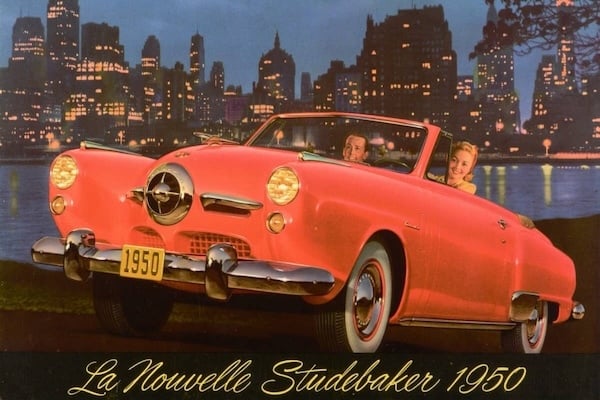
By the early 1950s, Studebaker was in real financial trouble. The company had talent, great ideas, and a habit of doing things differently, but that was not enough to survive the realities of a rapidly changing car industry in America. When Studebaker and Packard merged in 1954 to form Studebaker-Packard Corporation, it was not really a strong rescue plan. Both companies were already struggling, and neither had enough financial strength to secure the other’s future.
While Studebaker’s finances were poor, its design work remained very strong. The company kept producing cars that looked more modern than many of their rivals. One of the best examples was the 1953 Studebaker Starliner coupe. It was long, low, and elegant, and it helped move American car design away from tall, narrow post-war shapes towards something lower, wider, and more modern. Its proportions were unusual too, with the coupe using a longer wheelbase than the sedan to create a more graceful look. The low cowl, slim bonnet, and dramatic rear styling made it look like a car from the future. It looked more like something from 1963 rather than 1953.
Then came the Avanti in 1962, another Studebaker that had far more style impact than its sales numbers suggested. Designed by Raymond Loewy and Associates, it introduced themes that would later become common in American car design, especially the early form of the so-called Coke bottle shape around the rear wings. But it also created some tension inside Studebaker. The company’s design chief, Brooke Stevens, was not pleased that such an important new Studebaker had come from outside his own design team.
The new Studebaker
The Sceptre was partly his response. Stevens wanted to show that Studebaker’s own designers could create something just as advanced and impressive. He also understood where the market was going. In 1958, Ford had turned the Thunderbird from a two-seat sporty car into a four-seat personal luxury coupe. That move helped create a whole new class of American car. These cars were not sports cars. They were stylish, comfortable, exclusive, and designed to make an impression. Later cars such as the Buick Riviera, Pontiac Grand Prix, and Chevrolet Monte Carlo all followed that idea.
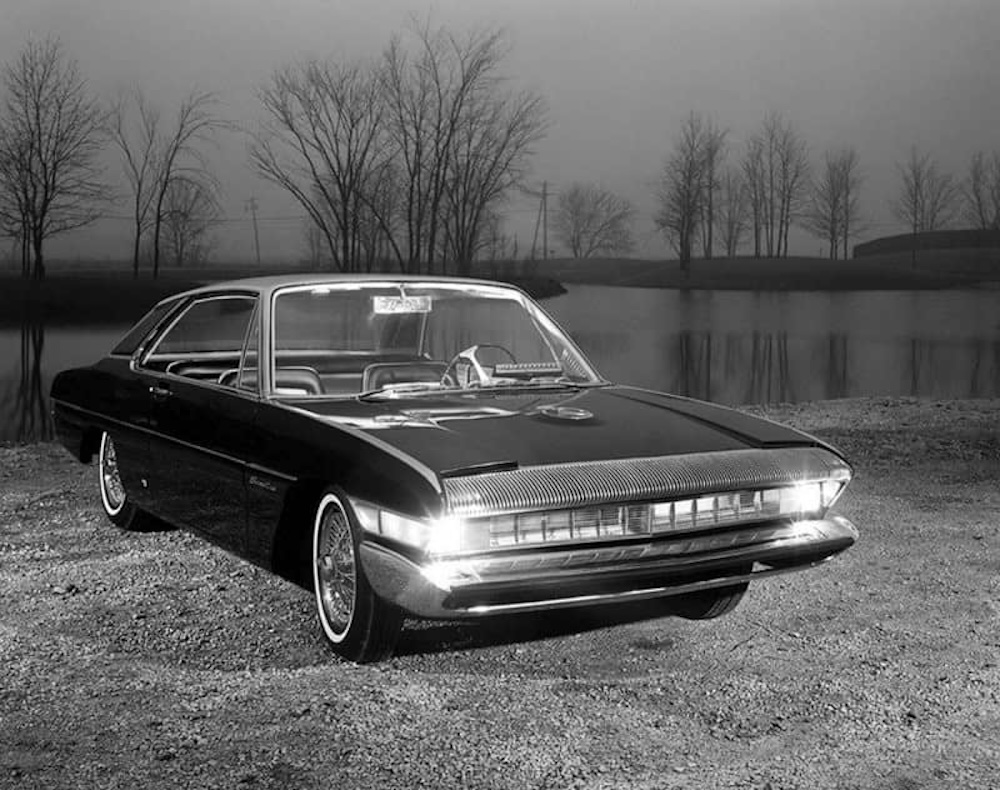
That was the kind of car the Sceptre was meant to be. Designed in 1962 and completed in 1963, it was Studebaker’s vision of a personal luxury coupe. At the same time, it also carried forward Studebaker’s old design ideas about making cars look lower, wider, and more modern. The result was a concept car that looked very much of its era, but in some ways also ahead of it.
The design
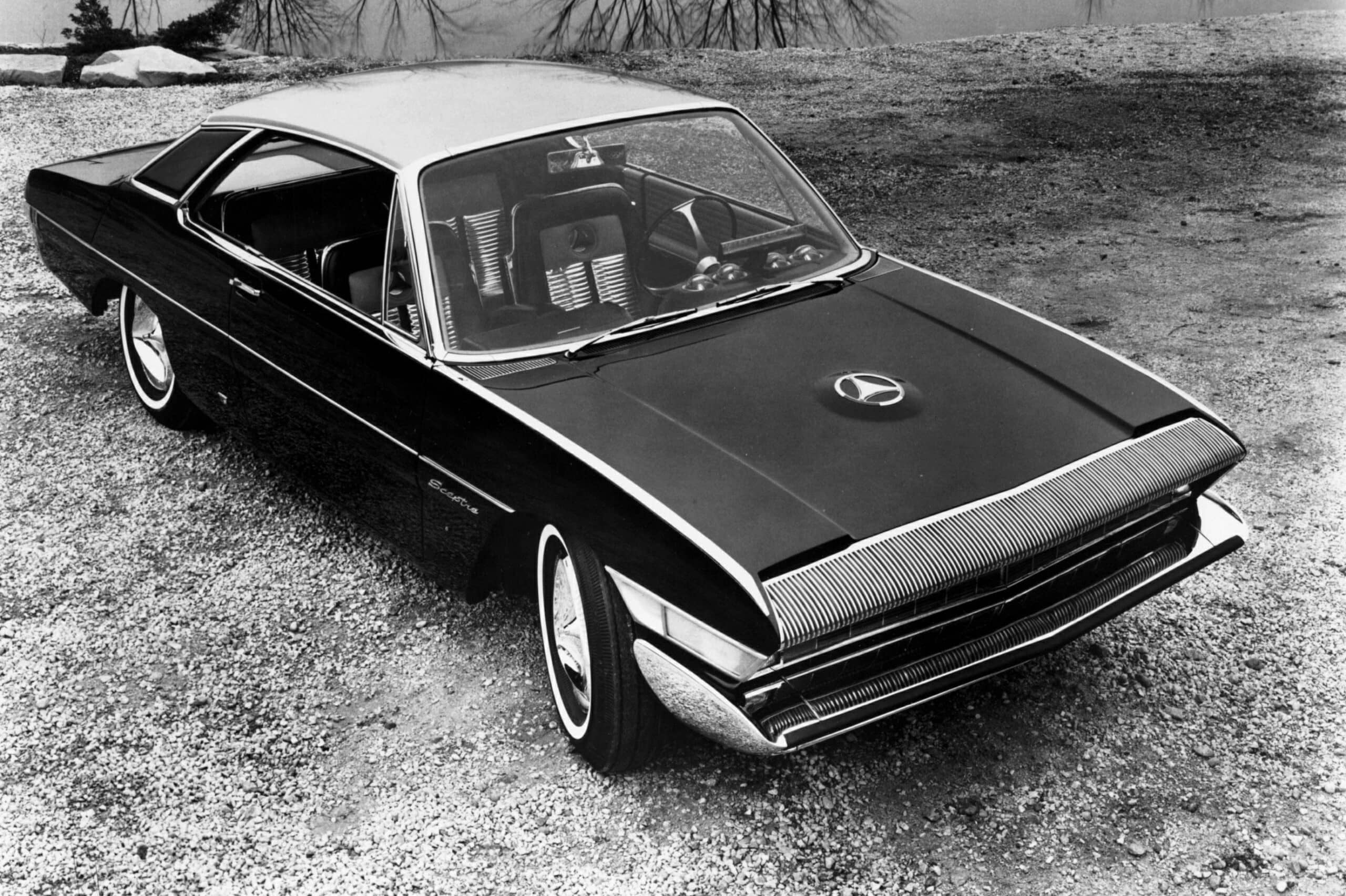
The front of the Sceptre is one of its most striking parts. It uses a full-width look, with wall-to-wall headlamps under a grille that has the sharp, horizontal look often described as electric razor styling. This theme was popular in the early 1960s, but on the Sceptre it was used very effectively. It made the car look wider and lower, and gave it a strong road presence. Above the grille were intake-like openings, while the rest of the front was kept clean. There was no traditional bonnet ornament and very little extra decoration. Instead, the new Studebaker emblem, sometimes called the polo mallet logo, was placed on the bonnet and repeated inside the car as well.
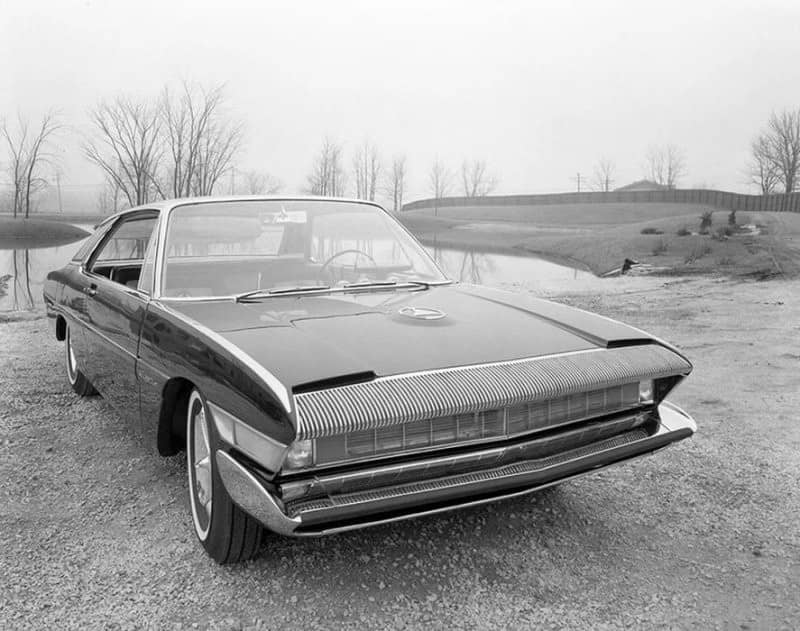
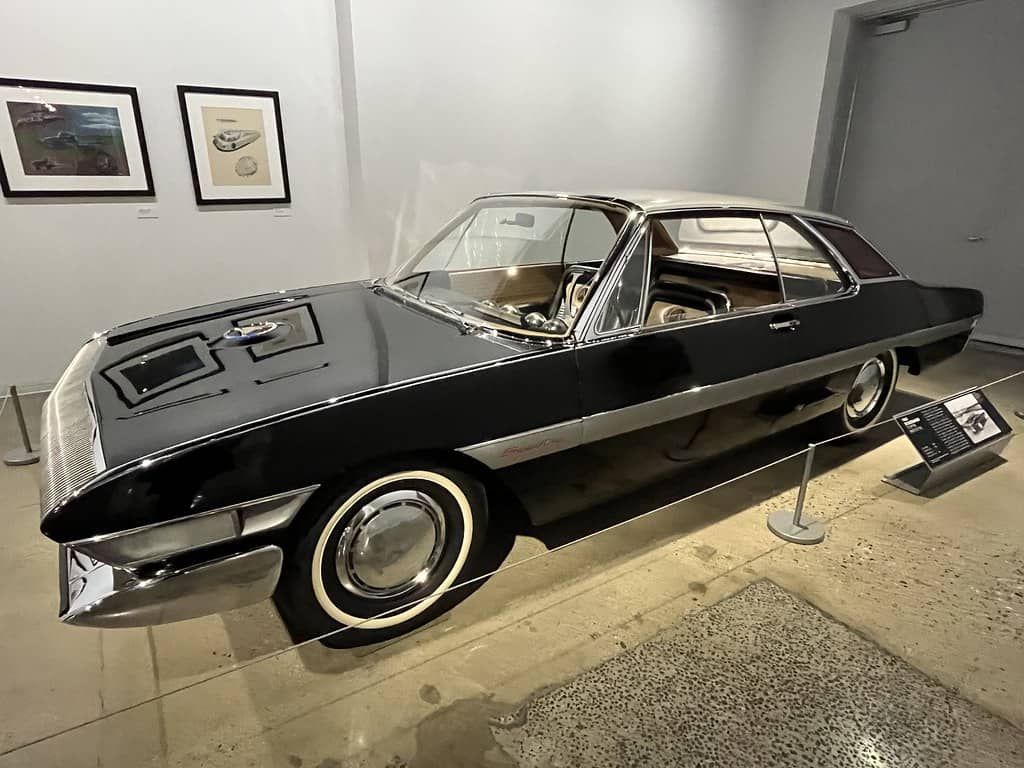
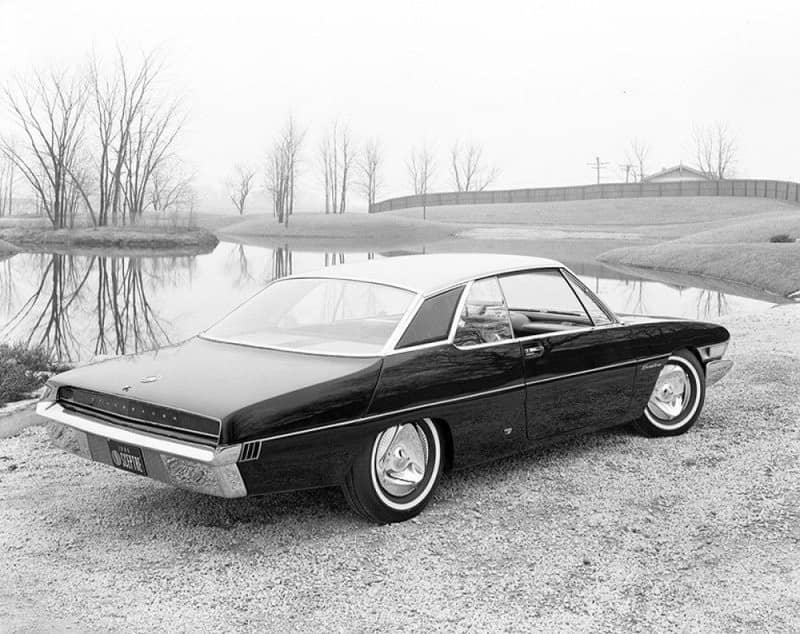
The roof was another unusual feature. The A-pillars were as thin as toothpicks, and the roof itself looked very light. From the side, it almost seemed to float above the body. That effect was helped by the translucent C-pillar treatment, which made the upper part of the car look more open and airy.
A lighter-coloured strip along the waistline helped break up the height of the body side and made the shape look slimmer, because the Sceptre was meant to be elegant rather than bulky. Stevens understood that a personal luxury coupe did not need to look heavy. Another notable thing was the limited use of chrome. For an American concept car of the early 1960s, the Sceptre was surprisingly restrained. Apart from the bumpers and a few trim pieces, the body was kept quite clean.
At the rear, the full-width theme appeared again in the form of a broad tail lamp panel with Studebaker lettering across the centre. Like the front, it was designed to make the car look wider. The rear surface was also very smooth and clean. Instead of using separate levels and broken lines, the top of the rear wings and the boot area formed one continuous plane. That helped strengthen the impression of width and gave the car a very calm, controlled shape.
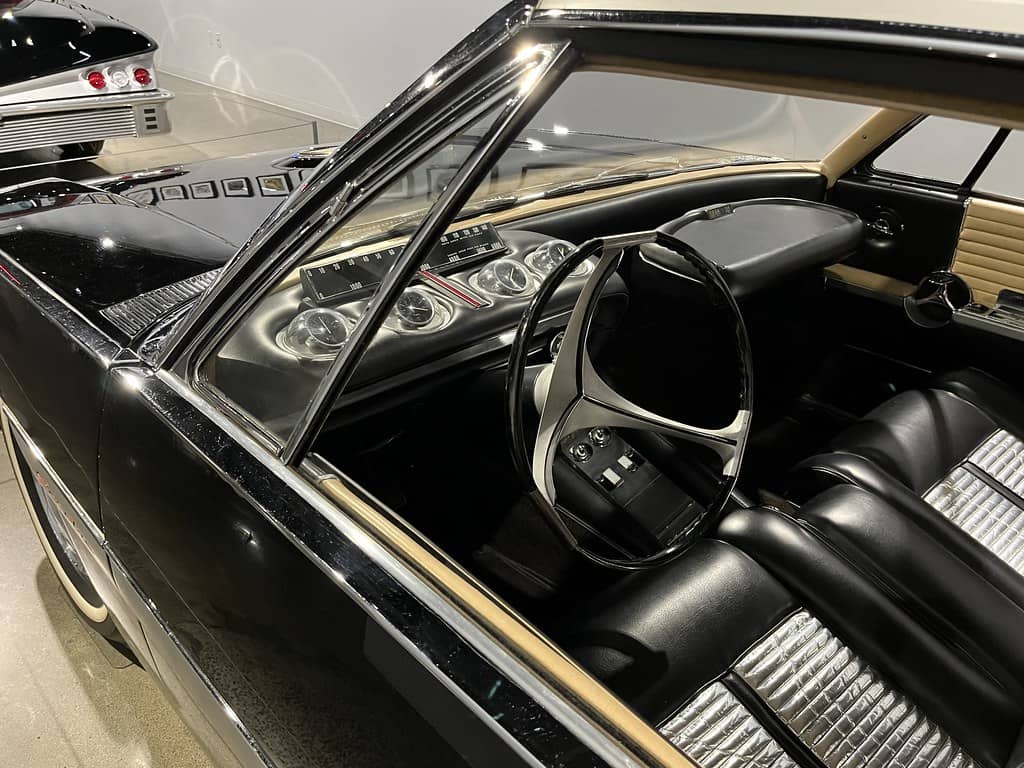
The interior was just as interesting as the outside. The polo mallet emblem appeared on the steering wheel and other trim pieces. The instruments were set in floating pods, and the centre console was angled towards the driver, which felt unusually modern. It was a complete design proposal for a future Studebaker.
The end
Of course, that future never arrived. The Sceptre cost about $16,000 to build, which was a very large amount of money at the time, and it remained a one-off concept car. It was hand-built in Italy and beautifully finished, but it was far removed from the practical reality of Studebaker’s financial position. However attractive it was, the Sceptre could not have saved the company. A personal luxury coupe could help shape an image, but it could not provide the sales volume Studebaker needed.
Still, that does not make the Sceptre any less important. In fact, it may make it more interesting. The car matters because it showed that even when Studebaker was close to the end, it still knew how to produce exciting and forward-looking design.
That is why the Studebaker Sceptre still has such appeal today. It was not just a lost concept car. It was a glimpse of what Studebaker might have become if circumstances had been different. Sometimes the most fascinating cars are not the ones that changed history, but the ones that came close.
---
We invite you to start your journey by exploring our broad selection of Car Categories. After that, feel free to visit the Classic Passion Shop, where you’ll find unique products from our partners — thoughtful picks for every enthusiast looking to add something special to their collection.