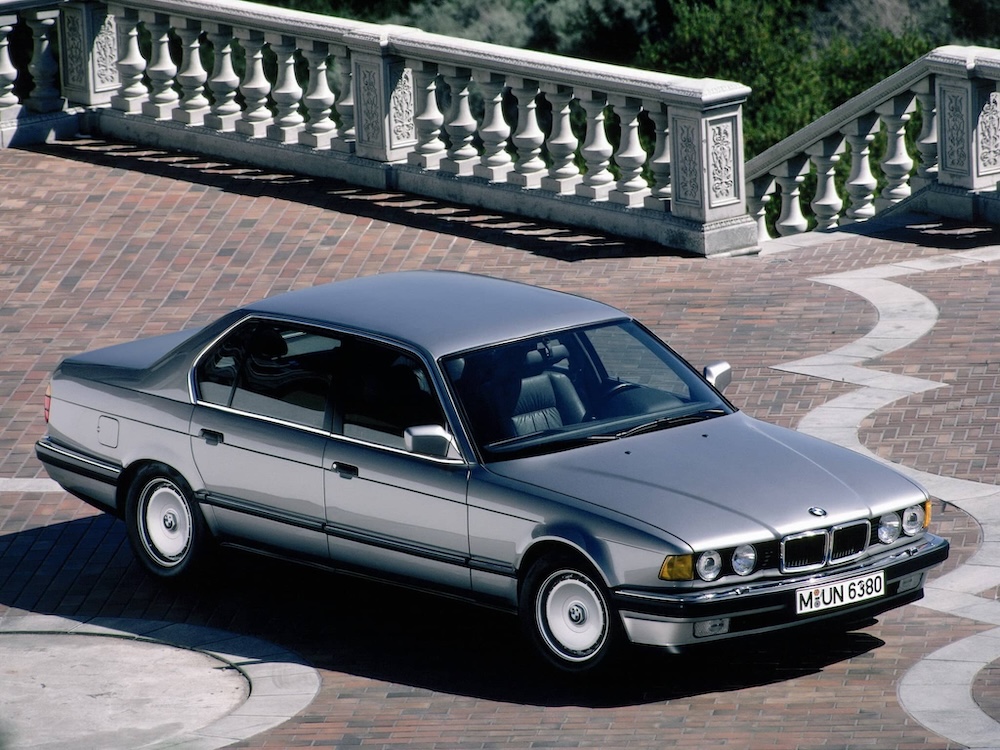
Today, if you see an BMW E32 on the road, you can be fairly sure it belongs to an enthusiast. Perhaps it has already been repaired, rebuilt, or restored more than once. Perhaps it has survived owners who did not deserve it. Perhaps this is not such a bad thing. If the E32 had been as common and as hard to kill as some later BMWs, its image might have been ruined completely by the wrong kind of attention. Scarcity has saved its dignity. I recently got the chance to experience one.
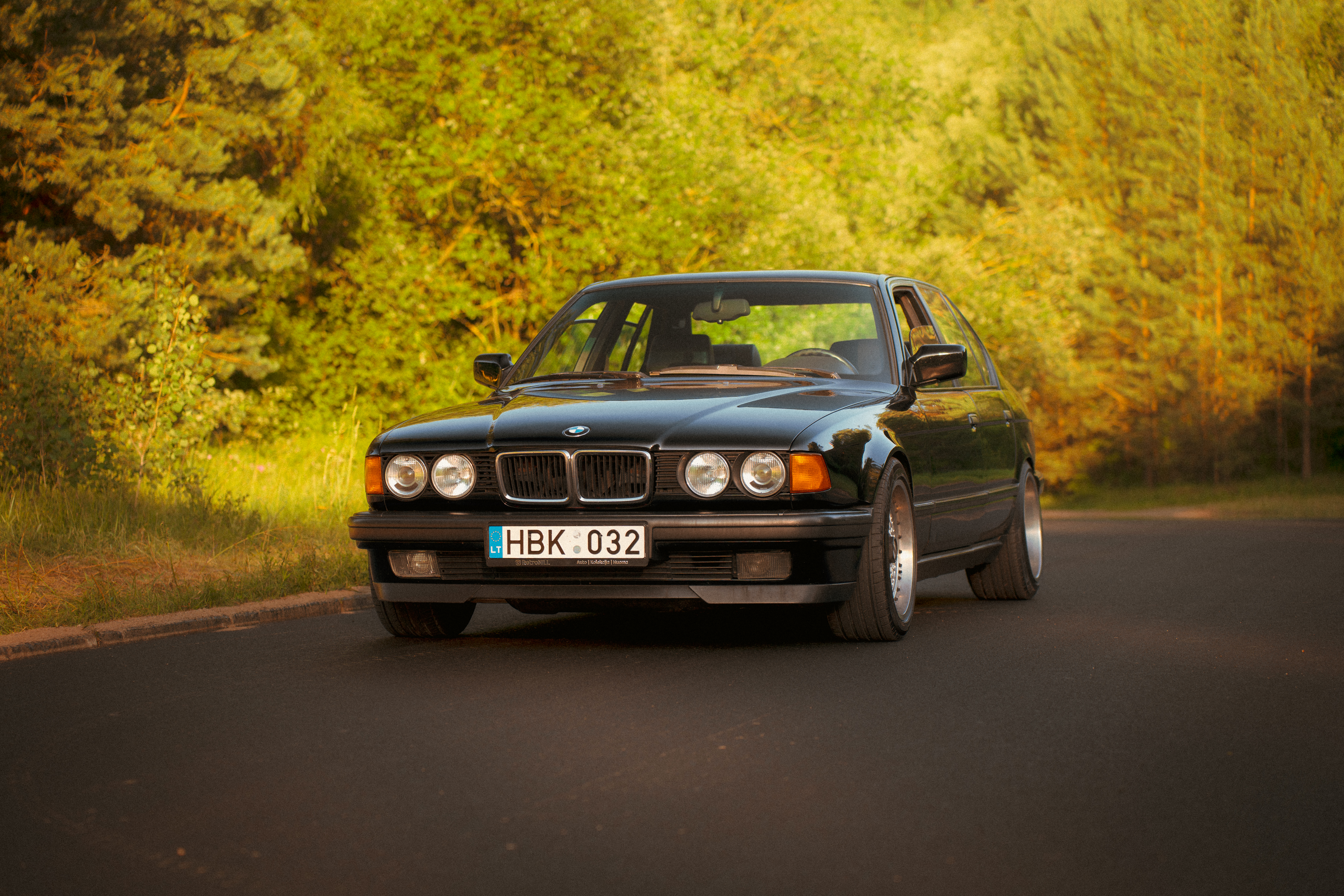
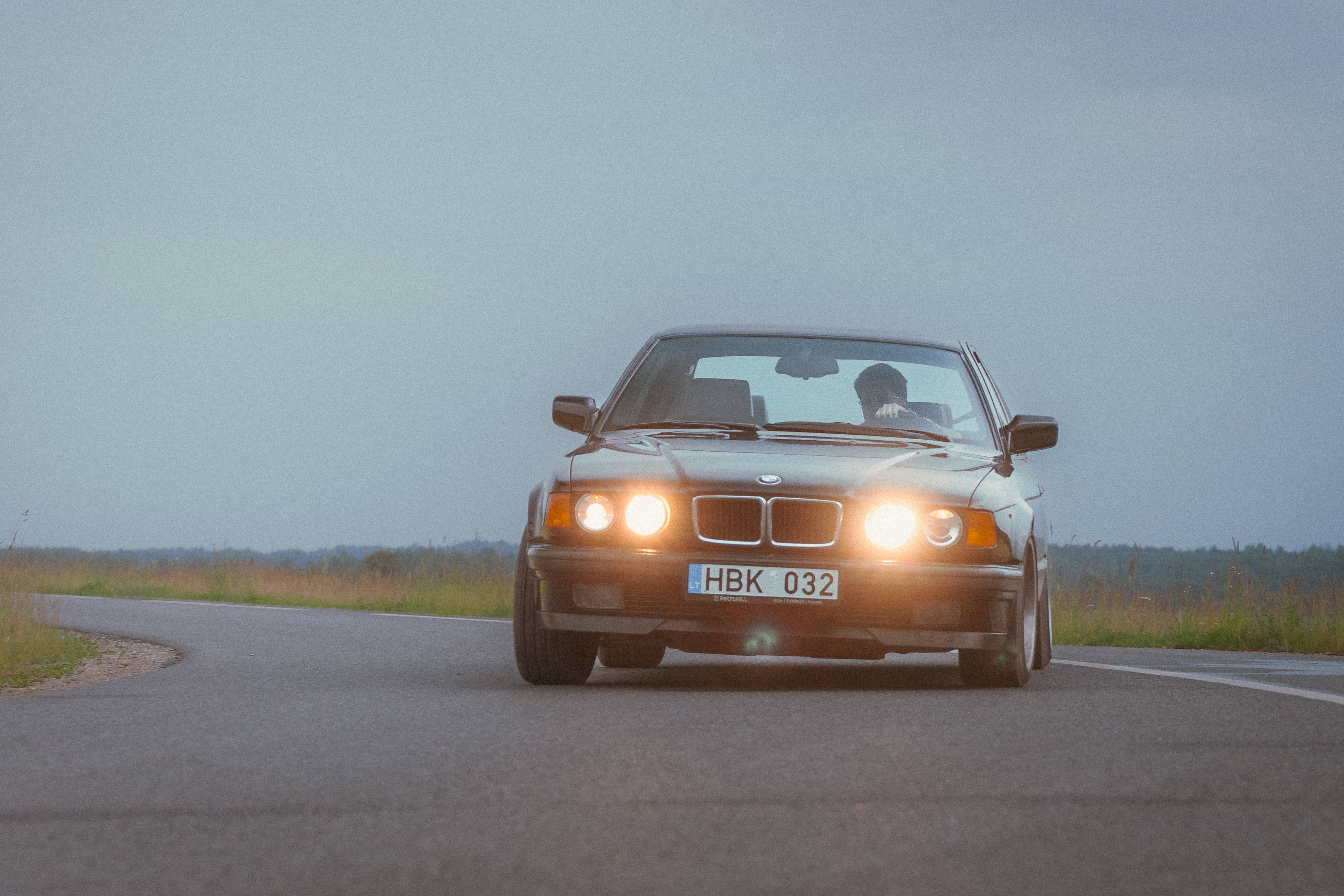
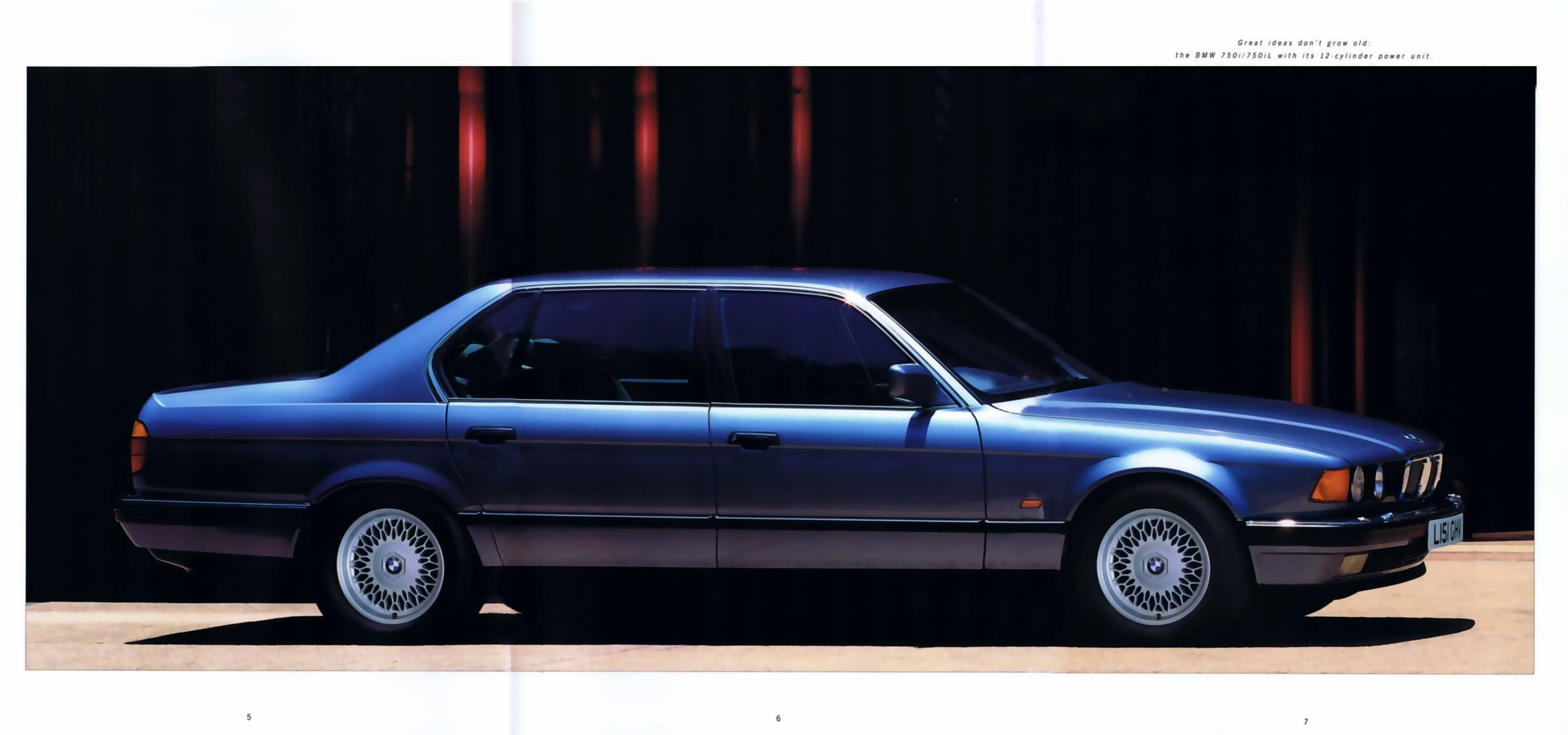
Even before opening the door, the car already has presence. You walk towards it and meet all those classical BMW lines: the long bonnet, the narrow, angry stare of the round headlights, and the sharp front edge of the engine cover hanging over them like a frown. The strongest feature of the nose is the pair of raised lines starting from the kidney grilles and widening towards the windscreen. They give the car a sense of forward movement even when it is standing still.
Technology
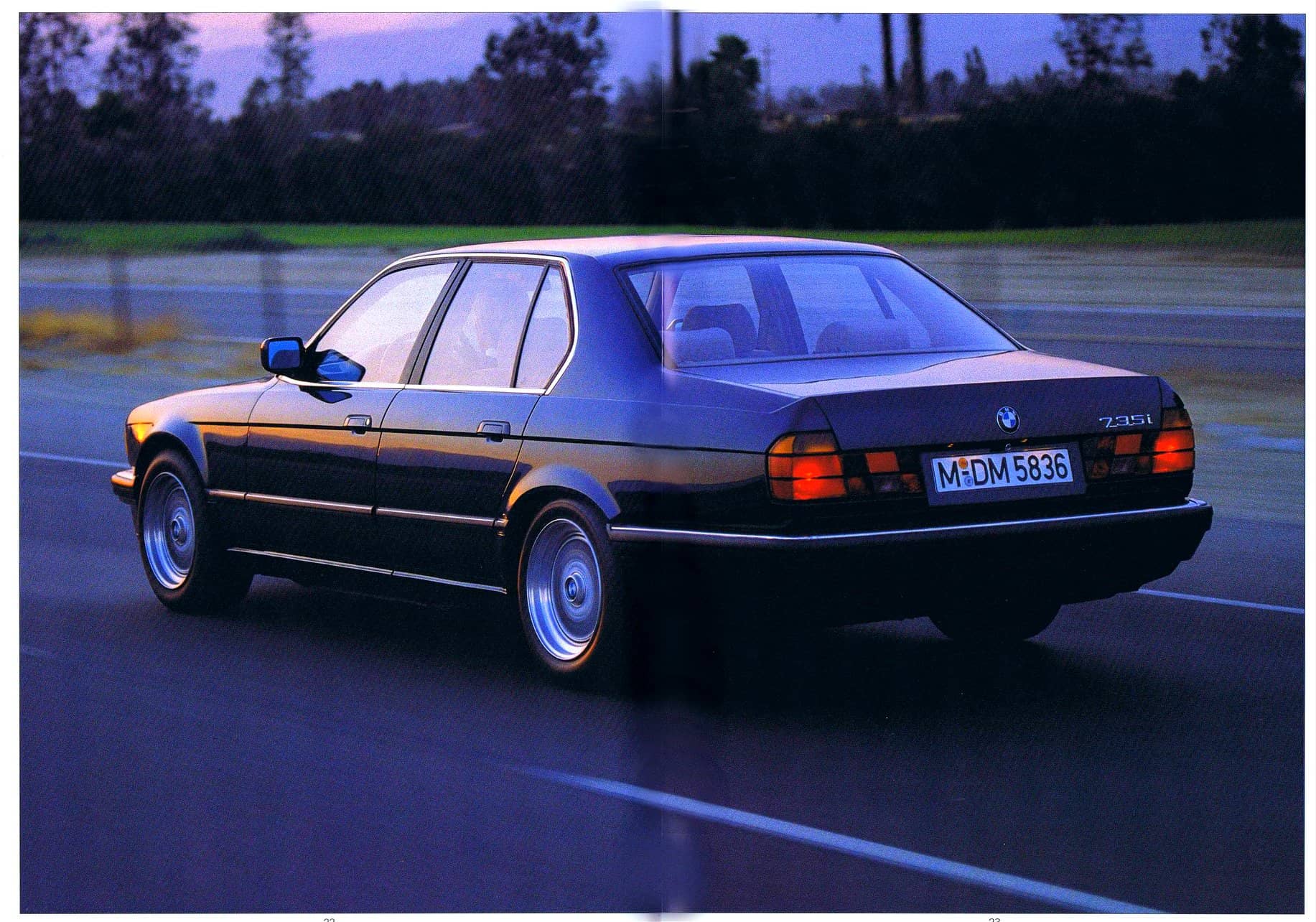
The mirrors are large, the Hofmeister kink is strong, the boot lid falls away with a confident slope, the rear lamps are unmistakably period BMW, and the bumpers still look like they were designed to survive contact with actual life. The whole car gives an impression that is muscular and slightly aggressive, but still serious. It is a big man in a good coat who does not need to raise his voice.
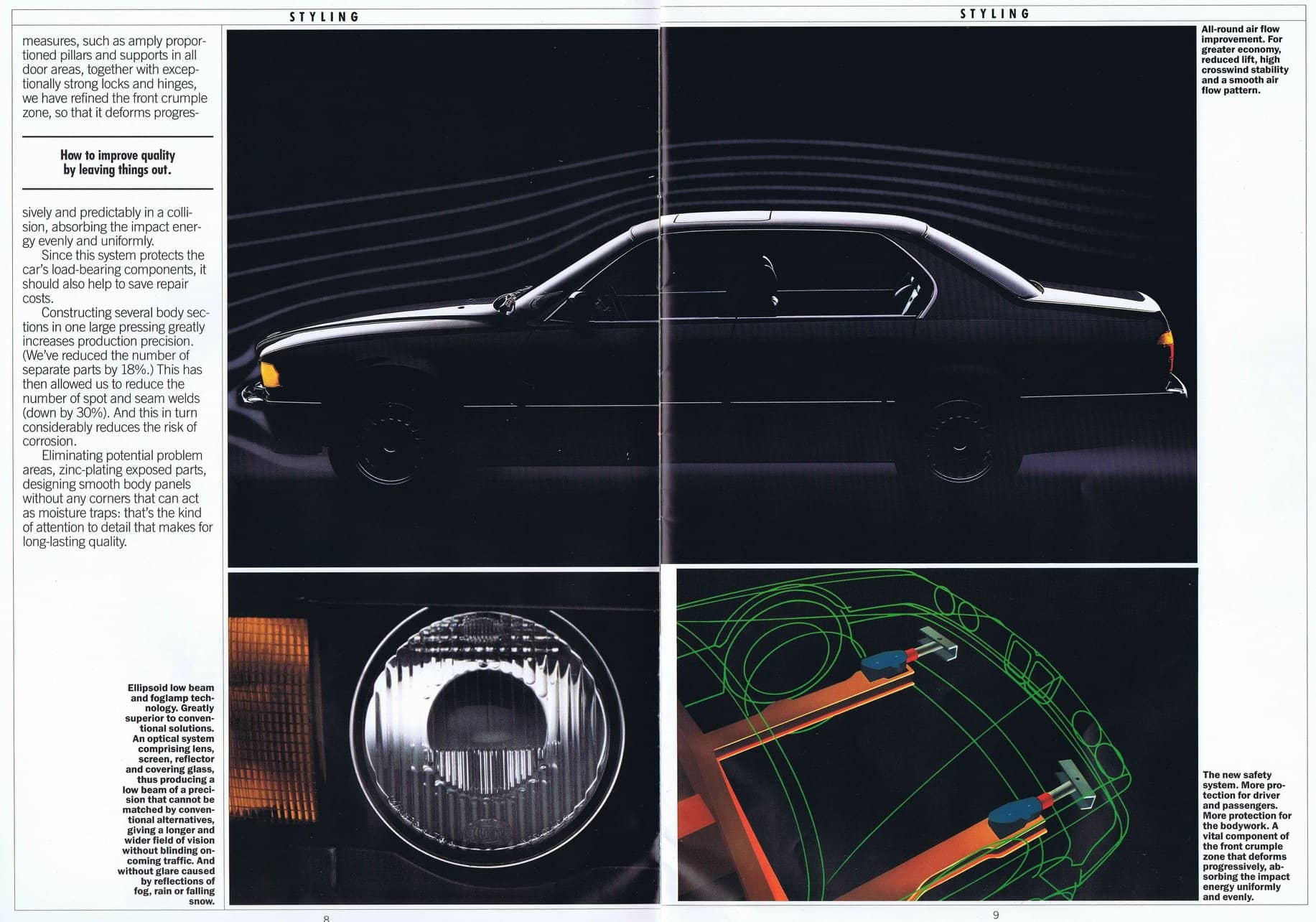
The E32 also has many small details that reveal how much engineering attention BMW was prepared to spend on a luxury saloon in the late 1980s and early 1990s. At the base of the windscreen, heating elements help free frozen wipers. The washer jets are heated. Headlamp washers were available. This model also carries an important place in lighting history, because the E32 was the first production car offered with xenon headlights as an option. Then there are the winter tricks. Owners who read the manual properly know that a frozen door lock can be warmed by holding the door handle lifted for a while.
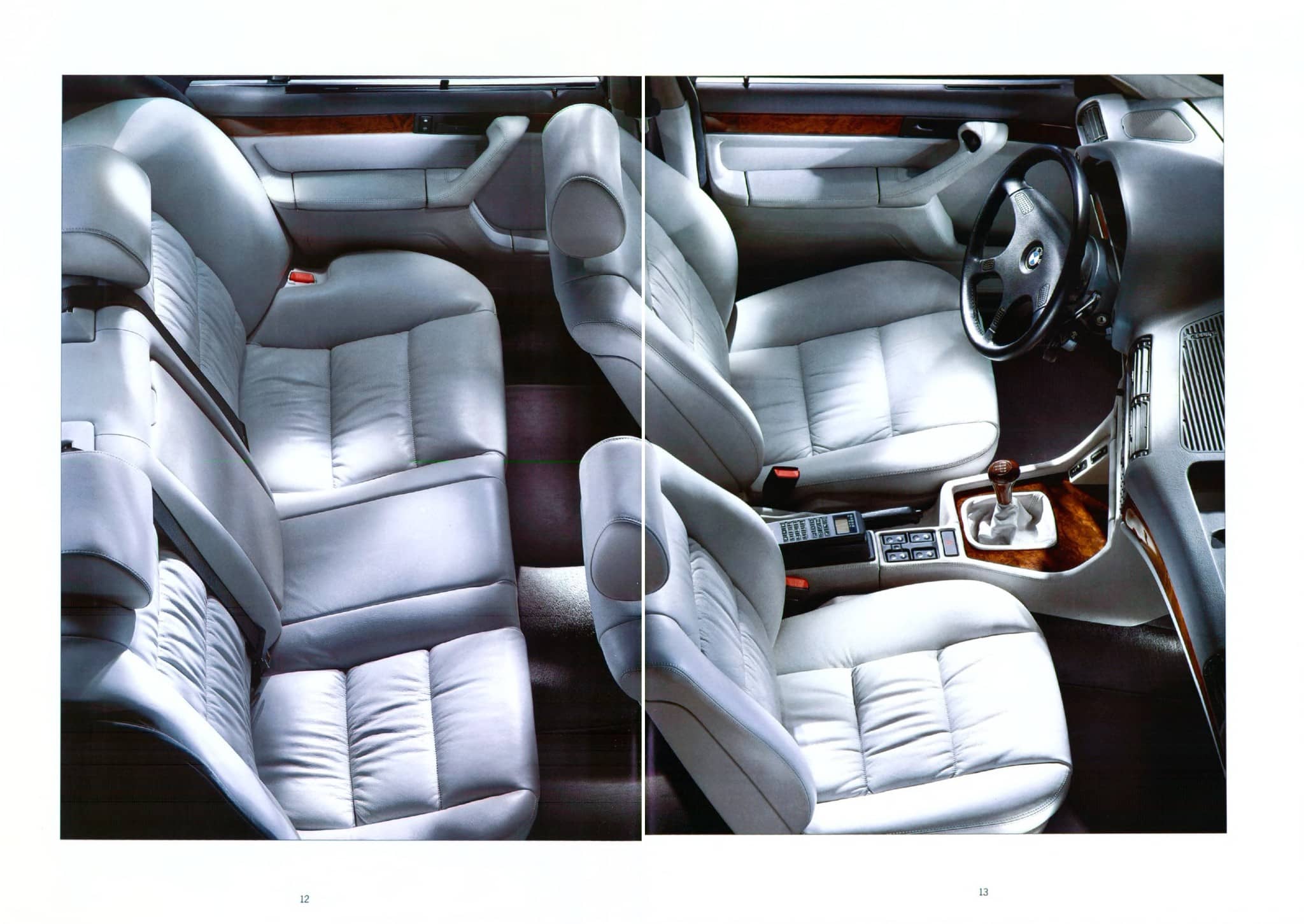
Inside, the first thing you notice is the smell of leather. Not the modern perfume of leather, but the deep, slightly dry smell of old BMW hide, warmed by decades of summers and winters. The fold-down armrests on the front seats may look a little strange today, almost like something borrowed from a people carrier, but on long drives they make complete sense. The rear bench is shaped with similar care.
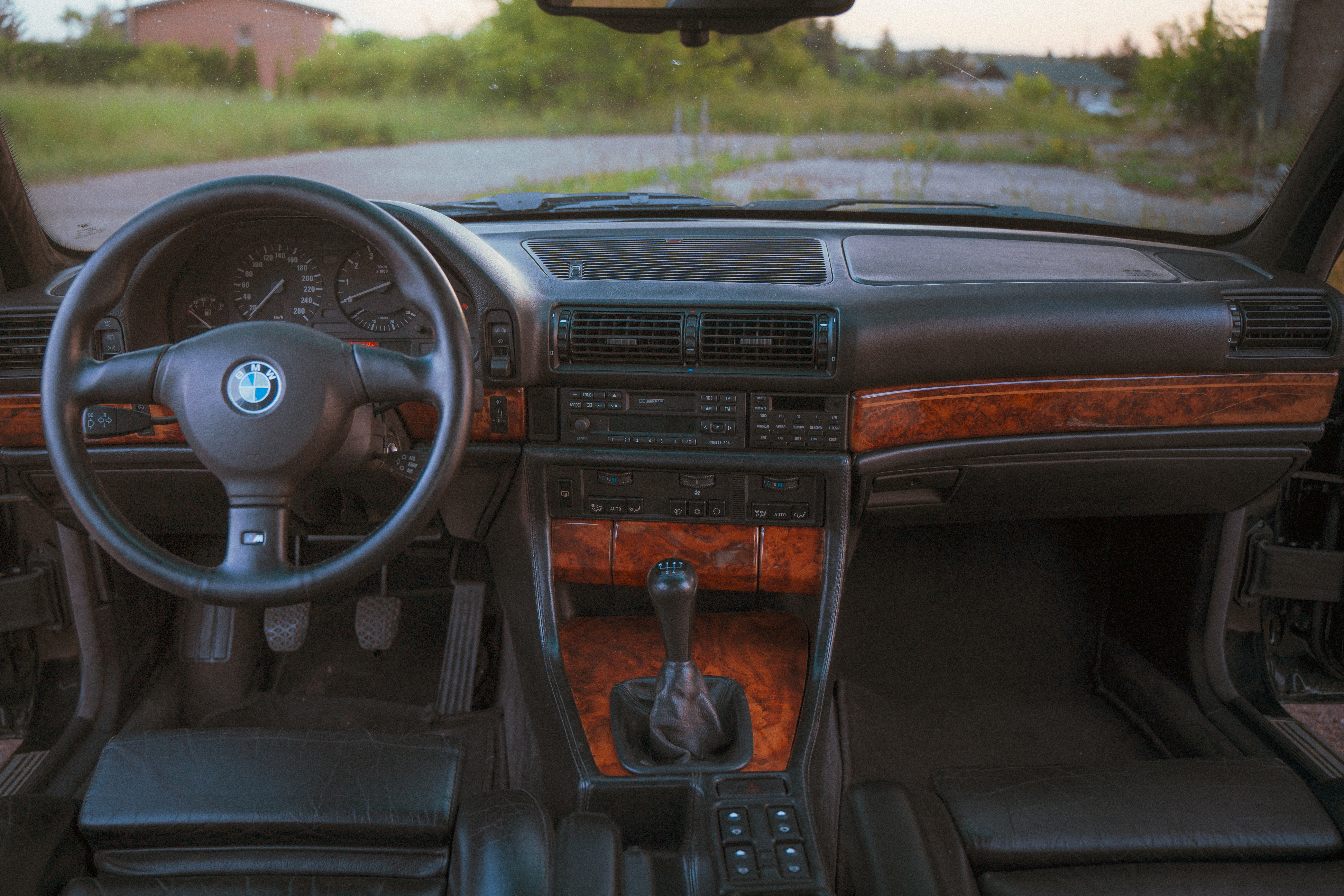
The ventilation system is another reminder that this was an expensive car built for people who expected machinery to obey. The vents allow a broad range of adjustment, and the dual-zone climate control lets driver and passenger choose different temperatures. In period, the air conditioning system was brutally effective, using R12 refrigerant, which could chill a cabin with more enthusiasm than many modern systems. R12 was later banned in Europe due to its effect on the ozone layer.
It heated just as strongly. All E32 engines warm up quickly, and their waste heat is more than enough to roast the cabin on a winter morning. There is a known old-BMW problem connected to this: cracked windscreens. Turn hot air onto a frozen screen, heat the inside too quickly while the outside remains cold, then drive over the first small road imperfection and the glass may crack like thin ice under a careless boot.
On the road
The driving position is one of the great BMW interiors of that era. The centre console is strongly turned towards the driver. Every switch is close, every action requires little attention, and the road remains the main subject. The buttons operate with precision. The plastics, leather, and other materials feel chosen by people who understood touch, not only cost. In higher specifications, almost everything that could be trimmed in leather was trimmed in leather, including the central tunnel between the front seats.
There is also one delightful detail: the additional storage compartment on the driver’s side. Depending on the owner’s lifestyle, it could hold a wallet, cigarettes, garage keys, toll receipts, or something more dramatic in countries and decades where illegal things happened around expensive BMWs.
The E32 could be ordered with several seat types, including standard, Comfort, and Recaro-style sports seats. The firmer seats hold the body better, while the standard and Comfort versions are better suited to long-distance work. Electric adjustment with memory could include lumbar support, and the electrically adjustable headrest remains one of those small features that still feels expensive. The only thing more period-correct is the optional car telephone with its coiled cable.
The user experience
Then there is the onboard computer. To fully understand it, one should ideally have the owner’s manual in one hand and an old German dictionary in the other. It could perform calculations, show information, and even allow the driver to set a digital security code required before starting the car. In theory, it was a clever anti-theft measure. In practice, in certain places and certain times, it might simply have made the thief more impatient and the owner more endangered. Old luxury cars often remind us that technology and human behaviour do not always develop at the same speed.
The wiper system has another beautifully over-engineered feature. The driver can set the intermittent wipe interval by accident and not even realise it. Switch the wipers on, decide the speed is too much, switch them off, wait, then move to intermittent mode. The car uses that waiting time as the interval.
The E32, like many BMWs of the era, also has the memo function: a gong at 59 minutes past the hour, originally intended to remind the driver to switch on the radio for the news. This is especially amusing because standard BMW audio systems of that period were not famous for quality. Some would say this was not an accident. BMW’s philosophy was driving pleasure, and driving pleasure requires fewer distractions. Music was one of them. So the car politely reminds you: listen to the news if you must, then return to the engine.
Despite its size, the E32 is not as spacious inside as you might expect. This is very BMW. Part of the cabin is sacrificed to the long engine and the correct weight distribution. The engine sits far back, the transmission tunnel is high, and the car is realistically more comfortable for four than five. Still, the interior has a wonderful firmness. Everything feels solid, severe, and functional.
That feeling becomes stronger once the car moves. Turn the key and you hear the energetic clatter of the starter. Press the brake, move the automatic selector into D, and the rear of the car settles down with a noticeable mechanical seriousness. As you roll away, there is that specific old-BMW sound from the climate system, a small electric whirr that instantly places the car in its correct decade.
At low speeds, the suspension eats road imperfections without drama. But it does not float in the way a Mercedes-Benz W140 floats. The W140 glides over the surface like it has made a private agreement with gravity. The E32 absorbs, softens, and filters, but it never cuts the conversation between road and driver.
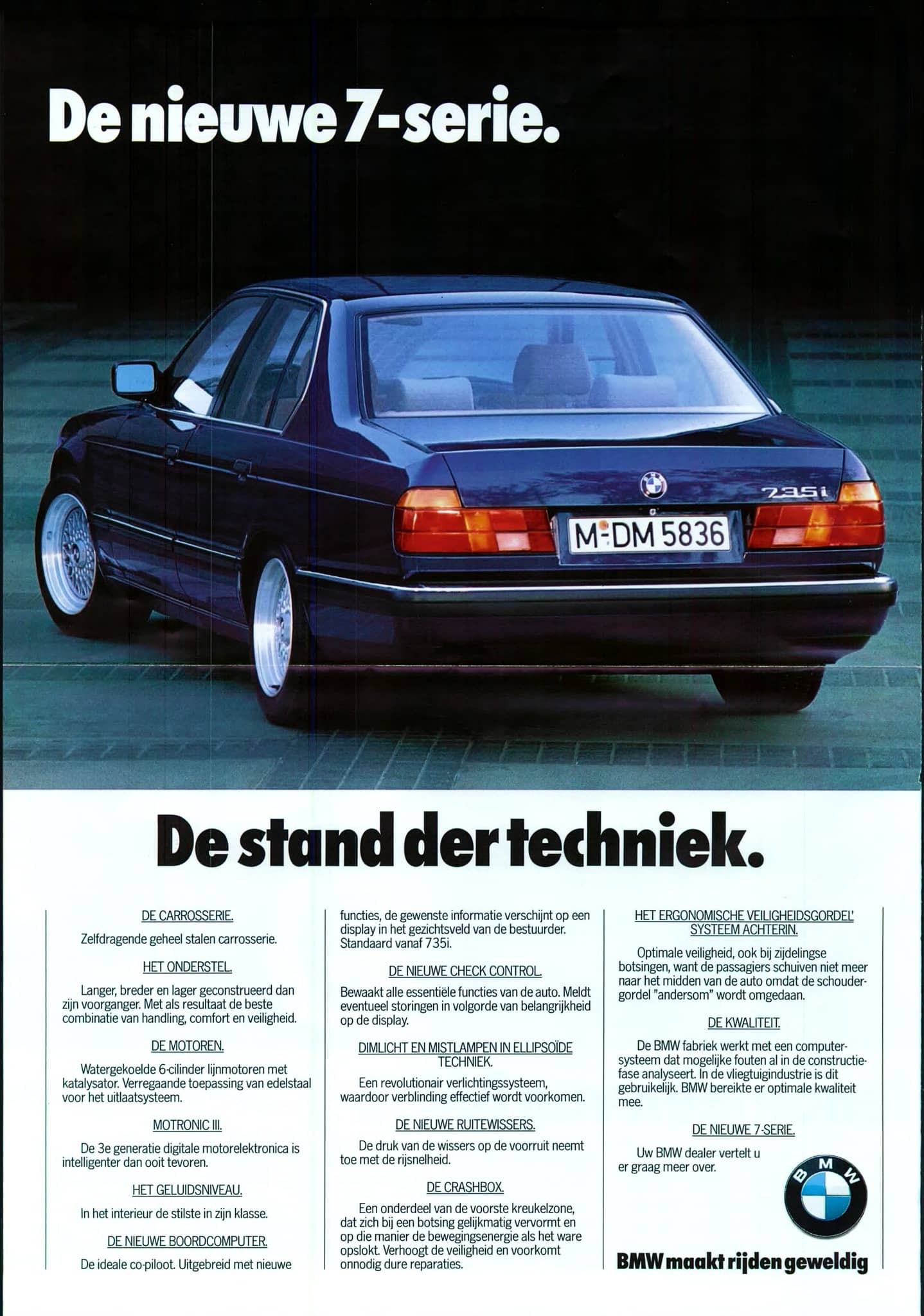
The steering is not perfect. The power assistance is too strong, and you may wish for more weight. The steering box usually has a little play, even in good examples. But the feedback is still there, and it is pleasant. You can understand how much grip the front tyres have, how quickly you should add steering, what line the car wants, and even what kind of asphalt is under the wheels. This is why old BMWs became old BMWs in the minds of people.
Suspension
In corners, the body can lean more than modern drivers expect, sometimes enough to feel slightly uncomfortable. But the car is not lazy. It has a strong rear-drive character, and with the optional limited-slip differential, it becomes a proper winter machine. It will pull itself out of snow, and when the rear axle starts to slide, it does so in a progressive, understandable way.
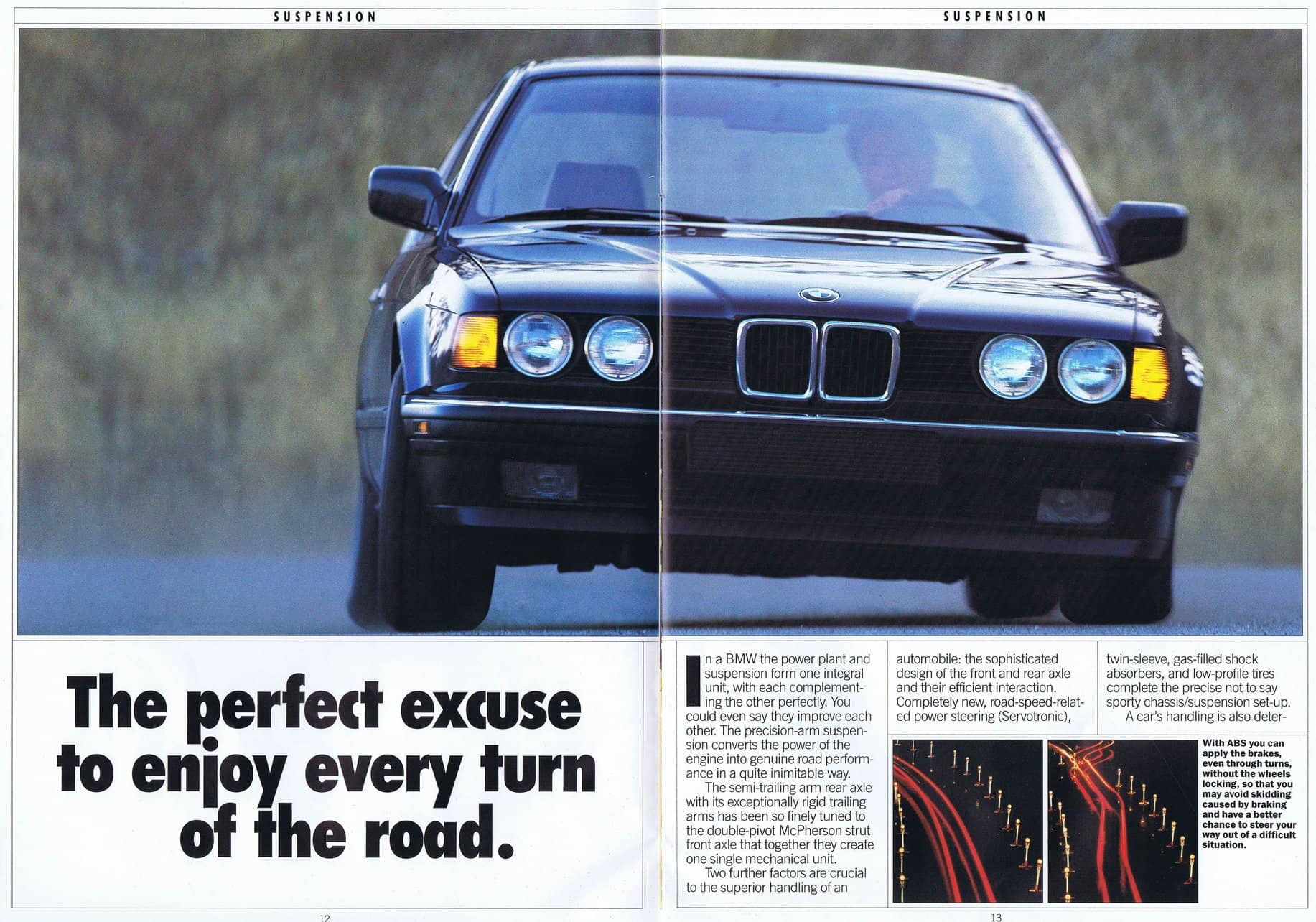
The semi-trailing arm rear suspension gives the E32 a tendency to move from the rear more readily than from the front. In a luxury saloon, that sounds dangerous on paper. In real life, in the hands of somebody with feeling, it makes the car surprisingly playful.
The automatic gearbox is less poetic. Its intelligence can be compared to a beaver that has successfully built two dams and now considers itself an engineer. But for the period, it was normal. Press the accelerator to the floor and the shifts arrive with a certain harsh enthusiasm. Each gearchange throws the car forward in a way that feels exciting, although sometimes it creates the impression of stronger acceleration than is actually happening.
Engines
The particular 730i I had the chance to drive belongs to an interesting place in the E32 world. The 3.0-litre V8 from BMW’s M60 family was refined and durable, but not necessarily the most dramatic engine in the range. Later versions of this V8 family, especially in the E38 and E39 era with VANOS, became more flexible and more entertaining. In the E32, the V8 is smooth, cultured, and competent, but it does not turn the car into a missile.
It does, however, suit the personality of the machine. It was also still a 7 Series before diesel clatter became part of the luxury-car landscape. Every E32 engine has a certain petrol-era richness, and that matters now more than it probably did when these cars were just used executive saloons.
There are, of course, costs. The normal operating temperature is high, close to 100 degrees Celsius, which accelerates the ageing of plastic cooling-system parts. If the engine mounts are tired and the engine sends more vibration through the car, this does not help. The fuel tank is enormous: 90 litres as standard, with a 100-litre version also available. This was necessary because fuel consumption can be criminal. A 730i or 740i can easily drink 18 to 20 litres per 100 kilometres in real use, while a 750i may consider 20 to 25 litres perfectly normal behaviour.
The appeal
Yet the total feeling of driving it is something many enthusiasts will recognise immediately. When you own a car like this, you look at the key lying on the table and begin inventing a reason to go somewhere. You do not need to go far. The road does not need to be special. The point is not arrival. The point is that the car wants to move, and after a few minutes, you want the same.
Of all 7 Series generations, the E32 may carry the most concentrated version of the old BMW spirit. It is luxurious, yes, but comfort is not its loudest voice. There is more drive than lounge in it. More muscle than velvet. More road than carpet.
It is a car from a time when a flagship saloon could still feel slightly impatient. A car that could transport a director, a businessman, or a serious man in a dark coat, but also remind him, when the road opened and the rear axle settled, that BMW had not forgotten how to enjoy itself.
---
We invite you to start your journey by exploring our broad selection of Car Categories. After that, feel free to visit the Classic Passion Shop, where you’ll find unique products from our partners — thoughtful picks for every enthusiast looking to add something special to their collection.