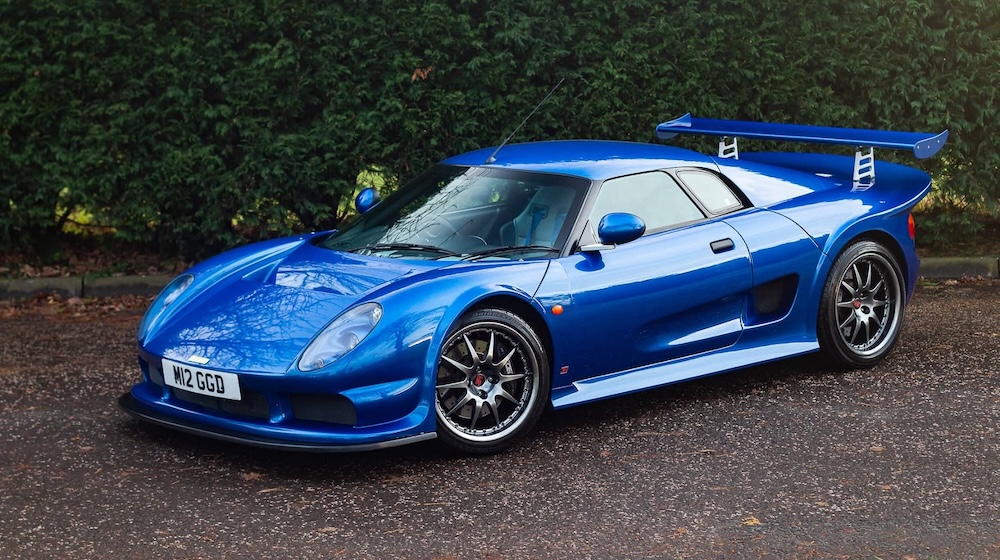
Noble has always seemed slightly out of place among supercar manufacturers, but that’s exactly how this small British company built its reputation. Its cars have the peculiar confidence of something developed by people who know exactly which bits matter to the right people.
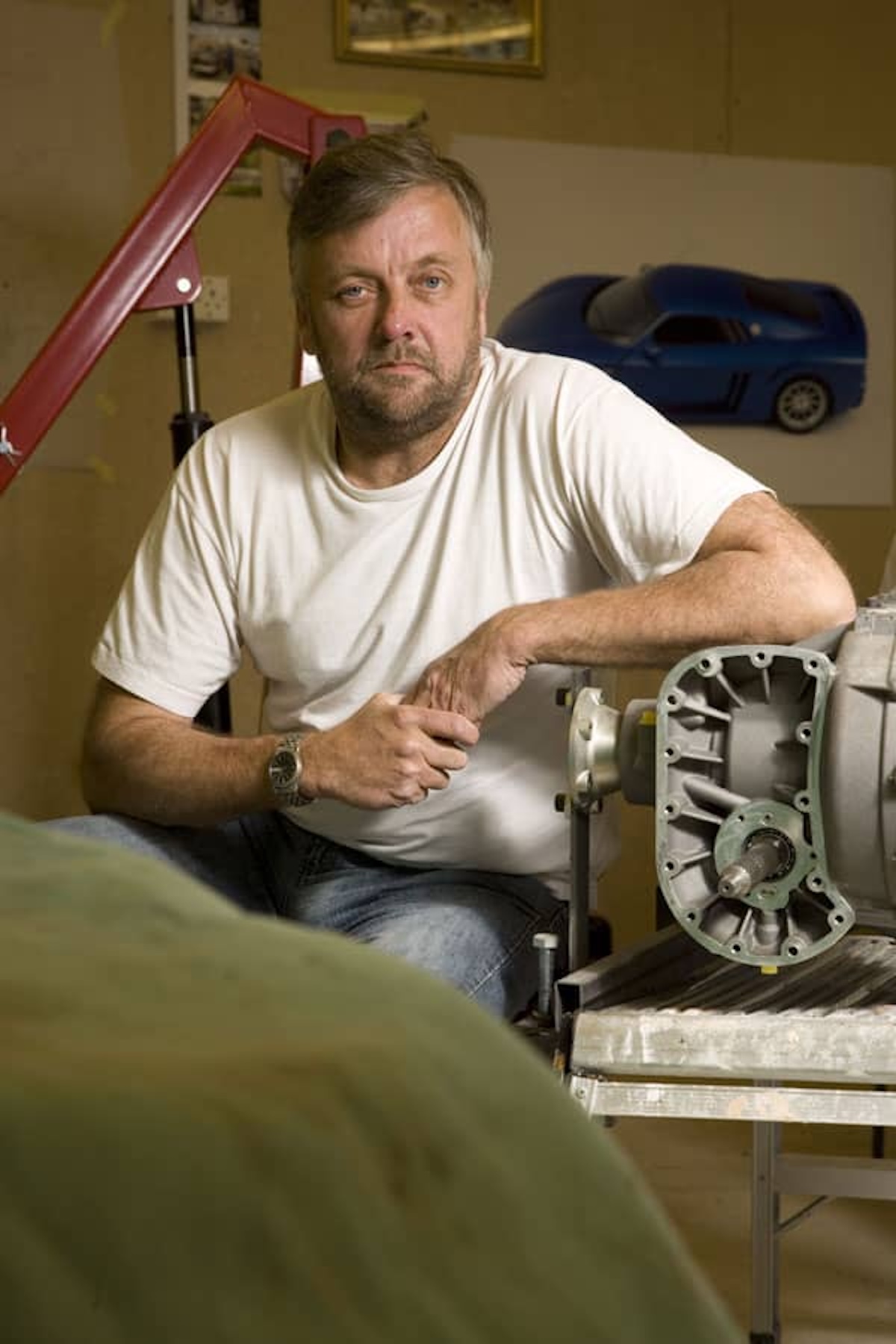
The name belongs to Lee Noble, a racing driver, designer and engineer whose earlier work included the original Ultima and projects for Ascari. By the late 1990s, he was ready to put his own name on a car. His experience showed in the fundamentals: low weight, a well-balanced chassis and an engine mounted behind the driver.
The First Cars
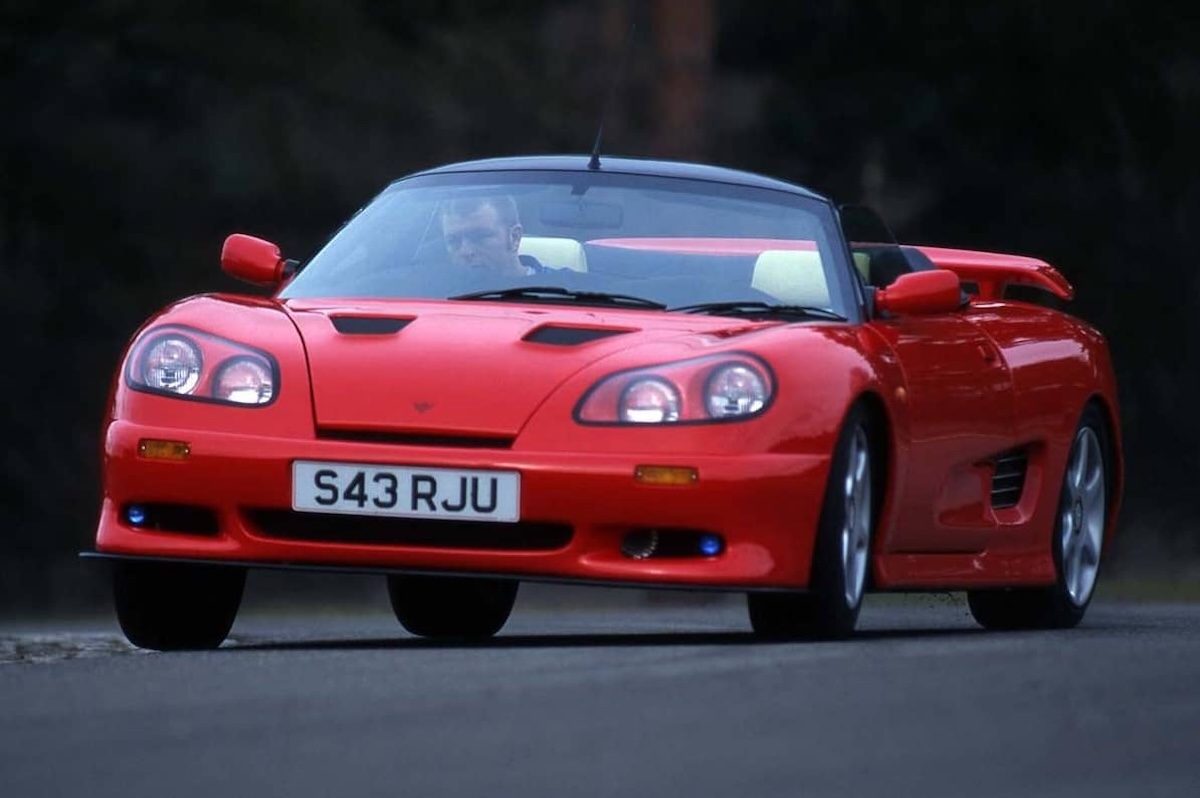
The first result was the M10, which attracted attention in 1999. It’s a small, open two-seater with a naturally aspirated 2.5-litre Ford V6, producing around 168 HP. Its appearance was a little uncertain, as though several perfectly reasonable sports cars had offered conflicting advice. But contemporary road tests found something much more convincing underneath. The steering, balance and ride suggested that its creator understood a difficult road rather better than a drawing board.
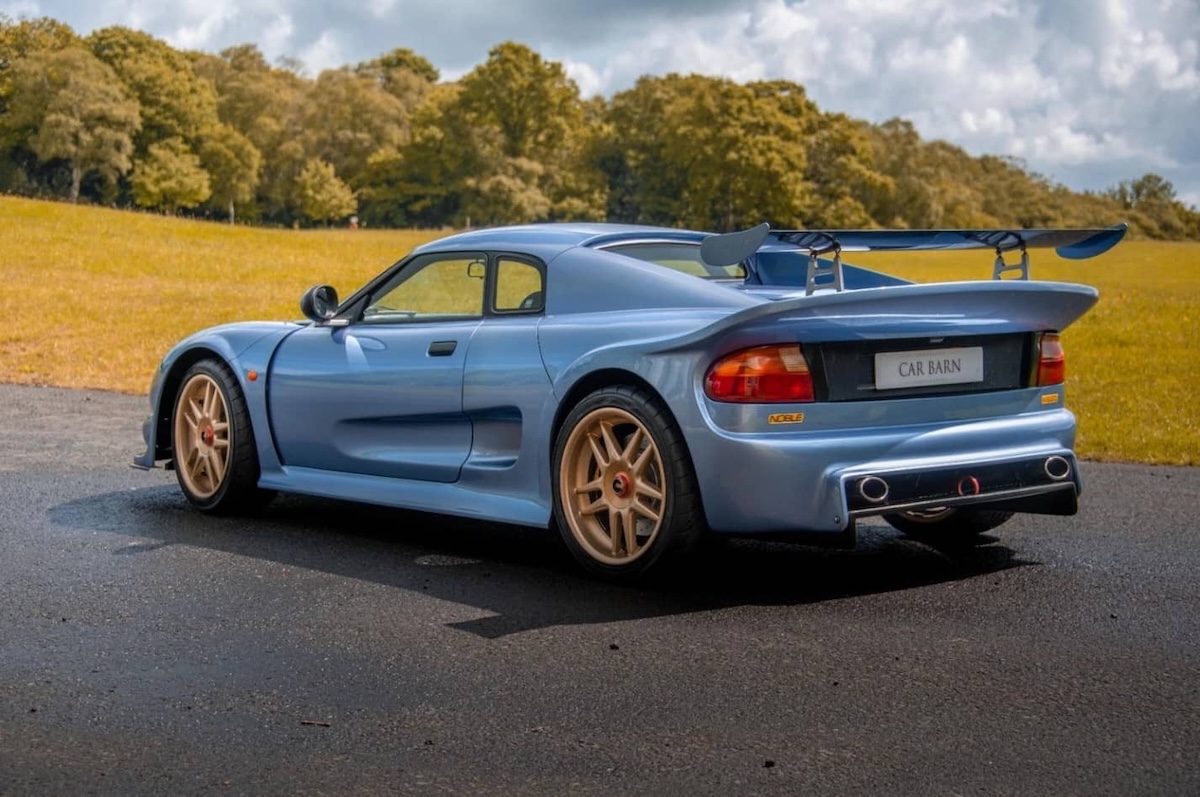
By 2001, customer cars were reaching the road with enclosed bodywork, a prominent rear wing and a Ford V6 now breathing through two turbochargers. The original M12 GTO delivered 310bhp from 2.5 litres. With its steel spaceframe and glassfibre body, it approached serious performance through familiar materials carefully arranged. The ingredients sounded ordinary. The result made established sports cars look rather expensive.
Crucially, the M12 could absorb an imperfect road. Its reputation rested on the suspension, accurate steering and controlled body movement. That matters in Europe, where a promising stretch of tarmac often comes with patches, cambers and repairs from several different decades. A sports car needs to keep its tyres working through all of this. Noble understood that firmness alone was a poor measure of engineering. Even its construction was pragmatic. Hi-Tech Automotive in South Africa supplied bodies and rolling chassis, with powertrain installation and final assembly completed in Leicestershire. The arrangement gave a small British manufacturer much needed access to production capacity.
More Power
Development brought the M12 GTO-3 and GTO-3R, using a larger 3.0-litre V6 with 352 HP. The latter added a six-speed gearbox and a limited-slip differential, sharpening an already persuasive package. Then came the M400 in 2004. Its 425 HP, revised suspension and greater track focus made the familiar shape considerably more serious. The name referred to roughly 400 HP per tonne. Even the badge was doing arithmetic.
Of course, the early cars had their rough edges. Cabin fittings lacked the polish of a Porsche, and the M12’s earlier five-speed gearbox could be troublesome. Exhaust manifolds could crack, too. Enthusiasm did not remove the need for maintenance; it provided a compelling reason to bother.
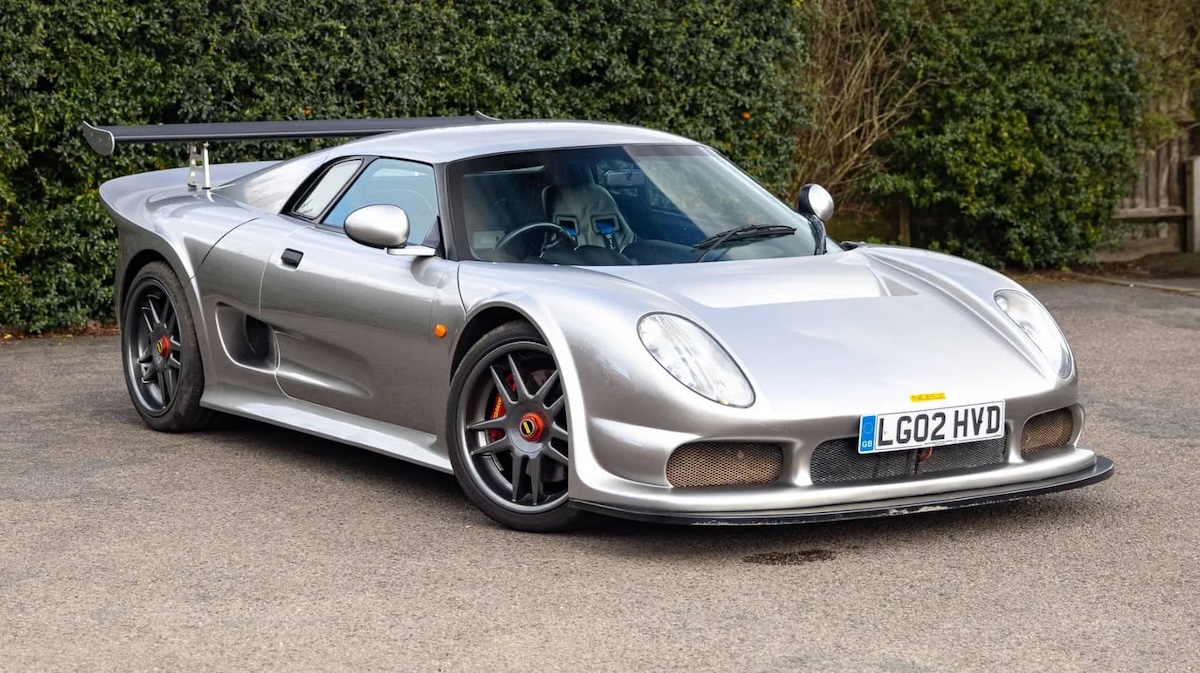
Ambition soon extended beyond the M12 family. The M14, shown in 2004, promised a more refined cabin and a place further up the supercar hierarchy. It gave way to the M15, revealed in 2006 with a 455 HP V6 and a new longitudinal engine installation. Neither reached series production. Financing difficulties and a change of ownership disrupted the plans, and Lee Noble sadly left the company in 2008.
Next-Generation
The company continued under new management by Peter Dyson, and the M600 took its ambitions into more expensive territory. It retained the small manufacturer’s belief in direct responses and mechanical involvement, but its engine introduced a particularly pleasing international affair.
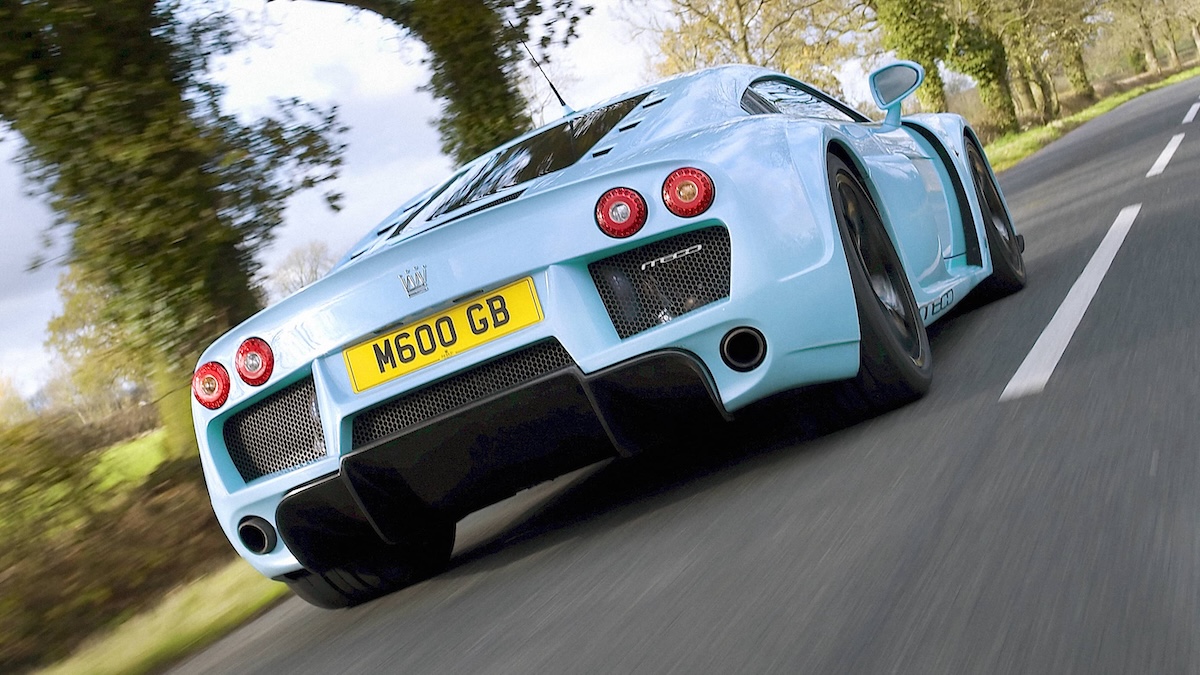
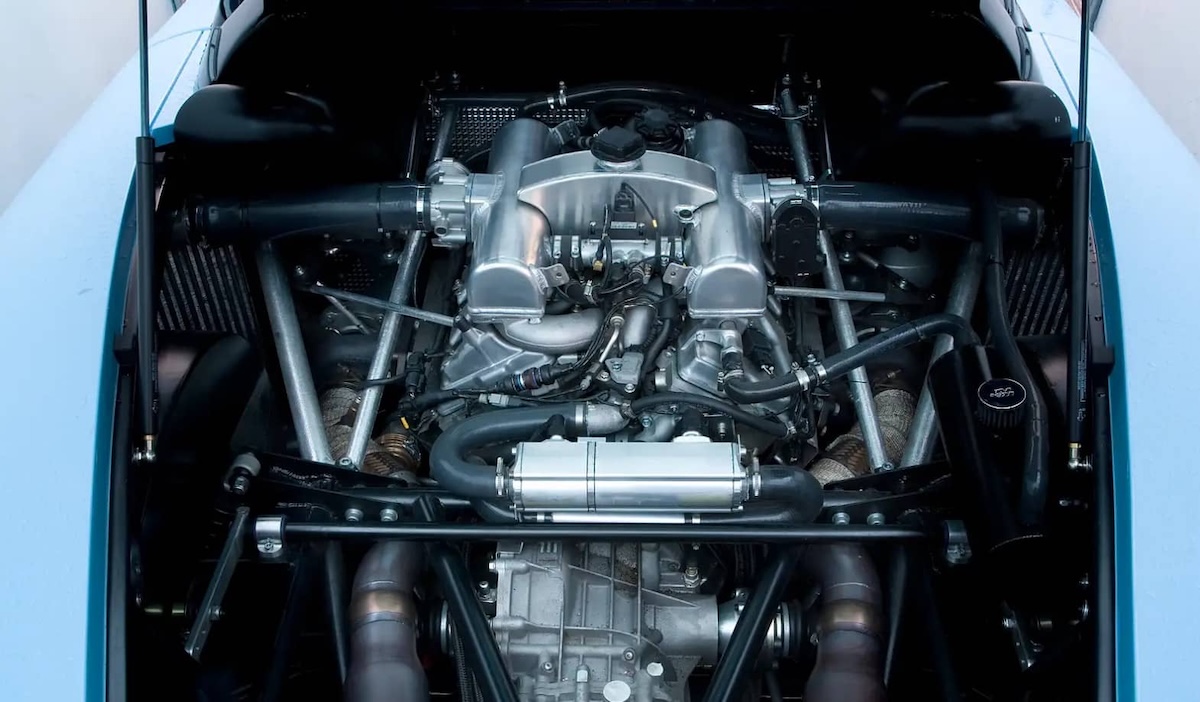
Behind the cabin sat a 4.4-litre Yamaha V8, related to the engine used in Volvo’s XC90. Yes, the sensible Swedish family car. In the Noble, extensive development and two turbochargers transformed that foundation into something capable of 650 HP. The connection is often treated as a joke, but it captures the company’s approach beautifully. A sound engine design could serve very different purposes. The Volvo carried children and shopping. The Noble gave the same basic architecture a very different occupation.
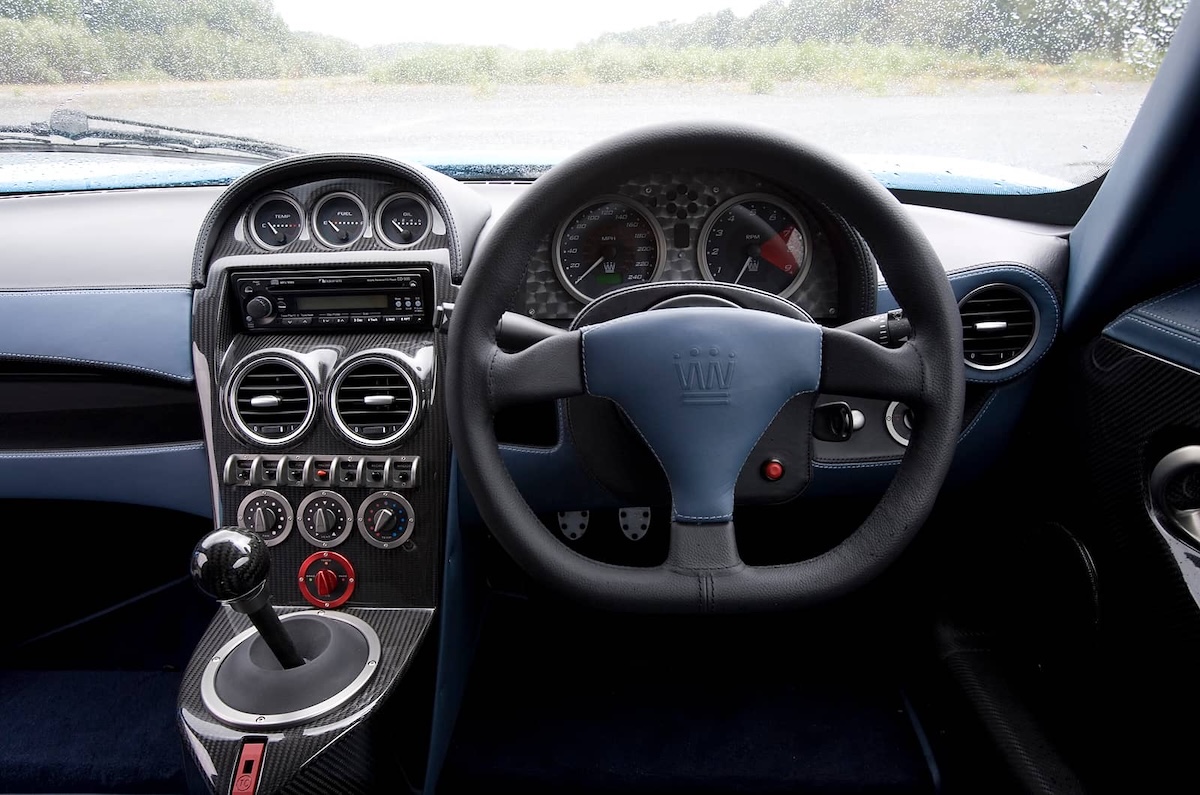
The M600 paired its V8 with a six-speed manual gearbox and offered three power settings: 450, 550 and 650 HP. Traction control was available, but ABS and electronic stability control were not there. That made the driver’s judgement unusually important. Deep involvement could be rewarding, but it demanded respect.
Visually, the M600 was almost restrained for a car with such substantial performance. Its low nose, broad rear shoulders and simple surfaces avoided the frantic ornament that can make a supercar look permanently cross. Inside, leather, carbon fibre and physical controls gave it the atmosphere of a small workshop’s most ambitious commission. The craftsmanship was personal; the scale remained intimate. Each M600 also carried a human detail: the names of the people involved in its construction appeared on the door sill. For a car capable of such violence, it was a gentle way to sign the work.
The M500
The later M500 brings the story back to Ford power, now through a 3.5-litre EcoBoost V6. Noble lists 541bhp and retains a six-speed manual gearbox, complete with an exposed gate. Based on the M600’s chassis, it promises a roomier cockpit, easier access and more brake assistance.
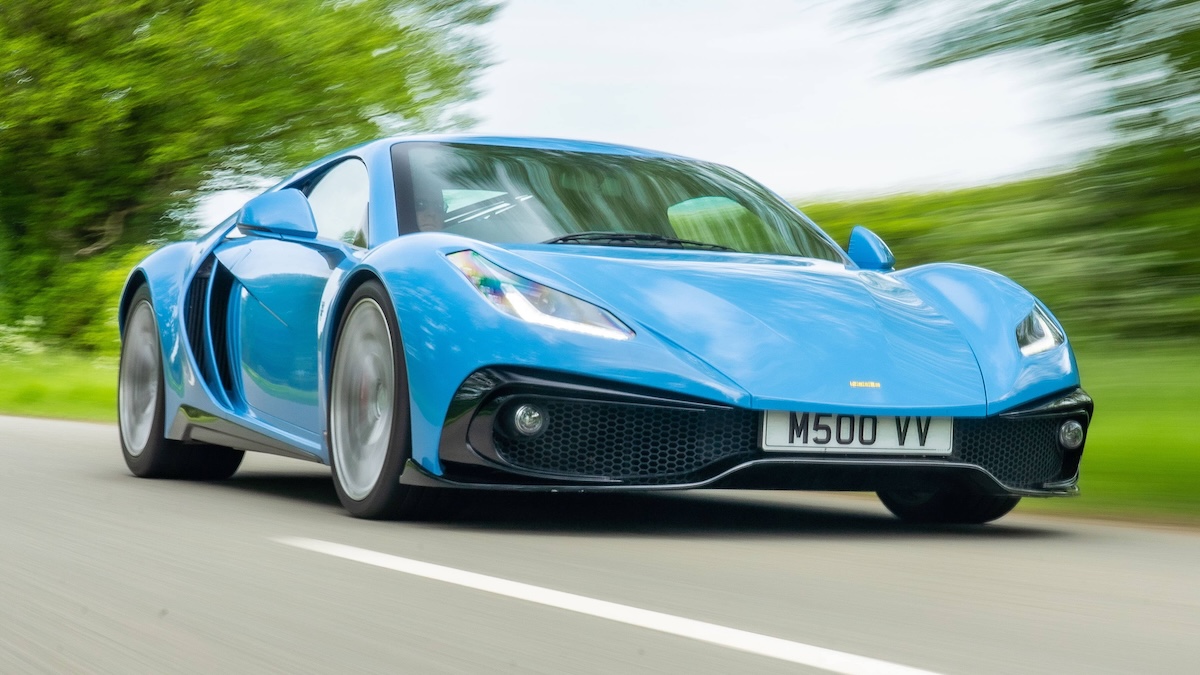
Across these models, Noble’s identity was actually remarkably clear. The awkward little M10, the wonderfully effective M12, the more intense M400 and the Yamaha-powered M600 all express a belief that a driver’s car begins with how it moves. There have been unfinished projects, changes of direction and compromises. That uneven history makes the achievements more interesting. Noble belongs to the Britain of small workshops and stubborn engineers, where a very good idea, given enough patience and persistence, can still acquire number plates. Noble is something the British can be deeply proud of.
---
We invite you to start your journey by exploring our broad selection of Car Categories. After that, feel free to visit the Classic Passion Shop, where you'll find unique products from our partners — thoughtful picks for every enthusiast looking to add something special to their collection. You can also explore Dyler Gift Cards. And if crypto is part of your world, you can discover some of the best gift cards to buy with cryptocurrency through CoinGate Gift Cards.


