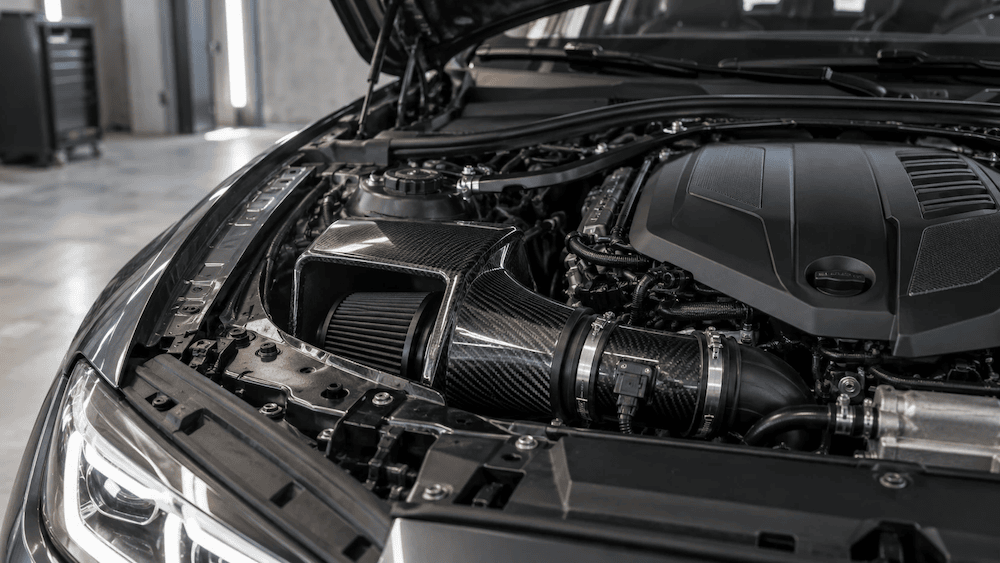
An upgraded air intake is one of those modifications you can enjoy every time you drive. It makes the engine’s breathing more noticeable, brings out the sound of the turbo and can make the car feel more responsive when you press the accelerator.
However, not every intake is a worthwhile upgrade. Some are designed mainly for sound, while others support engines with substantial performance modifications. In Germany, there is another important question to answer before buying one: Is the intake legal for use on public roads?
Drivers looking for a suitable system can explore this selection of BMW air intakes and related components: https://tunepoint.eu/collections/intakes. Before ordering, always confirm that the product fits your exact BMW model, engine and production year.
This guide explains what an air intake changes, what results you can realistically expect and how to choose a system that suits both your car and German regulations.
What does a performance air intake do?
An engine needs a continuous supply of clean air. The factory intake draws air through a filter and carries air towards the throttle body or turbocharger.
BMW designs its original systems to be quiet, reliable and suitable for different weather and driving conditions. A performance intake may use a larger filter, smoother pipes or a redesigned airbox to reduce unnecessary airflow restrictions.
Depending on the product, an intake kit may include a performance filter, larger pipes, a heat shield, a closed airbox and connections for the original engine sensors.
On a standard engine, the most noticeable difference is usually the sound. On a tuned engine that requires more air, an improved intake can also become a useful supporting modification.
BMW has a long history of developing engines that combine performance with an engaging driving experience. From naturally aspirated straight-six engines to modern turbocharged powerplants, engine character has always played an important role in the brand's appeal. This philosophy can also be seen throughout the history of BMW M performance cars, where engineering improvements have consistently focused on creating a more rewarding driving experience.
The first difference you will notice is the sound
Modern BMW models are refined and well insulated. This makes them comfortable, but it can also hide much of the engine’s character.
A performance intake allows more induction sound to reach the driver. Under acceleration, you may hear a deeper engine note and a stronger rush of air. On turbocharged BMWs, the sound of the turbo spooling can also become much clearer.
Open-filter systems normally produce the loudest result. Closed airboxes tend to be more restrained, although they can still sound noticeably more exciting than the factory setup.
The exhaust itself does not become louder. The additional sound comes from the intake side of the engine.
Will an air intake increase horsepower?
An air intake can support additional power, but realistic expectations are important.
Replacing the intake on an otherwise standard BMW will rarely produce a dramatic power increase by itself. The engine software, turbocharger, fuel system and exhaust still determine how much air and fuel the engine can use.
A filter that sounds louder does not automatically create more horsepower.
The benefits become more relevant when the engine has been tuned and requires greater airflow. Modified B48, B58, S55 and S58 engines, for example, may benefit more from a less restrictive intake than completely standard cars.
Even then, the complete design matters more than the size of the filter. A good intake should provide a smooth airflow path, avoid sudden changes in pipe diameter and protect the filter from excessive engine-bay heat.
Independent test results from the same engine and a similar vehicle setup are generally more useful than large horsepower claims in a product description.
The difference between naturally aspirated and turbocharged BMW engines is also worth considering. Older performance models, such as the BMW E46 M3, are known for their high-revving engines and distinctive induction character. Modern turbocharged BMWs produce a different sound, with intake upgrades often making turbo spool and airflow more noticeable. Understanding these differences can help owners choose modifications that complement their engine's original character.
Open intake or closed airbox?
An open intake places the filter directly inside the engine bay, usually with a heat shield around it. This type of system often costs less and produces a louder, more aggressive sound.
The main disadvantage is heat. If the filter is not properly protected, it may draw warm air from the engine bay when the car is stationary or travelling slowly. Warm air is less dense, which can reduce the potential performance benefit.
A closed intake places the filter inside an airbox connected to an external source of fresh air. This can help keep intake temperatures more consistent.
Premium systems often use carbon fibre because it is light, visually attractive and relatively resistant to heat transfer. Carbon intakes can look excellent in the engine bay, but they are usually considerably more expensive.
BMW itself has demonstrated the importance of intake design in performance cars. The legendary BMW M3 CSL featured a distinctive carbon-fibre airbox that contributed to its unmistakable induction sound. It remains an excellent example of how intake engineering can influence both engine performance and the overall driving experience.
Neither design is automatically better. A well-developed open system can work better than a poorly designed closed one. Pay attention to where the system receives fresh air, how it handles heat and whether its pipe diameter is appropriate for the engine.
How to choose the right intake for your BMW
Start with the exact vehicle rather than just the model name. BMW may use different engines, sensors and intake layouts within the same model range.
Before buying an intake, check the following points:
Vehicle compatibility
Confirm the chassis code, engine code, production year and steering configuration where relevant. A system designed for one B58-powered BMW may not fit every other B58 application.
Approval documents
Check whether the intake has an ABE, ECE approval, Teilegutachten or no road-use documentation.
Sensor compatibility
The original airflow and temperature sensors must fit in the correct positions. Poor sensor placement can cause inaccurate readings, warning lights or unstable engine operation.
Heat protection
Look at where the filter receives its air and how it is protected from heat produced by the engine and turbocharger.
Your tuning plans
A standard road car does not necessarily need the largest intake available. A heavily tuned engine may require a system capable of supporting greater airflow.
Filter availability
Check whether replacement filters and suitable cleaning products will remain easy to obtain in the future.
Are performance intakes legal in Germany?
This should be checked before purchasing or installing an intake.
In Germany, a vehicle modification can affect the car’s operating permit if it changes its safety, emissions or noise characteristics. A complete performance intake often changes the induction sound, which means it cannot always be treated like an ordinary replacement filter.
The documents supplied with the intake determine what you need to do.
An ABE may allow the intake to be used on public roads under specific conditions. Read those conditions carefully and keep the required document in the vehicle.
A Teilegutachten normally means the installation must be inspected by an approved testing organisation such as TÜV or DEKRA. Follow the instructions in the inspection report regarding registration in the vehicle documents.
An ECE-approved part may be used without a separate inspection, provided the approval covers the exact vehicle and installation.
Products marked “Race only,” “Motorsport only” or “Off-road use only” should not be assumed to be legal on German public roads. Without the appropriate approval, these parts are intended for competition or private-property use.
The combination of modifications is also important. An intake may have been approved with the standard exhaust and factory software but not in combination with an aftermarket downpipe, modified exhaust and engine remap.
If your car already has several modifications, contact TÜV, DEKRA or another recognised inspection body before buying the intake. Sending the product documents and your vehicle details in advance can prevent an expensive mistake.
Installation requires attention to detail
Many intake kits are advertised as bolt-on upgrades, and an experienced home mechanic may be able to install them. Nevertheless, the work must be completed carefully.
Every clamp and connection after the airflow sensor needs to be airtight. A loose hose can allow unmeasured air to enter the engine, resulting in rough running, incorrect air-fuel ratios or an engine warning light.
The new pipes must not rub against belts, sharp bodywork or hot exhaust components. Wiring and breather hoses should return to their intended positions without being stretched or trapped.
After installation, allow the engine to idle and listen for possible air leaks. Check for warning lights and inspect the clamps again after several journeys and heat cycles.
If the intake requires cutting, sensor modification or software changes, professional installation is the safer choice.
Do not forget filter maintenance
A performance intake still needs to protect the engine from dirt and dust. Some performance filters require more frequent maintenance than conventional paper filters, especially when the car is driven in dusty conditions.
Always follow the filter manufacturer’s instructions. Cotton, foam and dry synthetic filters require different cleaning methods.
Never apply oil to a filter unless it is specifically designed to be oiled. Using too much filter oil can contaminate sensitive airflow sensors and cause engine problems.
Inspect the filter regularly for dirt, damage and poor sealing. An intake that provides excellent airflow but allows dust to enter the engine is not a useful performance upgrade.
Is an air intake worth buying?
For many BMW owners, the answer is yes, if it is purchased for the right reasons.
A good air intake can make the engine more enjoyable to hear, improve the appearance of the engine bay and support a sensible performance build. It is less convincing when purchased only because of an unrealistic horsepower claim.
Choose a system that fits your exact BMW, manages heat properly and includes the documents required for how the vehicle will be used.
For enthusiasts interested in BMW performance beyond individual modifications, exploring different generations of the brand can also provide valuable perspective. From classic naturally aspirated M models to newer turbocharged cars, there are many approaches to performance engineering. Those considering another BMW can explore a selection of classic and modern BMW cars for sale on Dyler.
A quality intake may not completely transform the car, but it can make every acceleration more engaging and allow you to hear more of the BMW you already enjoy driving.
---
We invite you to start your journey by exploring our broad selection of Car Categories. After that, feel free to visit the Classic Passion Shop, where you'll find unique products from our partners — thoughtful picks for every enthusiast looking to add something special to their collection. You can also explore Dyler Gift Cards. And if crypto is part of your world, you can discover some of the best gift cards to buy with cryptocurrency through CoinGate Gift Cards.